Many With Long COVID May Also Have Neurocardiac Autonomic Dysfunction Without Realizing It
Nikhil Prasad Fact checked by:Thailand Medical News Team Mar 15, 2026 6 months, 2 weeks, 6 days, 3 hours, 58 minutes ago
Medical News: A new scientific analysis is raising concerns that people suffering from long COVID may be experiencing subtle but important disturbances in how their nervous system controls heart function. The findings suggest that Neurocardiac Autonomic Dysfunction, a disorder affecting the automatic regulation of the heart, could be an overlooked factor behind many lingering post-COVID symptoms.
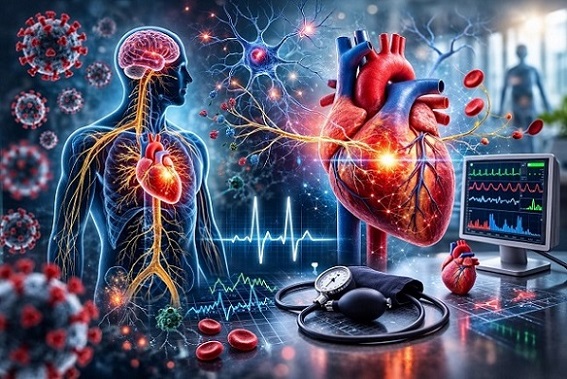 Research reveals long COVID patients may experience Neurocardiac Autonomic Dysfunction affecting
heart rate regulation
Researchers from the Department of Neurology, Faculty of Medicine and University Hospital Carl Gustav Carus at TUD Dresden University of Technology in Dresden, Germany; Dresden International University in Dresden, Germany; and the Center for Evidence-Based Healthcare, University Hospital and Faculty of Medicine Carl Gustav Carus at TUD Dresden University of Technology in Dresden, Germany conducted a comprehensive investigation into how COVID-19 may continue to influence heart regulation months after infection.
Their work highlights growing evidence that the virus can affect the body’s autonomic nervous system, the network responsible for controlling vital processes such as heart rate, blood pressure, breathing and digestion without conscious effort.
Understanding Long COVID and Autonomic Disruption
Long COVID, medically referred to as post-COVID condition, describes symptoms that persist for at least three months after the initial infection. Patients commonly experience fatigue, chest discomfort, shortness of breath, dizziness, memory problems and persistent sleep disturbances.
Many of these symptoms overlap with disorders involving the autonomic nervous system. When this system becomes dysregulated, the heart may not respond properly to changes in physical activity, stress or posture. This disruption is known as Neurocardiac Autonomic Dysfunction.
To better understand the relationship between long COVID and autonomic function, the research team conducted a large systematic review and meta-analysis of available studies examining heart regulation in post-COVID patients.
What The Study Examined
The investigators screened 856 scientific records and ultimately included 11 studies involving a total of 1,162 participants. Among these individuals were 593 patients diagnosed with post-COVID condition and 565 healthy control participants.
The primary focus of the research was heart rate variability (HRV), a widely used indicator of autonomic nervous system health. HRV measures the small variations in time between consecutive heartbeats.
A healthy cardiovascular system normally shows constant fluctuations between heartbeats, reflecting a balanced interaction between two branches of the autonomic nervous system: the sympathetic system, which prepares the body for stress, and the parasympathetic system, which promotes recovery and relaxation.
Reduced HRV can indicate that this balance has been disrupted and may signal increased cardiovascular risk.
Evidence Of Changes in Heart Regul
ation
Across the studies examined, the researchers observed a consistent trend suggesting impaired autonomic regulation in people with long COVID.
Ten of the eleven studies reported signs of altered neurocardiac autonomic function among post-COVID patients. Several key HRV indicators pointed toward disturbances in heart regulation.
One important measure is SDNN (standard deviation of normal-to-normal intervals), which reflects overall variability between heartbeats. Lower SDNN levels typically indicate reduced autonomic flexibility and poorer cardiovascular adaptability.
Another critical marker is rMSSD (root mean square of successive differences), which measures parasympathetic activity. Lower values suggest diminished calming influence on the heart from the parasympathetic nervous system.
The research also assessed the LF/HF ratio (ow-frequency to high-frequency ratio), a parameter that reflects the balance between sympathetic and parasympathetic activity.
Overall, the combined data suggested a pattern of reduced heart rate variability in individuals with long COVID, pointing toward ongoing autonomic imbalance even months after infection.
Symptoms Observed in Affected Patients
The symptoms reported in several of the analyzed studies closely matched known signs of autonomic nervous system dysfunction.
These symptoms included palpitations, chest pain, shortness of breath, dizziness, severe fatigue and sleep disturbances. Some patients also experienced postural orthostatic tachycardia syndrome (POTS), a condition where heart rate increases abnormally when standing.
Neurological symptoms such as memory difficulties, headaches, anxiety and insomnia were also commonly reported among individuals with post-COVID conditions.
In addition to these clinical symptoms, some studies detected elevated biological markers associated with inflammation and cardiovascular stress.
For example, increased levels of C-reactive protein, interleukin-6, and D-dimer were reported in several patient groups. These markers may indicate persistent inflammation and abnormal clotting activity after COVID-19 infection.
Possible Mechanisms Behind the Dysfunction
Scientists believe several biological processes may contribute to Neurocardiac Autonomic Dysfunction following COVID-19.
One potential mechanism involves the virus directly affecting nerve cells involved in autonomic control. SARS-CoV-2 is known to bind to ACE2 receptors that are present in parts of the brain responsible for regulating heart and respiratory functions.
Another possibility is prolonged immune activation. Viral proteins or fragments may remain in the body long after infection, triggering chronic inflammatory responses.
Researchers have also proposed that autoantibodies produced after infection may interfere with receptors controlling blood vessels and heart rate, potentially overstimulating the sympathetic nervous system.
Additionally, COVID-19 is known to cause a hypercoagulable state that can lead to microvascular damage. Such damage may impair oxygen supply to tissues that play critical roles in autonomic regulation.
Implications For Long COVID Care
Although the overall statistical effects observed in the meta-analysis were modest and varied between studies, the consistent pattern suggests that autonomic dysfunction may be an important contributor to long COVID symptoms.
This
Medical News report highlights the importance of further research into autonomic disturbances following SARS-CoV-2 infection, particularly because such dysfunction could influence long-term cardiovascular health and overall quality of life.
Experts emphasize that larger clinical studies with standardized testing protocols and longer follow-up periods are urgently needed to clarify the extent and persistence of these changes.
Conclusion
The analysis suggests that Neurocardiac Autonomic Dysfunction may represent a significant yet underrecognized complication of long COVID. Evidence from multiple studies indicates that many individuals recovering from COVID-19 show measurable alterations in heart rate variability, reflecting disruption of the autonomic nervous system that regulates cardiovascular function. While the current findings are not yet definitive, they provide an important foundation for understanding the biological mechanisms behind long COVID symptoms and highlight the need for more comprehensive investigations into how COVID-19 affects the body’s cardiovascular and neurological systems over time.
The study findings were published in the peer reviewed European Journal of Neurology.
https://onlinelibrary.wiley.com/doi/10.1111/ene.70561
For the latest on Long COVID, keep on logging to Thailand
Medical News.
Read Also:
https://www.thailandmedical.news/articles/long-covid
https://www.thailandmedical.news/articles/coronavirus




 Share
Share
 Tweet
Tweet
 Share
Share

































