Nikhil Prasad Fact checked by:Thailand Medical News Team Mar 29, 2026 5 months, 4 days, 14 hours, 42 minutes ago
Medical News: Mounting Fears Over Medicine Supply Disruptions
The United Kingdom is facing a growing threat of serious medicine shortages within the next three weeks as geopolitical tensions escalate due to the ongoing conflict involving Iran. Experts warn that the fragile global pharmaceutical supply chain is now under immense strain, raising alarms that essential medications—from basic painkillers to life-saving cancer treatments—could soon become scarce.
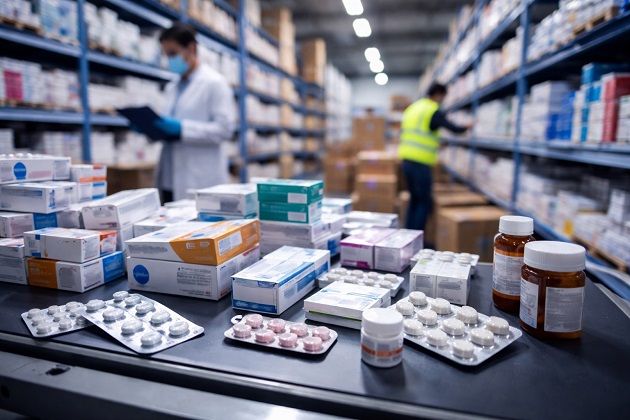 Global conflict threatens medicine supply chains, putting UK healthcare at risk
At the heart of the issue lies a complex web of disrupted logistics, rising transportation costs, and shortages of critical raw materials. The closure and restriction of key Middle Eastern airspaces, alongside the near shutdown of the Strait of Hormuz, have significantly hindered the movement of pharmaceutical goods across global routes.
Supply Chains Under Severe Pressure
The pharmaceutical industry relies heavily on a finely balanced global supply chain. India, often referred to as the “pharmacy of the world,” produces a substantial portion of generic medicines and active pharmaceutical ingredients (APIs) used worldwide. However, ongoing geopolitical instability has made exporting these crucial components increasingly difficult.
Air transport, which accounts for about 20 percent of medicines entering the UK, has been severely disrupted. Airports in major transit hubs such as Dubai, Doha, and Abu Dhabi initially shut down and are now operating at limited capacity. This has forced pharmaceutical companies to reroute shipments or shift to slower sea freight options.
Shipping routes have also been heavily impacted. With the Strait of Hormuz—a critical artery for global trade—largely inaccessible, vessels are being forced to take longer routes around the Cape of Good Hope. This detour adds approximately two weeks to delivery times and significantly increases fuel costs, placing additional strain on already tight supply timelines.
Stock Levels Offer Only Temporary Buffer
Currently, the UK is not yet experiencing widespread shortages, but the situation is precarious. Medical distributors typically maintain stockpiles sufficient for six to eight weeks, while suppliers to hospitals in England are required to hold at least eight weeks of inventory. These reserves provide only a temporary cushion.
Industry leaders caution that if disruptions persist, these stockpiles could quickly deplete. Mark Samuels, representing manufacturers of generic medicines, emphasized that while the situation is not yet critical, the window for stability is rapidly closing.
This
Medical News report highlights that generic medicines, which make up approximately 85 percent of all prescriptions within the UK’s National Health Service (NHS), are particularly vulnerable due to their low profit margins and dependence on international supply chains.
Rising Costs Threaten Acce
ssibility
Another pressing concern is the sharp increase in transportation costs. The ongoing conflict has reportedly doubled air freight prices, forcing manufacturers to absorb higher expenses. However, given the historically thin profit margins in the generic drug sector, this approach may not be sustainable.
While long-term contracts protect pricing for hospital-supplied medicines, drugs distributed through general practitioners and pharmacies are more exposed to price fluctuations. This could result in noticeable cost increases for patients, particularly for commonly used medications.
Experts suggest that if the crisis continues, price hikes could remain modest initially but may escalate over time. The broader economic impact extends beyond transportation, as rising oil and gas prices are also increasing the cost of producing essential petrochemical components used in pharmaceuticals.
Critical Medicines at Higher Risk
Certain categories of medicines are especially vulnerable to disruption. These include advanced treatments such as biologics, gene therapies, and medications used in clinical trials. These products often require rapid transport and strict temperature control, making them highly dependent on air freight.
Even routine treatments could face delays. During the COVID-19 pandemic, similar supply chain disruptions led to shortages of common medications like paracetamol. Experts fear a repeat scenario, potentially on a larger scale, if current conditions persist.
Global Ripple Effects on Healthcare Systems
The implications of these disruptions extend far beyond the UK. The interconnected nature of global pharmaceutical supply chains means that challenges in one region can quickly cascade across multiple countries. As production costs rise and logistical challenges mount, the financial burden is expected to shift toward healthcare systems and ultimately patients. Public health services like the NHS, funded by taxpayers, may face increased pressure to manage higher procurement costs while maintaining access to essential medicines.
A Fragile System Approaching a Breaking Point
The unfolding situation underscores the vulnerability of modern healthcare systems that rely heavily on globalized production and distribution networks. While contingency measures and stockpiles offer short-term relief, they cannot fully shield against prolonged disruptions.
If the conflict continues without resolution, the UK could soon face a scenario where both the availability and affordability of medicines are significantly compromised. Policymakers, healthcare providers, and industry leaders are now under increasing pressure to find solutions that ensure continuity of care. The current trajectory suggests that without swift stabilization of global trade routes and supply chains, the UK’s healthcare system may encounter one of its most challenging logistical crises in recent years, affecting millions who depend on timely access to essential medications.
What Lies Ahead for Patients and Providers
The evolving crisis paints a sobering picture of how geopolitical instability can directly impact everyday healthcare. Patients may soon experience delays, substitutions, or increased costs for medications that were once readily available. Healthcare providers, meanwhile, could be forced to make difficult decisions regarding treatment prioritization and resource allocation. The situation serves as a stark reminder of the importance of resilient supply chains and strategic planning in safeguarding public health.
The coming weeks will be critical in determining whether the UK can avert widespread shortages or whether the warning signs now emerging will escalate into a full-scale healthcare disruption affecting patients nationwide for an extended period.
References:
https://www.medicinesuk.com/key-issues/current-supply-issues/
https://www.telegraph.co.uk/news/2026/03/15/stockpile-medicine-avoid-shortage-iran-war-pharmacists/
https://www.reuters.com/business/healthcare-pharmaceuticals/britain-medicine-supply-risk-if-middle-east-conflict-persists-trade-group-warns-2026-03-20/
https://www.theguardian.com/business/2026/mar/28/uk-weeks-away-medicine-shortages-iran-war-impacts-experts-warn
https://www.reddit.com/r/news/comments/1s5y173/uk_weeks_away_from_medicine_shortages_if_iran_war/
https://www.express.co.uk/news/uk/2187775/uk-just-a-few-weeks-medicine-shortages
For the latest on drugs and medications supply, keep on logging to Thailand
Medical News.
Read Also:
https://www.thailandmedical.news/articles/uk-medical-news
https://www.thailandmedical.news/articles/med-news
https://www.thailandmedical.news/articles/pharma-news




 Share
Share
 Tweet
Tweet
 Share
Share