Nikhil Prasad Fact checked by:Thailand Medical News Team Jun 02, 2026 4 months, 1 day, 22 hours, 1 minute ago
Medical News: For decades, scientists have struggled to understand one of medicine’s most puzzling mysteries: why does the immune system suddenly turn against the body’s own proteins and tissues? A groundbreaking new study has now proposed an entirely new explanation, suggesting that tiny structures inside cells known as biomolecular condensates may be creating hidden changes in proteins that cause the immune system to mistake them for dangerous invaders.
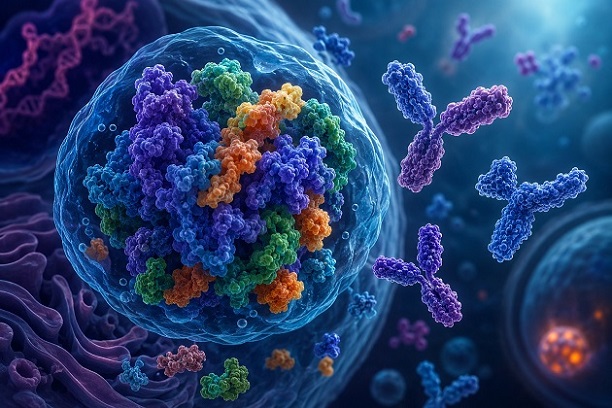 Researchers uncover how tiny cellular condensates may reshape proteins and trigger autoimmune diseases
Researchers from the Department of Biochemistry and Biophysics and the Department of Pharmacology at the University of North Carolina at Chapel Hill, North Carolina, USA, have uncovered evidence that proteins can undergo subtle shape changes when they gather inside cellular condensates. These alterations may create previously unseen targets, known as autoantigens, which can then trigger autoimmune responses.
A Long-Standing Medical Mystery
Autoimmune diseases occur when the immune system mistakenly attacks the body’s own tissues. Conditions such as lupus, rheumatoid arthritis, and multiple sclerosis are all linked to this process. However, scientists have never fully understood why only certain proteins become autoantigens while thousands of others are ignored.
Previous theories mainly focused on failures within the immune system itself or on damaged proteins being exposed to immune cells. The new study takes a completely different approach by suggesting that normal cellular processes may be responsible for creating autoantigens.
The researchers explain that roughly 10 percent of human proteins can become autoantigens. Yet the reason these particular proteins are selected has remained elusive for decades.
The Surprising Role of Biomolecular Condensates
Biomolecular condensates are microscopic, membrane-free structures found inside cells. They form through a process called liquid-liquid phase separation and act as specialized hubs where proteins and other molecules gather to perform important cellular functions.
Scientists estimate that human cells contain more than 100 different types of condensates. These structures are involved in gene regulation, protein production, stress responses, metabolism, and cellular signaling.
Because condensates concentrate proteins into small spaces, they greatly increase the chances of proteins interacting with one another. The research team hypothesized that these close interactions could subtly alter protein shapes, creating new molecular surfaces that the immune system has never learned to recognize as harmless.
Examining Thousands of Autoantigens
To test their theory, the scientists assembled a database containing approximately 1,925 known autoantigens and compared them with proteins found in biomolecular condensates.
Their findings were striking. About 22 percent of proteins associated with condensates were identified as autoantigens, compared to only about 9.6 percent across the entire human proteome. This mean
s proteins within condensates were more than twice as likely to become autoantigens.
The statistical significance of this difference was extremely strong, suggesting that condensates possess characteristics that actively contribute to autoantigen formation.
Advanced Artificial Intelligence Reveals Structural Changes
Using sophisticated protein structure prediction tools including AlphaFold Multimer, the researchers analyzed multiple protein complexes known to exist within condensates. They compared proteins in their free state with the same proteins when bound to partners inside condensates.
The study identified numerous examples where proteins underwent conformational changes—alterations in their three-dimensional shape—after forming complexes. These changes frequently coincided with the appearance of regions predicted to attract immune system antibodies.
Several important protein complexes displayed these alterations, including DNA repair proteins XRCC6 and XRCC5, the PeBoW ribosome assembly complex, STAT transcription factor complexes, translation termination factors, and proteins involved in chromatin remodeling and nuclear transport.
In many cases, even relatively small shifts in protein structure appeared sufficient to generate new antibody-recognition sites. Some proteins also underwent transitions from helical structures to turns or loops, potentially exposing previously hidden regions to immune surveillance.
This
Medical News report highlights that the researchers repeatedly observed a strong relationship between protein-protein interactions, structural rearrangements, and the emergence of potential immune targets.
Why These Findings Matter
The discovery could fundamentally change how scientists think about autoimmune diseases. Instead of viewing autoantigens solely as products of immune system malfunction, the study suggests that normal biological processes occurring inside healthy cells may continuously generate altered protein forms capable of stimulating immune reactions.
If confirmed by future laboratory and clinical studies, the findings could help explain why autoimmune diseases often appear unexpectedly and why certain proteins repeatedly emerge as immune targets across different diseases. The work may also open new opportunities for developing therapies aimed at preventing harmful protein conformational changes or limiting immune exposure to these altered protein structures.
Conclusion
The study presents a compelling new model for how autoantigens may arise during ordinary cellular activities. By demonstrating that proteins concentrated within biomolecular condensates can undergo structural changes that create new antibody-recognition sites, the researchers have identified a previously overlooked mechanism that could contribute to autoimmune disease development. Importantly, the findings suggest that the very cellular systems responsible for maintaining normal biological functions may inadvertently generate proteins that appear foreign to the immune system. Although further experimental validation is needed, this research provides a powerful new framework for understanding autoimmunity and may eventually lead to more targeted approaches for diagnosing, preventing, and treating a wide range of autoimmune disorders that affect millions of people worldwide.
The study findings were published in the peer reviewed journal: Biomolecules.
https://www.mdpi.com/2218-273X/16/6/803
For the latest on autoimmune diseases, keep on logging to Thailand
Medical News.
Read Also:
https://www.thailandmedical.news/news/abnormal-immune-antibodies-targeting-the-nervous-system-linked-to-brain-fog-and-chronic-fatigue-in-long-covid
https://www.thailandmedical.news/news/scientists-warn-of-autoantibodies-found-in-donated-blood-from-recovered-covid-19-patients
https://www.thailandmedical.news/news/list-of-86-of-167-autoantibodies-that-covid-19-infections-and-vaccines-induces-in-the-human-host-part1




 Share
Share
 Tweet
Tweet
 Share
Share

































