Nikhil Prasad Fact checked by:Thailand Medical News Team Jul 27, 2026 36 minutes ago
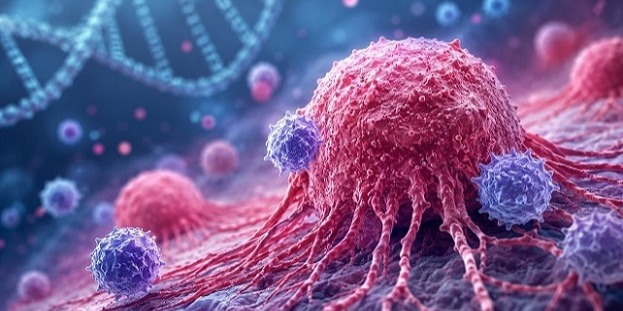
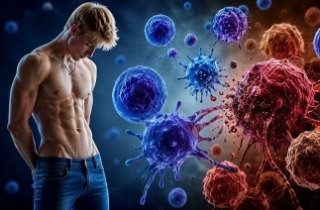
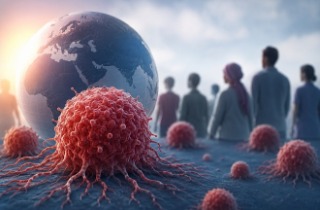
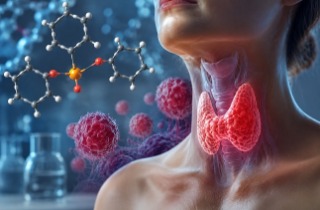
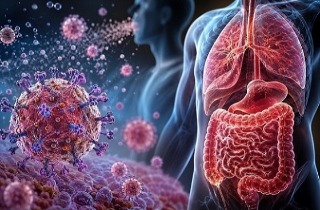
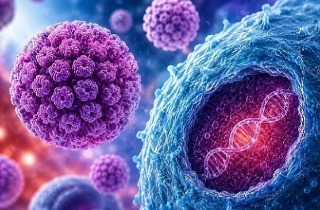
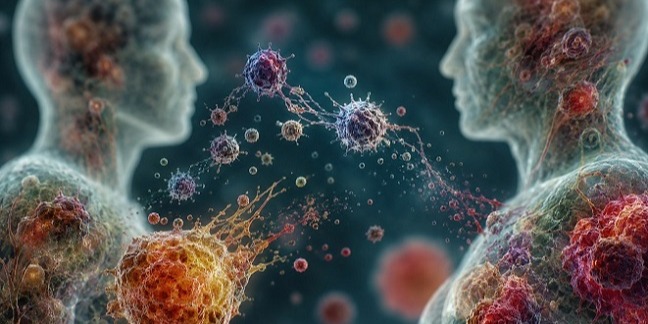
Medical News: A growing body of scientific evidence is raising important questions about the long-term biological effects of COVID-19. Although SARS-CoV-2 is not classified as a cancer-causing virus, researchers are finding that the infection can leave behind persistent changes in the body that resemble many of the same biological processes involved in cancer development and progression. These findings do not mean that COVID-19 directly causes cancer, but they suggest the virus may create conditions that could potentially favor tumor growth or recurrence in susceptible individuals, particularly those experiencing Long COVID.
 Scientists have identified multiple biological pathways altered by COVID-19 that overlap with mechanisms
involved in cancer progression, although direct evidence that the virus causes cancer remains lacking.
The new review was conducted by researchers Andrea Orue and Alejandro Cornejo from the Laboratorio de Biología de Tumores, Centro de Microbiología y Biología Celular, Instituto Venezolano de Investigaciones Científicas (IVIC), Caracas, Venezuela, together with Héctor Rafael Rangel from the Laboratorio de Virología Molecular, Centro de Microbiología y Biología Celular, Instituto Venezolano de Investigaciones Científicas (IVIC), Caracas, Venezuela. Their work brings together findings from hundreds of experimental, transcriptomic and clinical studies published since the pandemic began, examining whether SARS-CoV-2 may influence pathways already known to play major roles in cancer biology.
While Some Claim That SARS-CoV-2 Might be an Oncogenic Virus, Scientists Are Seeing Concerning Biological Overlap
The researchers make one point abundantly clear from the outset. There is currently no evidence that SARS-CoV-2 behaves like classical oncogenic viruses such as human papillomavirus (HPV), hepatitis B virus, Epstein-Barr virus or human T-cell leukemia virus, all of which are capable of directly initiating cancer. Instead, SARS-CoV-2 appears to exert its influence in a much more indirect manner.
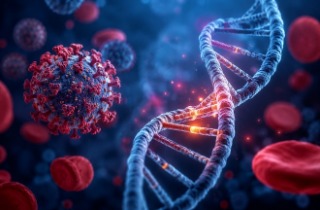
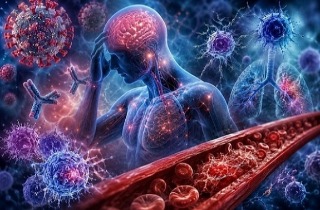
Rather than inserting cancer-causing genes into human cells, the virus appears capable of triggering prolonged inflammation, disrupting immune regulation, altering metabolism, modifying gene regulation and creating persistent cellular stress. Many of these same biological disturbances are already recognized as important contributors to tumor progression, cancer recurrence and immune escape.
The review therefore proposes that COVID-19 may converge upon numerous cancer-related biological pathways without actually transforming healthy cells into cancer cells.
Persistent Inflammation Emerges as the Biggest Concern
One of the strongest findings throughout the review involves chronic inflammation.
Normally, inflammation helps eliminate infections before subsiding. However, in some individuals recovering from COVID-19, the inflammatory response fails to completely switch off.
Researchers describe persistent activation of inflammatory pathways involving IL-6/STAT3 and NF-κB, two master regulators that control numerous
immune and cellular functions. Continuous activation of these pathways has already been implicated in many cancers because they stimulate cell survival, tissue remodeling, abnormal blood vessel formation and resistance to normal cell death.
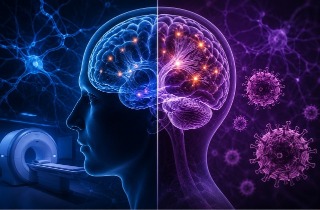
The review notes that these inflammatory pathways remain activated in subsets of Long COVID patients months after infection, producing a prolonged inflammatory environment that resembles conditions often found inside tumors.
The researchers emphasize that this chronic inflammatory state could weaken the body's ability to eliminate abnormal cells before they become dangerous.
Long COVID May Keep the Immune System in a Constant State of Activation
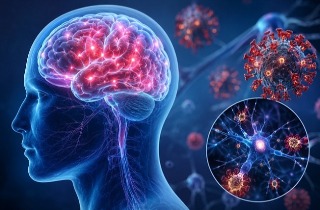
The review places significant emphasis on Long COVID as a possible biological setting where these cancer-related mechanisms may become most relevant.
Several studies suggest that viral remnants may persist within certain tissues long after acute infection. Other hypotheses include persistent immune activation, reactivation of dormant viruses such as Epstein-Barr virus and HHV-6, microbiome disruption, endothelial dysfunction and autoimmune responses.
Together these factors may produce an immune system that remains chronically stimulated.
Instead of providing efficient protection, prolonged immune activation may gradually become dysfunctional. The review describes exhausted T cells, impaired interferon signaling, expansion of immune-suppressive myeloid cells and excessive cytokine production. These immune abnormalities bear striking similarities to immune environments commonly observed in advanced cancers, where tumors successfully evade immune destruction.
Importantly, the researchers stress that there is currently no direct epidemiological evidence showing that Long COVID increases cancer incidence. Nevertheless, the biological overlap is sufficient to justify intensive long-term investigation.
Cellular Aging and Oxidative Stress May Add to the Problem
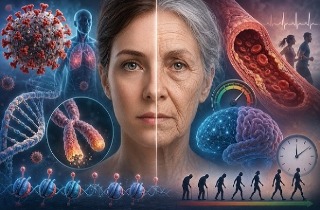
Another major focus of the review involves cellular senescence, a process often described as accelerated cellular aging.
Under stressful conditions, cells can permanently stop dividing while remaining metabolically active. Rather than quietly dying, these senescent cells begin releasing large quantities of inflammatory molecules, enzymes and signaling proteins collectively known as the senescence-associated secretory phenotype (SASP).
SARS-CoV-2 appears capable of inducing these senescence-like programs both in infected cells and in neighboring healthy cells.
The resulting inflammatory secretions can spread tissue damage far beyond the original site of infection while continuously stimulating inflammatory pathways already associated with cancer progression.
The researchers also describe increased oxidative stress, mitochondrial dysfunction, DNA damage responses, telomere shortening and metabolic disturbances following infection. Although many of these findings originate from laboratory experiments and post-mortem analyses, they collectively point toward prolonged biological stress that may alter tissue environments long after the virus has disappeared.
COVID-19 May Interfere with the Body's Natural Tumor Defenses
The review also examines evidence suggesting SARS-CoV-2 proteins may interfere with two of the body's most important tumor suppressor systems—p53 and retinoblastoma protein (pRB).
These proteins normally prevent damaged cells from multiplying uncontrollably.
Laboratory studies suggest that viral proteins such as nsp3 and nsp15 may influence pathways controlling these tumor suppressors through indirect mechanisms involving protein degradation, oxidative stress and altered cellular signaling.
However, the authors caution that these observations come primarily from laboratory models and mechanistic studies rather than patients. There is no convincing evidence that COVID-19 permanently disables these critical cancer-protective systems in humans.
Major Changes in Cell Signaling Could Favor Tumor Growth
The review identifies several additional signaling pathways altered during SARS-CoV-2 infection that are also heavily involved in cancer biology.
Among them are the Wnt/β-catenin, Notch, SRC, STAT3 and PI3K/AKT pathways.
These signaling networks regulate stem cell behavior, tissue repair, metabolism, cell proliferation and immune function. When improperly activated over prolonged periods, they are known to contribute to tumor development and metastasis.
Experimental studies indicate that SARS-CoV-2 proteins may activate several of these pathways while simultaneously promoting metabolic reprogramming. Cells begin consuming glucose differently, producing excessive reactive oxygen species and developing mitochondrial abnormalities that resemble metabolic changes frequently observed in cancer cells.
Tiny Genetic Regulators May Also Be Disrupted
Another fascinating aspect of the review involves microRNAs, tiny molecules that regulate the activity of thousands of genes.
COVID-19 appears capable of significantly altering several cancer-related microRNAs.
Among the most important are reductions in the tumor-suppressive let-7 family, together with changes involving miR-21, miR-150, miR-93, miR-155 and miR-221/222.
Loss of let-7 may remove natural suppression of important cancer-promoting genes including STAT3, RAS, HMGA2 and components of the Wnt/β-catenin pathway, potentially reinforcing chronic inflammation and abnormal cellular survival.
Meanwhile, elevated miR-21 has previously been associated with tumor proliferation, invasion and metastasis in multiple cancers.
The authors caution that these microRNA changes are not unique to COVID-19 and may also occur in other infectious and inflammatory diseases. Nevertheless, they provide additional evidence that SARS-CoV-2 affects regulatory systems central to cancer biology.
This
Medical News report underscores that although none of these findings prove COVID-19 causes cancer, they collectively reveal a remarkable convergence between persistent post-infection biology and mechanisms that drive tumor behavior.
Pandemic Disruptions Also Played a Major Role
The researchers also remind readers that increases in advanced-stage cancers observed following the pandemic cannot automatically be blamed on SARS-CoV-2 itself.
During lockdowns, millions of people postponed cancer screenings, diagnostic testing and treatments. Hospitals diverted resources toward COVID-19 care, resulting in delayed diagnoses worldwide.
Many patients were therefore diagnosed with more advanced cancers simply because their disease went undetected for months.
Distinguishing the biological effects of SARS-CoV-2 from healthcare disruptions will require carefully designed long-term studies.
Conclusions
The review concludes that SARS-CoV-2 should not currently be regarded as an oncogenic virus. However, accumulating evidence demonstrates that COVID-19 can induce persistent inflammation, immune dysregulation, oxidative stress, mitochondrial dysfunction, cellular senescence, metabolic reprogramming and widespread changes in gene regulation that closely overlap with pathways involved in cancer biology. Whether these post-infectious alterations ultimately increase cancer susceptibility, accelerate tumor progression or contribute to recurrence in vulnerable individuals remains unknown. Only large longitudinal studies combining immune profiling, inflammatory biomarkers, transcriptomics, epigenetic analyses and long-term clinical follow-up will determine whether these concerning mechanistic links translate into measurable cancer risk in humans.
The study findings were published in the peer reviewed journal: Cancer Reports.
https://onlinelibrary.wiley.com/doi/10.1002/cnr2.70629
For the latest on COVID-19 and cancer, keep on logging to Thailand
Medical News.
Read Also:
https://www.thailandmedical.news/articles/coronavirus
https://www.thailandmedical.news/articles/long-covid
https://www.thailandmedical.news/articles/cancer




 Share
Share
 Tweet
Tweet
 Share
Share