Nikhil Prasad Fact checked by:Thailand Medical News Team Jun 07, 2026 3 months, 3 weeks, 5 days, 20 hours, 58 minutes ago
Medical News: For decades, D-amino acids were regarded as biological oddities with little relevance to human health. Scientists believed these mirror-image versions of conventional amino acids existed mainly in bacteria and played almost no role in human physiology. However, a growing body of research is now overturning that belief and revealing that D-amino acids may be among the most overlooked regulators of human health and disease.
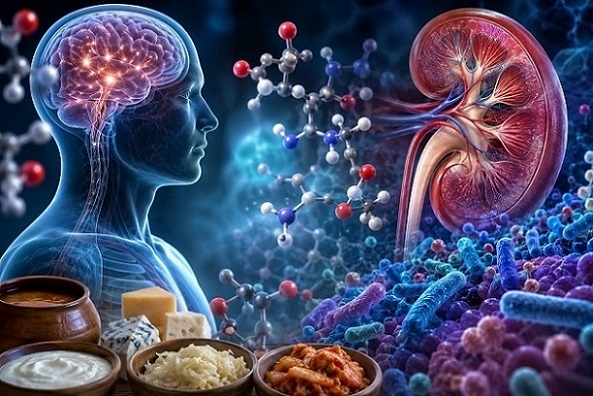 Researchers are discovering that D-serine, D-aspartate, D-alanine and other D-amino acids influence brain health,
kidney function, immunity, aging, and future therapeutic development
A new review by researchers Masao Shimoda and Bernard Yukihiro Hiraoka from the Institute for Oral Science, Matsumoto Dental University, Shiojiri, Japan, highlights how D-amino acids are involved in critical processes ranging from brain signaling and hormone production to kidney function, immune defense, metabolism, and healthy aging. The findings suggest that these compounds could eventually become powerful biomarkers for disease diagnosis and even form the basis of entirely new therapeutic approaches.
The Discovery That Changed Scientific Thinking
Almost all proteins in the human body are built from L-amino acids. Their mirror-image counterparts, known as D-amino acids, were long thought to be absent from mammals.
This assumption began to collapse when scientists discovered D-aspartic acid in mammalian tissues and blood. Since then, increasingly sophisticated laboratory techniques have identified numerous D-amino acids in blood plasma, urine, saliva, cerebrospinal fluid, amniotic fluid, kidneys, brain tissue, endocrine glands, and other organs.
Researchers now recognize that D-amino acids are biologically active molecules rather than accidental metabolic leftovers. Their presence across multiple organs suggests they participate in many fundamental physiological functions.
The Most Important D-Amino Acids in the Human Body
Several D-amino acids have emerged as especially important.
-D-Serine: The Brain's Critical Signaling Molecule
Among all D-amino acids, D-serine has attracted the greatest scientific attention.
D-serine is highly concentrated in parts of the brain and acts as an essential co-activator of NMDA receptors. These receptors are involved in learning, memory formation, cognition, emotional regulation, and communication between nerve cells.
Without adequate D-serine, NMDA receptors cannot function efficiently. Researchers believe abnormalities in D-serine signaling may contribute to schizophrenia, cognitive decline, and various neurological disorders.
Multiple clinical studies have shown that people with schizophrenia often have reduced levels of D-serine. Supplementation with D-serine has been reported to improve symptoms when used alongside conventional treatments, making it one of the most promising D-amino acids for future psychiatric therapies.
-D-Aspartate: A Regulator of Hormones and Reproduction
Another important molecule is D
-aspartate. Studies have shown that D-aspartate plays a role in regulating hormone production throughout the body. It can influence melatonin synthesis in the pineal gland, affect prolactin release from the pituitary gland, and stimulate testosterone production in the testes.
Researchers believe D-aspartate may contribute to fertility, reproductive health, sleep regulation, and endocrine function. Interestingly, levels of D-aspartate are significantly higher during fetal development, suggesting an important role in growth and tissue maturation.
-D-Alanine: A Potential Protector of the Kidneys
D-alanine is emerging as one of the most exciting D-amino acids in kidney research.
Much of the body's D-alanine originates from gut bacteria and fermented foods. Experimental studies suggest that D-alanine may protect kidney tissues from injury, reduce oxidative stress, improve mitochondrial function, and help preserve cellular energy production.
Recent research also indicates that D-alanine may influence circadian rhythms and glucose metabolism, suggesting possible benefits for metabolic health.
Scientists are currently investigating whether D-alanine supplementation could become part of future treatment strategies for chronic kidney disease.
The Gut Microbiome as a D-Amino Acid Factory
One of the most surprising findings is that the human gut microbiome serves as a major producer of D-amino acids.
Many intestinal bacteria possess enzymes capable of converting ordinary L-amino acids into D-amino acids. Species such as Escherichia coli, Bacillus subtilis, Pseudomonas putida, and Vibrio cholerae are known to generate multiple D-amino acids.
These microbial compounds enter the circulation and interact with human organs.
Researchers estimate that microorganisms may contribute up to one-third of the body's D-amino acid pool. This means the gut microbiome could influence health not only through vitamins, metabolites, and short-chain fatty acids, but also through D-amino acid production.
Fermented Foods May Provide Valuable D-Amino Acids
The review highlights that many traditional fermented foods naturally contain D-amino acids.
Examples include cheese, yogurt, bread, vinegar, wine, beer, sake, natto, pickles, and fermented soy products.
During fermentation, microorganisms convert portions of L-amino acids into D-forms. Scientists believe these food-derived D-amino acids may contribute to some of the health benefits associated with fermented diets.
Although researchers are still investigating these effects, evidence suggests that dietary D-amino acids may help support gut health, microbial balance, and metabolic regulation.
How D-Amino Acids Help Defend the Body
D-amino acids also participate in the body's natural defense mechanisms. When certain D-amino acids encounter the enzyme D-amino acid oxidase, they can generate hydrogen peroxide. This substance possesses strong antimicrobial activity and helps eliminate potentially dangerous pathogens.
Researchers have shown that this system contributes to intestinal immunity and helps protect against bacterial infections.
Remarkably, beneficial bacteria and harmful bacteria appear to interact differently with these defense mechanisms, suggesting that D-amino acids may help the body distinguish between friendly and dangerous microbes.
D-Amino Acids and Aging
The review also highlights an intriguing connection between D-amino acids and aging.
Over time, certain proteins gradually accumulate D-amino acids through natural chemical processes. Elevated levels of D-aspartic acid have been detected in aging brain tissue, skin, teeth, and eye lenses.
Scientists have linked these changes to age-related biological processes, including skin aging, cataract formation, and neurodegenerative disorders.
Researchers have even used D-amino acid accumulation as a biological clock for estimating age and dating ancient skeletal remains.
A New Generation of Kidney Disease Biomarkers
One of the most clinically important findings involves kidney disease. The kidneys play a crucial role in controlling D-amino acid concentrations through filtration, reabsorption, and enzymatic breakdown.
When kidney function declines, D-amino acids begin accumulating in the bloodstream. Numerous studies have found elevated levels of D-serine, D-asparagine, D-alanine, and other D-amino acids in patients with chronic kidney disease.
Some researchers now believe D-amino acid profiles may provide earlier and more sensitive indicators of kidney damage than traditional laboratory markers. This could allow physicians to identify kidney disease before significant irreversible damage occurs.
This
Medical News report notes that D-amino acid testing could eventually become an important component of precision medicine approaches for kidney disorders.
The Double-Edged Nature of D-Amino Acids
Despite their many benefits, D-amino acids are not universally beneficial.
A recurring theme throughout the review is their concentration-dependent nature.
At normal physiological levels, D-amino acids help regulate brain function, hormonal balance, microbial interactions, immunity, and organ health. However, excessive levels may become toxic.
D-serine provides the clearest example. While moderate amounts support healthy kidney remodeling and neurological function, excessively high concentrations can damage kidney cells and may contribute to renal injury.
Laboratory studies have shown that elevated concentrations of several D-amino acids can impair cell growth, reduce viability, and trigger cellular stress responses. This delicate balance highlights the importance of maintaining proper D-amino acid metabolism throughout life.
Conclusions
The growing scientific interest in D-amino acids is reshaping understanding of human biology. Once dismissed as insignificant molecules found mainly in bacteria, D-amino acids are now recognized as important regulators of brain activity, hormone production, immunity, metabolism, kidney function, and host-microbiome interactions. Research into D-serine, D-aspartate, D-alanine, and other D-amino acids is revealing a complex network of biological effects that extends across multiple organ systems. Their ability to serve as disease biomarkers, influence neurological disorders, support kidney health, regulate hormones, and shape immune responses makes them attractive targets for future therapeutic development. While many questions remain regarding their optimal concentrations and long-term effects, current evidence strongly suggests that D-amino acids could become a major focus of medical research over the coming decade and may ultimately help transform the diagnosis, prevention, and treatment of numerous diseases.
The study findings were published in the peer reviewed journal: BioChem.
https://www.mdpi.com/2673-6411/6/2/10
For the latest on D-Amino Acid, keep on logging to Thailand
Medical News.
Read Also:
https://www.thailandmedical.news/news/the-amino-acid-d-alanine-shows-promise-against-flu-and-covid-19
https://www.thailandmedical.news/news/breaking-covid-19-news-japanese-scientists-find-that-supplementation-with-the-amino-acid-d-alanine-can-help-prevent-and-treat-covid-19-severity




 Share
Share
 Tweet
Tweet
 Share
Share