Nikhil Prasad Fact checked by:Thailand Medical News Team Jun 16, 2026 3 months, 2 weeks, 3 days, 20 hours, 37 minutes ago
Medical News: Many people believe that eliminating sugar completely is one of the healthiest dietary choices they can make. However, surprising new research suggests that removing all sucrose from the diet may actually create unexpected problems in the gut and could even contribute to metabolic disorders.
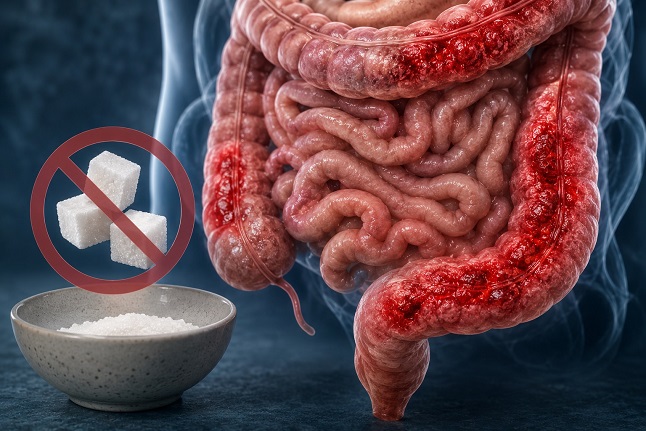 New research suggests that completely removing sugar from a low-fat diet may harm gut bacteria and worsen metabolic health
Scientists from the Dasman Diabetes Institute in Kuwait City, Kuwait, an institute founded by the Kuwait Foundation for the Advancement of Sciences, have discovered that a completely sugar-free low-fat diet disrupted gut bacteria, triggered inflammation, and impaired metabolic health in laboratory mice. The findings were presented at ENDO 2026, the annual meeting of the Endocrine Society held in Chicago, Illinois.
New Findings Challenge Common Beliefs About Sugar
For years, health experts have encouraged people to reduce sugar intake to lower the risk of obesity, diabetes, and heart disease. While excessive sugar consumption is undoubtedly harmful, this new study suggests that eliminating sucrose entirely may also have unintended consequences.
Lead researcher Dr. Rasheed Ahmad, Principal Scientist and Head of the Immunology and Microbiology Department at the Dasman Diabetes Institute, explained that balanced nutrition may be more important than simply removing sugar from the diet.
The researchers designed an experiment involving two groups of mice that were monitored for 16 weeks. One group received a low-fat diet containing sucrose, while the second group consumed a low-fat diet completely free of sucrose. Throughout the study, the team assessed glucose tolerance, insulin sensitivity, hormone levels, gut microbiome composition, and inflammation in both the colon and liver.
Metabolic Health Worsened Despite Stable Body Weight
One of the most surprising observations was that mice fed the sugar-free diet did not become heavier than the control animals. Body weight and liver weight remained largely unchanged.
However, beneath the surface, significant metabolic problems emerged. The sugar-free group developed impaired glucose tolerance, meaning their bodies struggled to process blood sugar efficiently. They also showed reduced insulin sensitivity, a key warning sign associated with the development of type 2 diabetes.
Researchers detected major changes in circulating metabolic hormones. Levels of C-peptide, incretins, ghrelin, and resistin increased, while fasting insulin levels declined, indicating widespread disruption of normal metabolic regulation.
Gut Microbiome Thrown Out of Balance
Perhaps the most important discovery involved the gut microbiome. Advanced genetic analysis revealed that eliminating sucrose dramatically altered the diversity and composition of gut bacteria. Beneficial microbes known to produce short-chain fatty acids, including Lactobacillus murinus and members of the Lachnospiraceae family, were significantly reduced.
These bacteria are considered important because they help mainta
in intestinal health, support immune function, and reduce inflammation.
At the same time, potentially harmful or inflammation-associated microbes increased. These included Helicobacter ganmani, Odoribacter splanchnicus, and several Alistipes species.
This
Medical News report notes that these microbial shifts created an environment that favored inflammation and metabolic dysfunction.
Intestinal and Liver Inflammation Intensified
The consequences of microbial imbalance extended beyond the gut. Researchers observed extensive inflammation within the colon. Microscopic examination revealed disruption of normal intestinal structures, loss of mucus-producing goblet cells, expansion of underlying tissues, and increased infiltration of immune cells such as T lymphocytes and macrophages.
Inflammatory molecules including IL-1β, IL-6, CCL2, RORγt, and TBX21 were also significantly elevated.
The liver was similarly affected. Mice on the sugar-free diet developed microvesicular steatosis, a form of fatty liver change characterized by abnormal fat accumulation within liver cells. They also displayed liver inflammation and increased recruitment of immune cells, accompanied by elevated levels of inflammatory cytokines.
These findings suggest activation of the so-called gut-liver axis, a biological communication pathway linking gut health directly to liver function.
Implications for Future Dietary Advice
The researchers believe their findings could reshape future nutritional recommendations. Rather than focusing exclusively on eliminating sugar, dietary strategies may need to place greater emphasis on maintaining a healthy and diverse gut microbiome.
The study also highlights the complexity of nutrition. Simply removing a single dietary component may not always produce the expected health benefits.
Conclusion
The findings suggest that completely eliminating sucrose from a low-fat diet may unintentionally disrupt the delicate balance of gut microbes, trigger inflammation, impair glucose control, and contribute to fatty liver changes. While excessive sugar consumption remains harmful, the research indicates that moderation and dietary balance may be more beneficial than extreme restriction. Further human studies will be needed to determine whether similar effects occur in people and how future dietary guidelines should be adjusted to protect both gut and metabolic health.
The study findings were presented during ENDO 2026 Proceedings (Endocrine Society Annual Meeting).
https://www.endocrine.org/news-and-advocacy/news-room/2026/ahmad-press-release-endo-2026
https://endo2026.endocrine.org/fsPopup.asp?PresentationID=1830381&mode=presInfo
For the latest on diets and nutrition, keep on logging to Thailand
Medical News.
Read Also:
https://www.thailandmedical.news/articles/diets-and-nutrition




 Share
Share
 Tweet
Tweet
 Share
Share

































