Nikhil Prasad Fact checked by:Thailand Medical News Team Jun 26, 2026 3 months, 1 week, 23 hours, 22 minutes ago
Medical News: Researchers have uncovered promising evidence that blocking a key immune signaling pathway could help reduce the dangerous inflammatory storms seen in severe cases of Severe Fever with Thrombocytopenia Syndrome (SFTS) and COVID-19. Their findings suggest that targeting the interleukin-10 (IL-10) receptor may rebalance the body's immune response instead of simply suppressing it, opening the door to a potential new treatment strategy.
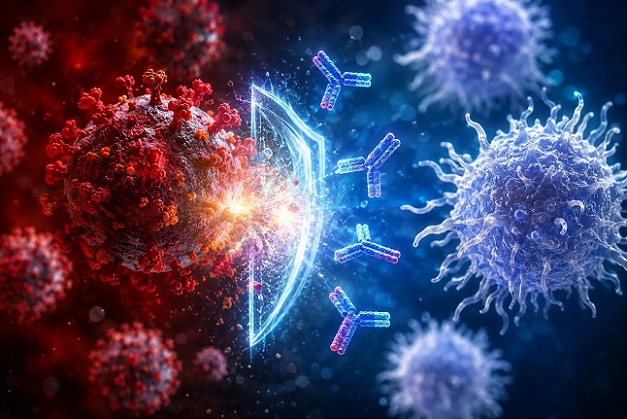 Scientists discover that blocking the IL-10 receptor may help prevent deadly immune overreactions in severe SFTS
and COVID-19
Scientists Explore a Different Way to Control Inflammation
The study was conducted by researchers from Hanyang University College of Medicine, Jeju National University College of Medicine, Seoul National University College of Medicine, Korea University College of Medicine, Seoul National University School of Biological Science, and the U.S. Naval Medical Research Unit INDO PACIFIC, Singapore.
SFTS is a serious tick-borne viral disease with a high death rate, while SARS-CoV-2 causes COVID-19. Although these viruses are very different, patients with severe disease often suffer from a similar problem—a massive immune overreaction known as a cytokine storm. Instead of protecting the body, the immune system begins producing excessive amounts of inflammatory molecules that damage healthy tissues and organs.
IL-10 Emerges as a Surprising Driver of Severe Disease
IL-10 has traditionally been viewed as an anti-inflammatory molecule. However, the researchers discovered that in severe viral infections it appears to behave very differently.
Blood samples from 86 SFTS patients collected over several years showed that patients who died had dramatically higher levels of IL-10 and IL-6 than those who survived. They also had elevated tumor necrosis factor-alpha (TNF-alpha), increased inflammatory immune cells carrying HLA-DR and CD86 markers, and lower levels of the protective molecule transforming growth factor-beta (TGF-beta).
Rather than calming inflammation, excessive IL-10 appeared to help sustain the damaging immune response.
This
Medical News report highlights that the researchers believe IL-10 may actually become part of a vicious cycle that continuously fuels cytokine storms during severe viral infections.
Blocking the IL-10 Receptor Produced Remarkable Changes
To investigate further, the scientists infected laboratory-grown human macrophages with either SFTS virus or SARS-CoV-2. They then treated these immune cells with antibodies designed to block the IL-10 receptor.
The results were striking
. Blocking IL-10 signaling consistently reduced production of IL-6 and TNF-alpha, two of the major inflammatory molecules responsible for tissue damage during cytokine storms. At the same time, production of TGF-beta increased, suggesting the immune system was shifting toward a more balanced and heal
ing response.
The treatment also changed the types of macrophages present. Harmful inflammatory macrophages marked by HLA-DR and CD86 became less common, while protective macrophages expressing CD163 and CD206 increased. These protective cells are known to support tissue repair, limit excessive inflammation, and promote recovery.
The same immune-balancing effects were observed not only during SFTS virus infection but also in SARS-CoV-2 infection and even when inflammation was artificially triggered using bacterial lipopolysaccharide. When macrophages were exposed to blood serum from fatal SFTS patients, IL-10 receptor antibodies again reduced IL-10 and IL-6 production, further supporting the therapeutic potential of this approach.
A Potential New Target for Future Treatments
The researchers also identified important changes in cellular signaling pathways, particularly involving Smad3 proteins, which appear to help determine whether macrophages promote inflammation or recovery. By altering these signaling networks, IL-10 receptor blockade may encourage immune cells to switch from destructive behavior to protective functions.
Although these findings remain limited to patient samples and laboratory experiments, they provide valuable evidence that targeting IL-10 signaling could become a novel immune-based strategy for treating cytokine storms caused by both SFTS and severe COVID-19. The researchers also cautioned that IL-10 normally serves protective functions, meaning any future therapies would require careful testing to avoid unwanted side effects such as excessive inflammation or secondary infections.
Conclusion
This study provides compelling evidence that IL-10 is far more complex than previously believed. Instead of acting solely as an anti-inflammatory molecule, excessive IL-10 may actually help drive the deadly immune storms responsible for severe SFTS and COVID-19. By blocking the IL-10 receptor, researchers successfully reduced harmful inflammatory signals while restoring protective immune responses in laboratory models. Although extensive clinical trials are still required before this approach can be used in patients, the findings identify IL-10 receptor antibodies as one of the more promising experimental strategies for controlling life-threatening cytokine storms without completely shutting down the immune system.
The study findings were published in the peer reviewed journal: Frontiers in Immunology.
https://www.frontiersin.org/journals/immunology/articles/10.3389/fimmu.2026.1828107/full
For the latest on treating viral infections, keep on logging to Thailand
Medical News.
Read Also:
https://www.thailandmedical.news/articles/coronavirus
https://www.thailandmedical.news/articles/immunology




 Share
Share
 Tweet
Tweet
 Share
Share

































