



BREAKING NEWS
For the latest on Thailand Medical Industry, Thailand Doctors, Thailand Medical Research, Thailand Hospitals, Thailand Wellness Initiatives and the latest Medical News
 Share
Share
 Tweet
Tweet
 Share
Share
Medical News: A disturbing post-pandemic health trend is emerging across numerous countries as growing numbers of adults in their 30s and 40s are requiring hip replacement surgeries once considered far more common among the elderly. Orthopaedic specialists are warning that severe hip joint damage linked to post-COVID complications and treatment-related factors is increasingly being detected in younger populations, raising concerns about a potential global musculoskeletal health crisis.
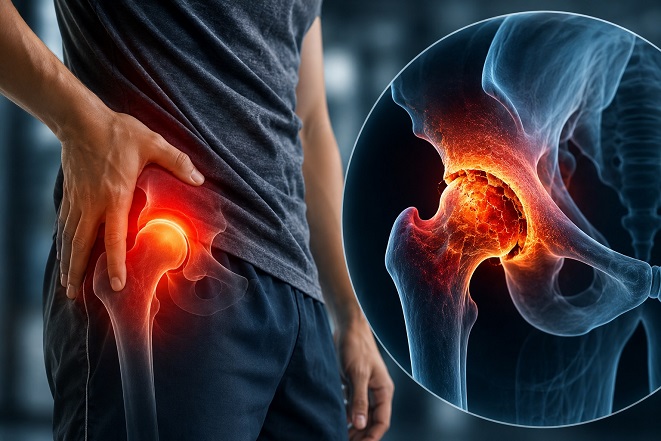
Increasing numbers of younger adults worldwide are developing severe post-COVID hip damage that often leads to joint replacement surgery
Rising Cases of Hip Joint Collapse Among Younger Adults
Healthcare providers across different regions are reporting a noticeable increase in younger patients presenting with debilitating hip pain, stiffness, limping, and difficulty walking months or even years after recovering from COVID-19. Many of these individuals are eventually diagnosed with avascular necrosis (AVN), also known as osteonecrosis, a condition that occurs when blood supply to the femoral head is disrupted.
The femoral head forms the ball portion of the hip joint. When blood flow is compromised, bone tissue begins to die. Over time, the weakened bone structure collapses, causing severe arthritis, chronic pain, and permanent joint damage that often leaves hip replacement surgery as the only effective treatment option.
Experts note that AVN was traditionally more common among older individuals, trauma patients, or those with specific medical conditions. However, the post-pandemic period has seen an unusual increase in diagnoses among younger adults who previously would not have been considered high-risk candidates for severe hip degeneration.
Steroid Use Under Growing Scrutiny
One of the factors receiving increased attention is the widespread use of corticosteroids during the COVID-19 pandemic. Steroids played a vital role in reducing inflammation and saving countless lives among patients suffering from severe respiratory complications.
However, prolonged or excessive exposure to corticosteroids has long been recognized as a risk factor for osteonecrosis. Medical specialists believe that in some individuals, particularly those with underlying vascular, metabolic, or inflammatory conditions, steroid use may have contributed to accelerated damage within the hip joint.
Researchers are continuing to investigate the exact mechanisms involved, but clinical observations from multiple countries suggest a growing association between post-COVID treatment histories and subsequent hip deterioration.
Early Symptoms Frequently Ignored
A major challenge in managing AVN is that its earliest symptoms are often subtle and easily dismissed. Mild groin pain, occasional stiffness, discomfort during walking, or reduced hip mobility are commonly mistaken for muscle strain, overexertion, or minor orthopedic issues.
As a result, many patients delay seeking medical attention. By the time advanced imaging studies are performed, the femoral head may already have suffered irreversible collapse. Specialists emphasize that magnetic resonance imaging (MR
I) remains one of the most effective tools for detecting AVN during its early stages, when joint-preserving interventions may still be possible.
This Medical News report highlights growing concerns that a significant number of post-COVID patients may be living with undiagnosed bone and joint complications that could worsen over time if left untreated.
Additional Risk Factors Compounding the Problem
While steroid exposure remains a major concern, experts stress that it is not the sole factor driving the increase in hip degeneration. Obesity, sedentary lifestyles, excessive alcohol consumption, metabolic disorders, vascular abnormalities, and chronic inflammation can all contribute to the development and progression of AVN.
The convergence of these risk factors with post-pandemic health challenges may be accelerating the burden of hip disease among younger populations worldwide.
Advances In Treatment Offering Hope
Fortunately, significant advances in orthopedic medicine are improving outcomes for patients requiring surgical intervention. Robotic-assisted procedures, minimally invasive surgical techniques, and newer implant technologies are helping patients recover faster while achieving improved long-term joint function. Nevertheless, specialists caution that prevention and early detection remain far preferable to joint replacement surgery.
Without greater awareness, earlier screening, timely MRI evaluation, and stronger preventive healthcare strategies, many countries could face a substantial rise in hip replacement procedures among younger adults over the coming decade. The growing number of post-COVID patients developing severe hip damage serves as a reminder that the long-term consequences of the pandemic may extend far beyond respiratory illness, creating a new and potentially lasting challenge for global healthcare systems.
For the latest post-COVID health complications, keep on logging to Thailand Medical News.
References:
https://journals.lww.com/annals-of-medicine-and-surgery/fulltext/2022/10000/corticosteroids_induced_avascular_necrosis_of_hip,.212.aspx
https://www.wolterskluwer.com/en/news/corticosteroid-injections-of-hip-linked-to-rapidly-destructive-hip-disease
https://jocr.co.in/wp/2023/06/acute-covid-related-hip-arthritis-case-report-and-literature-review/
https://orthospinenews.com/2026/02/02/hip-replacement-market-to-reach-us-11-4-billion-by-2033-driven-by-aging-population-rising-osteoarthritis-and-robotic-assisted-surgery-says-astute-analytica/
https://www.mdpi.com/2077-0383/14/22/8214
https://orthospinenews.com/2025/01/22/knee-and-hip-replacement-trends-from-2024-forecasts-for-2025/
https://www.uteshiyamedicare.com/market-forecast-report-for-hip-replacements-from-2024-to-2030-the-incredible-role-of-robotics-in-hip-replacement-surgery/
https://www.aahks.org/american-joint-replacement-registry-2025-annual-report-is-available-now/
https://journals.lww.com/annals-of-medicine-and-surgery/fulltext/2022/10000/corticosteroids_induced_avascular_necrosis_of_hip,.212.aspx
Read Also:
https://www.thailandmedical.news/articles/coronavirus
https://www.thailandmedical.news/articles/long-covid

































