Nikhil Prasad Fact checked by:Thailand Medical News Team Mar 30, 2026 6 months, 5 days, 4 hours, 13 minutes ago
Medical News: Stroke is one of the world’s leading causes of disability, and even when doctors restore blood flow in time, the brain often suffers a second wave of injury. Now, scientists have discovered that a natural compound from a traditional medicinal herb may help protect brain cells from this hidden damage and improve recovery.
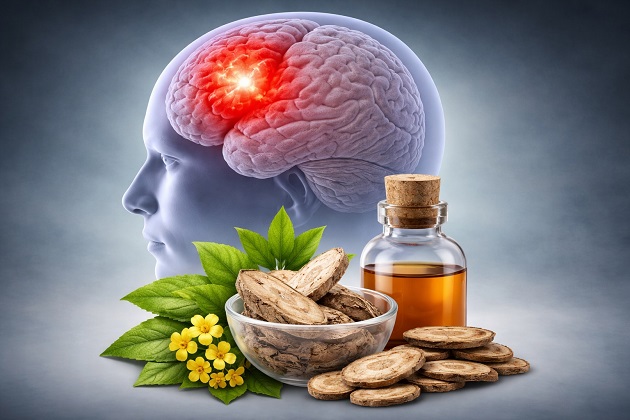 Natural compound shows potential in protecting brain cells after stroke injury
The Hidden Danger After Blood Flow Returns
Natural compound shows potential in protecting brain cells after stroke injury
The Hidden Danger After Blood Flow Returns
When a stroke blocks blood supply to the brain, cells are deprived of oxygen and nutrients. Emergency treatments aim to restore circulation as quickly as possible. However, this sudden return of blood—known as reperfusion—can trigger additional harm.
This secondary injury sets off a cascade of stress inside brain cells, leading to inflammation, oxidative damage, and ultimately cell death. One of the most important processes involved is apoptosis, a form of programmed cell death that plays a major role in worsening brain damage after a stroke.
Researchers Turn to a Natural Compound
A team of scientists from Hebei University of Chinese Medicine and its Graduate School in Shijiazhuang, China, investigated Astragaloside IV, a natural compound extracted from the herb Astragalus membranaceus.
Their experiments used both animal models and laboratory-grown nerve cells to mimic stroke conditions. The results were striking. Animals treated with Astragaloside IV showed better neurological function, reduced brain injury, and improved tissue structure compared to untreated subjects.
How Brain Cells Are Being Saved
The researchers focused on a critical internal pathway that controls whether brain cells live or die. This pathway involves proteins known as CytC and Apaf-1, which act like switches that trigger cell death when activated.
During a stroke and the subsequent return of blood flow, mitochondria inside brain cells become damaged. These structures release CytC, which then binds to Apaf-1. This interaction activates a chain reaction involving enzymes called caspases, ultimately leading to cell destruction.
Astragaloside IV was found to interrupt this process. It reduced harmful proteins such as CytC, Apaf-1, and caspases while increasing protective proteins like Bcl-2. As a result, fewer brain cells entered the self-destruct mode.
Consistent Results Across Experiments
This
Medical News report highlights that the protective effects were observed not only in animal brains but also in cultured nerve cells exposed to stress conditions similar to a stroke.
Cells treated with Astragaloside IV showed higher survival rates, reduced damage, and lower levels of cell death markers. At the same time, indicators of mitochondrial health improved, suggesting that the compound helps stabilize the cell’s energy systems.
Advanced Analys
is Confirms the Mechanism
To better understand how the compound works at a molecular level, researchers used computer simulations. These showed that Astragaloside IV can bind strongly to several proteins involved in the cell death pathway, especially Apaf-1.
This direct interaction suggests that the compound does not merely reduce symptoms but actively targets the mechanisms responsible for brain cell damage.
A Potential Breakthrough for Stroke Care
Current treatments for stroke focus mainly on restoring blood flow, but options to prevent secondary brain injury remain limited. This research points to a new approach—protecting brain cells by blocking the internal signals that lead to their destruction.
If future clinical studies confirm these findings, Astragaloside IV could become part of a new generation of therapies aimed at improving recovery and reducing long-term disability after stroke.
Conclusion
The study provides strong evidence that Astragaloside IV can significantly reduce brain cell death following a stroke by targeting a key mitochondrial pathway. By lowering harmful proteins, boosting protective ones, and stabilizing cellular function, it offers a promising direction for future treatments. While further human trials are essential, the findings represent an important step toward better outcomes for stroke patients worldwide.
The study findings were published in the peer reviewed journal: Pharmaceuticals.
https://www.mdpi.com/1424-8247/19/4/547
For the latest on stroke and post-stroke care, keep on logging to Thailand
Medical News.
Read Also:
https://www.thailandmedical.news/articles/herbs-and-phytochemicals




 Share
Share
 Tweet
Tweet
 Share
Share

































