Nikhil Prasad Fact checked by:Thailand Medical News Team Apr 24, 2026 5 months, 1 week, 3 days, 3 hours, 9 minutes ago
Medical News: Lifesaving HIV Treatment May Have Hidden Long-Term Effects
Antiretroviral therapy (ART) has transformed HIV from a once fatal disease into a manageable chronic condition, allowing millions of people to live longer and healthier lives. However, new research suggests that these powerful medications may also have unintended long-term effects on the body’s immune system, particularly in the lungs. Scientists from the Research Institute of the McGill University Health Centre, McGill University, the McGill International TB Centre, the Canadian Centre for Computational Genomics, the University of Chicago, and associated clinical research programs have discovered that prolonged exposure to ART may gradually alter key immune cells in ways that resemble aging.
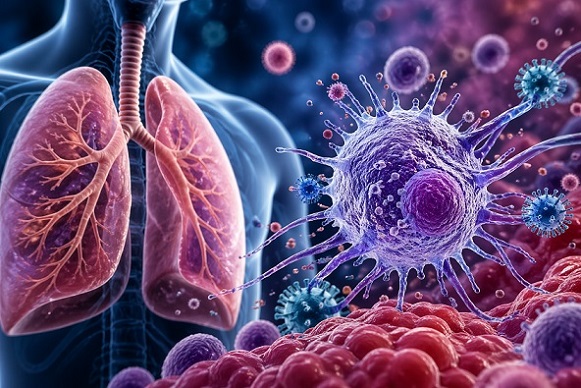 Long-term HIV treatment may slowly weaken lung immune defenses by accelerating cellular aging
The Role of Lung Immune Cells
Long-term HIV treatment may slowly weaken lung immune defenses by accelerating cellular aging
The Role of Lung Immune Cells
The study focused on alveolar macrophages, which are specialized immune cells that live inside the lungs and serve as the first line of defense against harmful invaders such as viruses, bacteria, and environmental pollutants. These cells play a crucial role in maintaining lung health and coordinating immune responses.
Researchers compared these cells across three groups: individuals living with HIV on ART, people taking ART as a preventive measure known as pre-exposure prophylaxis (PrEP), and healthy individuals who were not exposed to these medications. Using advanced molecular and genetic analysis, the team investigated how these cells function and change over time under the influence of ART.
Signs of Premature Cellular Aging
The researchers found that the longer a person was exposed to ART, the more their lung immune cells began to show features of cellular aging, also known as senescence. These aging-like cells lose their ability to divide properly, become less effective at responding to threats, and begin releasing inflammatory substances that can damage surrounding tissue. Importantly, these changes were strongly linked to the duration of ART use rather than HIV infection itself. Even individuals taking ART for prevention showed similar patterns. The study revealed increased activity in genes associated with inflammation, stress, and cell cycle arrest, while genes involved in maintaining normal immune function were reduced.
Weakened Response to Viral Infections
One of the most concerning findings was how these altered immune cells responded to viral challenges. When exposed to SARS-CoV-2 in controlled laboratory experiments, alveolar macrophages from individuals on ART showed a significantly weaker response compared to those from healthy individuals.
Normally, these immune cells activate interferon signaling pathways, which are essential for fighting viral infections. However, this response was noticeably impaired in both HIV patients and individuals on PrEP. This
Medical News report highlights that such weakened immune reactions could help explain why people on long-term ART may face increased risks of respiratory infecti
ons and more severe disease outcomes.
A Shift Toward Chronic Inflammation
The study also identified a persistent shift toward a pro-inflammatory state in lung immune cells exposed to ART over time. These cells produced higher levels of inflammatory molecules while losing their ability to properly regulate stress and repair damage. In addition, researchers observed disruptions in cellular energy production systems, suggesting that ART may interfere with how these immune cells generate and use energy. This combination of chronic inflammation and reduced resilience may contribute to the higher incidence of lung-related illnesses seen in people living with HIV, including chronic obstructive pulmonary disease, pulmonary fibrosis, and increased susceptibility to infections.
Why This Matters for Long-Term Health
While ART remains essential for controlling HIV and saving lives, these findings raise important questions about its long-term impact on overall health. The researchers emphasize that patients should continue their treatment as prescribed, but they also highlight the need for improved therapies that can minimize these unintended effects. Future strategies may include additional treatments designed to protect immune cells from premature aging or to restore their normal function.
Conclusion
This study provides compelling evidence that long-term antiretroviral therapy may gradually reprogram lung immune cells into a state that resembles accelerated aging. These changes reduce the cells’ ability to fight infections effectively while promoting chronic inflammation, which may increase the risk of respiratory diseases over time. Understanding these effects is crucial for developing better treatment approaches that not only extend life expectancy but also preserve immune health. As researchers continue to explore these findings, there is hope that future therapies will address these hidden challenges and improve the long-term well-being of individuals relying on ART.
The study findings were published in the peer reviewed journal: Frontiers in Immunology.
https://www.frontiersin.org/journals/immunology/articles/10.3389/fimmu.2026.1805936/full
For the latest on the long-term health effects of HIV drugs, keep on logging to Thailand
Medical News.
Read Also:
https://www.thailandmedical.news/articles/hiv-aids
https://www.thailandmedical.news/articles/med-news




 Share
Share
 Tweet
Tweet
 Share
Share

































