Nikhil Prasad Fact checked by:Thailand Medical News Team Apr 14, 2026 5 months, 2 weeks, 5 days, 20 hours, 23 minutes ago
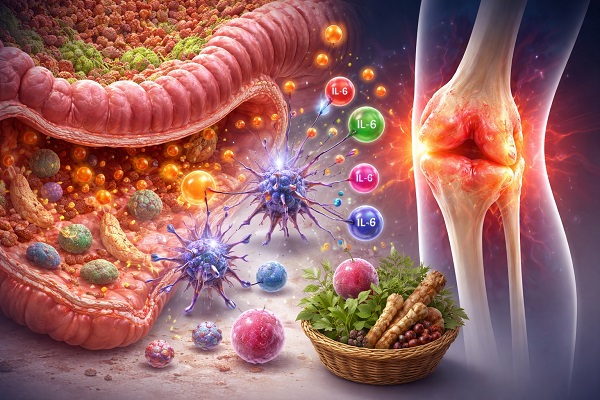
Medical News: Rheumatoid arthritis, a painful autoimmune disease that damages joints over time, may be driven by an unexpected culprit emerging from the gut. New research reveals how a small metabolic molecule called succinate can worsen inflammation, while natural compounds from a traditional medicinal plant may counteract this effect and offer new hope for treatment.
 Natural plant compounds may block a gut-driven trigger of arthritis inflammation
Scientists Uncover a Gut–Joint Connection
Natural plant compounds may block a gut-driven trigger of arthritis inflammation
Scientists Uncover a Gut–Joint Connection
Researchers from the School of Pharmacy at Anhui University of Chinese Medicine in Hefei, China, led by Mengqiang Gao, Shanshan Ma, and Yunzhi Li, explored how gut-derived signals influence immune responses linked to arthritis. Their work focused on a plant known as Aralia echinocaulis, traditionally used in parts of China to treat joint disorders. The study examined its key active components - polysaccharides and glycosides, collectively called TPGs.
The team discovered that succinate, a natural byproduct of metabolism, plays a surprising role in worsening inflammation. Normally involved in energy production, succinate can also act as a signaling molecule that activates immune cells, especially dendritic cells in the gut. These cells then trigger a chain reaction that promotes inflammation throughout the body, including the joints.
How Inflammation Spirals Out of Control
Using a mouse model of rheumatoid arthritis, researchers found that higher levels of succinate significantly increased swelling, immune cell infiltration, and inflammatory markers. According to findings detailed in the uploaded study, mice given additional succinate showed more severe joint damage, thicker synovial tissue, and elevated levels of inflammatory cytokines such as IL-6, TNF-α, and IL-17.
Further analysis revealed that succinate activates a receptor called GPR91 on intestinal dendritic cells. Once triggered, these cells promote the production of pro-inflammatory T helper 17 (Th17) cells while suppressing regulatory T cells (Treg), which normally help control immune responses. This imbalance is a known driver of autoimmune diseases like rheumatoid arthritis.
Natural Plant Compounds Show Powerful Effects
Encouragingly, treatment with TPGs from Aralia echinocaulis reversed many of these harmful changes. Mice treated with TPGs showed a roughly 28 percent reduction in paw swelling and significantly lower inflammatory markers. Even more striking, intestinal succinate levels dropped by nearly 67 percent after treatment.
TPGs also restored balance between Th17 and Treg cells, effectively calming the overactive immune response. They appeared to suppress dendritic cell activation and reduce the cascade of inflammation triggered by the succinate–GPR91 pathway.
In addition, tissue analysis showed reduced damage in joint structures, with fewer inflammatory cells infiltrating the synovium. This suggests that the plant compounds not only reduce symptoms but may also protect joint integrity.
A New Therapeutic Target
This
://www.thailandmedical.news/">Medical News report underscores how targeting the gut–immune connection could reshape how rheumatoid arthritis is treated. Instead of focusing only on suppressing the immune system broadly, therapies could aim to regulate specific metabolic signals like succinate and their effects on immune cells.
The findings also reinforce the growing importance of gut microbiota in chronic diseases. Certain gut bacteria are known to produce succinate, meaning that microbial imbalances could directly fuel inflammation in distant organs like joints.
What This Means for Future Treatments
The study opens the door to new therapeutic strategies that combine natural compounds with targeted immune modulation. By lowering succinate levels and blocking its interaction with GPR91, it may be possible to interrupt the cycle of inflammation at its source.
However, researchers caution that more studies are needed, especially in humans, to confirm these effects and determine optimal dosing and safety. They also suggest future work should explore how gut bacteria contribute to succinate production and how diet or probiotics might influence this process.
Conclusion
This research provides compelling evidence that a small molecule produced in the gut can have far-reaching effects on immune function and joint health. By identifying the succinate–GPR91 pathway as a key driver of inflammation and demonstrating how plant-based compounds can counteract it, the study offers a fresh and promising direction for rheumatoid arthritis treatment. These insights not only deepen our understanding of the disease but also highlight the potential of natural therapies to complement modern medicine in managing chronic inflammatory conditions.
The study findings were published in the peer reviewed journal: Pharmaceuticals.
https://www.mdpi.com/1424-8247/19/4/606
For the latest on rheumatoid arthritis, keep on logging to Thailand
Medical News.
Read Also:
https://www.thailandmedical.news/articles/arthritis




 Share
Share
 Tweet
Tweet
 Share
Share