Nikhil Prasad Fact checked by:Thailand Medical News Team Jun 09, 2026 3 months, 3 weeks, 4 days, 6 hours, 16 minutes ago
Medical News: As cases of Alzheimer’s disease, Parkinson’s disease, dementia, depression, and other brain-related disorders continue to rise worldwide, scientists are increasingly turning their attention to an age-old source of medicine: herbs. A new scientific review suggests that certain medicinal plants may offer promising support for brain health by targeting multiple biological pathways involved in memory loss and cognitive decline.
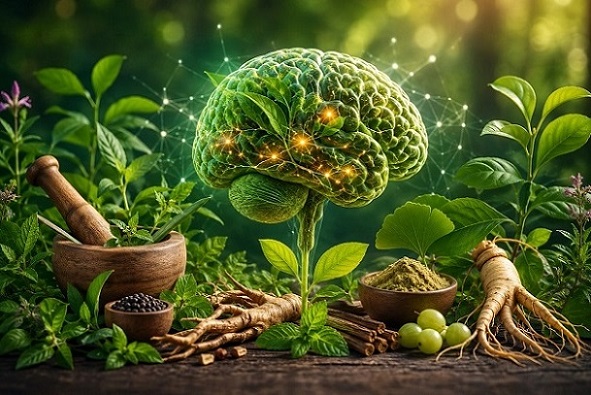 Researchers find that several medicinal herbs may help protect the brain, support memory, and influence the
gut-brain connection involved in cognitive health
The research was conducted by scientists from the Department of Pathology, College of Korean Medicine, Kyung Hee University, Seoul, Republic of Korea; the Department of Pharmacy, Northern University Bangladesh, Dhaka, Bangladesh; the Department of Microbiology, Quaid-i-Azam University, Islamabad, Pakistan; and the Korean Medicine-Based Drug Repositioning Cancer Research Center, College of Korean Medicine, Kyung Hee University, Seoul, Republic of Korea.
Why Cognitive Disorders Are Becoming a Global Crisis
The number of people suffering from cognitive disorders is growing rapidly as populations age. Dementia alone currently affects tens of millions of people globally, and experts expect that figure to more than double in the coming decades.
Conditions such as Alzheimer’s disease, Parkinson’s disease, schizophrenia, depression, vascular dementia, and mild cognitive impairment are all linked to disruptions in brain communication systems. These disorders can cause memory loss, difficulty concentrating, impaired decision-making, mood changes, and reduced quality of life.
Scientists now understand that cognitive decline is not caused by a single factor. Instead, it results from a combination of oxidative stress, chronic inflammation, mitochondrial dysfunction, damaged nerve connections, blood-brain barrier disruption, metabolic disturbances, and changes in gut bacteria.
How Herbs May Protect the Brain
The review highlights several medicinal plants that have shown potential benefits in laboratory studies and selected human trials. Among the most studied are Bacopa monnieri, Withania somnifera (Ashwagandha), Ginkgo biloba, Panax ginseng, Glycyrrhiza glabra, and Moringa oleifera.
Researchers found that these herbs may help protect brain cells through several mechanisms. They can reduce harmful oxidative stress, calm inflammation, improve blood circulation to the brain, support energy production inside cells, and help maintain healthy neurotransmitter activity.
Neurotransmitters are chemical messengers that allow brain cells to communicate. When these signaling systems become disrupted, memory and thinking abilities can deteriorate.
Targeting the Brain's Key Chemical Messengers
One of the most important findings discussed in the review involves the ability of herbal compounds to influence major neurotransmitters.
In Alzheimer’s disease, declining levels of acetylcholine contribute s
ignificantly to memory problems. Certain herbal compounds appear capable of slowing the breakdown of this neurotransmitter, potentially helping maintain cognitive function.
In Parkinson’s disease, loss of dopamine-producing neurons leads to movement difficulties and cognitive impairment. Herbal compounds such as curcumin, resveratrol, green tea polyphenols, and Mucuna pruriens may help reduce oxidative damage while supporting dopamine-related pathways.
The review also examined serotonin, glutamate, and GABA, neurotransmitters involved in mood regulation, learning, memory, and emotional processing. Herbal compounds may help restore balance in these systems, potentially benefiting people with depression, schizophrenia, and other neurological disorders.
The Surprising Role of the Gut-Brain Connection
One of the most fascinating aspects of the review is its focus on the gut-brain axis. Scientists are increasingly discovering that bacteria living in the digestive tract can directly influence brain health.
Healthy gut microbes help produce important substances that regulate inflammation, support neurotransmitter production, and maintain the integrity of the blood-brain barrier. When the gut microbiome becomes imbalanced, it may contribute to neurodegenerative diseases and cognitive decline.
This
Medical News report highlights that several herbal compounds appear capable of improving gut microbial balance, increasing beneficial bacterial populations, and reducing inflammatory signals that can damage brain tissue.
New Technologies Could Improve Herbal Treatments
The researchers also noted that modern delivery systems such as nanoparticles and phytosomes may significantly improve the absorption and brain-targeting abilities of herbal compounds. These technologies could help overcome one of the biggest challenges facing herbal medicine: poor bioavailability.
Conclusions
The review presents growing evidence that herbal medicines may offer valuable support for maintaining memory, protecting neurons, and slowing some of the biological processes linked to cognitive decline. What makes these natural compounds especially interesting is their ability to target multiple disease mechanisms simultaneously rather than focusing on a single pathway. However, the researchers caution that current human studies remain limited, often involving small participant groups and varying treatment methods. While the findings are encouraging, larger and better-designed clinical trials are still needed before herbal neurotherapeutics can be widely recommended as standard treatments for Alzheimer’s disease, Parkinson’s disease, dementia, depression, and related cognitive disorders.
The study findings were published in the peer reviewed journal: Nutrients.
https://www.mdpi.com/2072-6643/18/11/1796
For the latest on preventing or treating memory loss, keep on logging to Thailand
Medical News.
Read Also:
https://www.thailandmedical.news/articles/herbs-and-phytochemicals
https://www.thailandmedical.news/articles/alzheimer,-dementia-




 Share
Share
 Tweet
Tweet
 Share
Share

































