Nikhil Prasad Fact checked by:Thailand Medical News Team Jul 16, 2026 1 month, 2 weeks, 3 days, 12 hours, 35 minutes ago
Medical News: A new study has uncovered a previously overlooked biological feature of Long COVID that could eventually pave the way for new treatment strategies. Researchers have discovered that people suffering from Long COVID carry unusually high numbers of tiny sugar-coated particles in their blood, offering fresh clues about why symptoms persist long after the initial coronavirus infection has resolved.
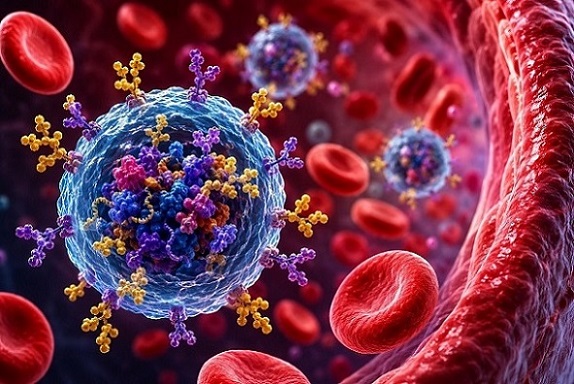 Researchers identify unusual mannose-coated blood vesicles that could become future diagnostic
markers and treatment targets for Long COVID
The research was conducted by scientists from Aethlon Medical, Inc. in San Diego, California, and the Department of Medicine at the University of California, San Francisco (UCSF). Their findings suggest these microscopic blood particles may become both valuable biomarkers for Long COVID and potential therapeutic targets.
Tiny Blood Messengers Under the Spotlight
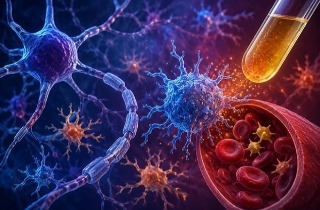
The study focused on extracellular vesicles, tiny membrane-bound particles released by nearly every cell in the body. These vesicles function as biological messengers, transporting proteins, genetic material, fats and other molecules between cells to regulate immune responses, inflammation and tissue repair.
Scientists have increasingly suspected that extracellular vesicles contribute to Long COVID because previous research has shown they can carry fragments of the SARS-CoV-2 virus, including spike proteins, as well as inflammatory molecules capable of affecting distant tissues.
In the latest investigation, researchers wanted to determine whether these vesicles undergo chemical changes in people with Long COVID that distinguish them from those found in individuals who have fully recovered from COVID-19.
An Unusual Sugar Signature Emerges
The team analyzed blood plasma samples collected from 45 participants enrolled in UCSF's Long-term Impact of Infection with Novel Coronavirus (LIINC) study. The participants included 15 people who had completely recovered from COVID-19, 15 individuals with Long COVID, and another 15 Long COVID patients experiencing neurological symptoms such as brain fog, dizziness and headaches.
While the overall numbers of extracellular vesicles varied considerably between individuals, one consistent pattern stood out.
Large extracellular vesicles carrying unusually high amounts of mannose—a naturally occurring sugar molecule attached to proteins—were found at roughly twice the levels in Long COVID patients compared with recovered individuals.
This increase was statistically significant and represents one of the first demonstrations that altered sugar coating, known scientifically as glycosylation, may be a defining biological feature of Long COVID.
Interestingly, researchers also observed that relationships between large and small extracellular vesicles differed in Long COVID patients, suggesting that the disease may alter the normal balance of these cellular communication systems.
Capturing Harmful Vesicles
To determine whether t
hese abnormal vesicles could be selectively removed, the researchers tested a naturally occurring protein called Galanthus nivalis agglutinin (GNA), which specifically binds to mannose molecules.
Using a GNA affinity resin, they demonstrated that many of the small extracellular vesicles could be captured from blood plasma. Moreover, the amount of vesicles captured closely correlated with the abundance of mannose-rich vesicles present in Long COVID patients.
This
Medical News report highlights an important implication of the findings. Rather than merely identifying a biological marker, the study suggests that these abnormal vesicles may be physically removable using specialized blood filtration technology.
The same GNA affinity resin is already incorporated into the Aethlon Hemopurifier, an investigational extracorporeal blood purification device previously studied for removing viruses, extracellular vesicles and other disease-related circulating particles.
Seven Key Genetic Regulators Were Reduced
The investigators also examined microRNAs—tiny molecules that regulate how genes are switched on and off.
Among 827 human microRNAs analyzed, 358 were detected in measurable amounts. After treatment with the GNA affinity resin, seven microRNAs were significantly reduced, indicating that they were associated with the captured material.
The affected microRNAs included miR-374a-5p, miR-640, miR-301b-3p, miR-1272, miR-3613-3p, miR-4531 and miR-874-3p.
Computer-based analyses suggested these changes could influence several important biological pathways, including JAK-STAT, VEGF, PI3K, MAPK, NF-kB, TNF-alpha, and estrogen signaling. These pathways are involved in immune regulation, inflammation, blood vessel function, tissue repair and cellular communication—all biological systems that have been implicated in Long COVID.
Although these pathway predictions require further experimental confirmation, they provide valuable clues about how abnormal extracellular vesicles might contribute to persistent symptoms.
Why the Findings Matter
The researchers caution that this was an exploratory pilot study involving a relatively small number of participants. The study does not prove that the sugar-coated vesicles directly cause Long COVID, nor does it demonstrate that removing them will improve patient outcomes.
However, the findings establish that people with Long COVID possess a distinct population of mannose-rich extracellular vesicles that can be selectively targeted using GNA affinity technology. Future studies will investigate exactly what these vesicles carry, including viral remnants, inflammatory proteins, immune molecules or other disease-driving cargo that may help explain persistent symptoms.
Conclusion
This study provides compelling new evidence that Long COVID is associated with a distinctive population of abnormal sugar-coated extracellular vesicles circulating in the bloodstream. Their increased abundance, combined with the ability to selectively capture them using mannose-binding technology, opens an intriguing new avenue for both diagnostics and treatment research. While much larger clinical studies are still needed, these findings strengthen the growing evidence that persistent biological abnormalities continue long after the initial infection and may eventually be targeted through innovative blood purification strategies.
The study findings were published in the peer reviewed International Journal of Molecular Sciences.
https://www.mdpi.com/1422-0067/27/13/5723
For the latest news, keep on logging to Thailand
Medical News.
Read Also:
https://www.thailandmedical.news/articles/long-covid
https://www.thailandmedical.news/articles/coronavirus




 Share
Share
 Tweet
Tweet
 Share
Share