Nikhil Prasad Fact checked by:Thailand Medical News Team Jun 12, 2026 3 months, 3 weeks, 1 day, 10 hours, 2 minutes ago
Medical News: Millions of people worldwide suffer from corneal blindness, a condition that can severely impair vision and quality of life. While corneal transplantation has long been the standard treatment, a growing shortage of donor tissue and the risk of transplant failure have pushed scientists to search for better alternatives. Now, researchers are increasingly turning to induced pluripotent stem cells (iPSCs), a powerful technology that could revolutionize the way damaged corneas are repaired and restored.
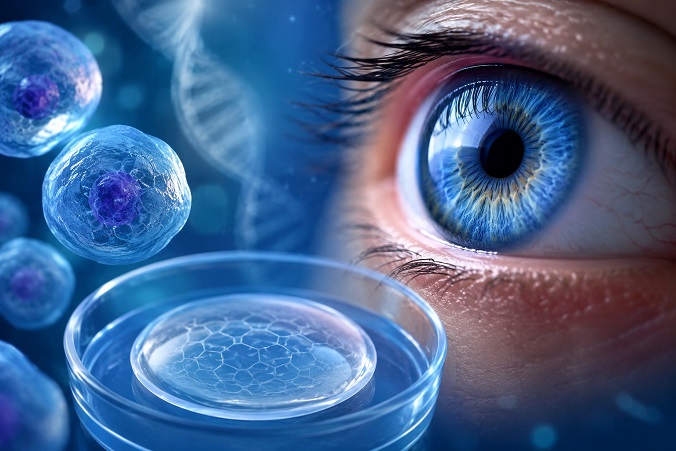 Scientists are developing stem-cell-based corneal therapies that may one day restore vision without the need for donor corneal transplants
The research was conducted by scientists from the Singapore National Eye Centre, Singapore, including Tareq S. Al-Amarat and Professor Jodhbir S. Mehta.
Why Corneal Blindness Is Such a Major Problem
The cornea is the clear front surface of the eye that helps focus light and is responsible for about two-thirds of the eye’s optical power. Even small injuries or diseases affecting the cornea can cause significant vision loss.
Corneal damage can result from infections, injuries, chemical burns, inherited disorders, autoimmune diseases, and limbal stem cell deficiency (LSCD). In many cases, patients eventually require a corneal transplant. Unfortunately, donor corneas remain in short supply globally, and even successful transplants can fail over time due to immune rejection, cell loss, or other complications.
Turning Ordinary Cells into Vision-Saving Cells
Induced pluripotent stem cells are created by reprogramming ordinary adult cells, such as skin cells, back into a stem-cell-like state. These cells can then be transformed into many different cell types found in the body.
Researchers have successfully developed methods to convert iPSCs into the three major cell types needed for corneal repair: corneal epithelial cells, stromal keratocyte cells, and corneal endothelial cells.
This means scientists may eventually be able to create replacement corneal tissue without relying on donor eyes.
Encouraging Results in Laboratory and Animal Studies
One of the most exciting developments involves creating corneal epithelial cell sheets from iPSCs. These engineered tissues have successfully restored damaged eye surfaces in animal models. Researchers observed improved healing, better tissue organization, and reduced abnormal blood vessel growth.
Studies involving non-human primates showed particularly promising results. Transplanted stem-cell-derived epithelial sheets remained stable for long periods and restored the normal structure of the eye surface without causing tumor formation.
Scientists have also developed iPSC-derived endothelial cells, which are especially important because endothelial dysfunction is one of the leading causes of corneal transplantation worldwide. In animal studies, these cells reduced corneal swelling, restored transparency, and improved the eye’s ability to maintain proper hydration.
Meanwhile, strom
al regeneration has shown progress but remains more challenging. The corneal stroma contains highly organized collagen fibers that are essential for transparency. Although researchers have successfully produced keratocyte-like cells, rebuilding the complex architecture of the stroma remains a significant hurdle.
Early Human Trials Deliver Hope
The most advanced clinical work has been conducted in Japan, where researchers tested iPSC-derived corneal epithelial sheets in patients suffering from severe bilateral LSCD.
Patients experienced improved vision, healthier corneal surfaces, reduced blood vessel invasion, and stable epithelial coverage for up to two years after treatment. Importantly, no serious safety issues or tumor formation were reported during the follow-up period.
This
Medical News report notes that scientists have also begun testing iPSC-derived corneal endothelial therapies in human patients. Early results showed reduced corneal swelling and improved visual function, although researchers emphasize that much larger studies are still needed.
Major Challenges Still Remain
Despite the remarkable progress, several obstacles continue to slow clinical adoption.
One concern is tumor risk if any undifferentiated stem cells remain in the final product. Another challenge is genomic instability, where genetic changes may develop during laboratory expansion of the cells. Researchers have already identified unexpected genetic alterations in some experimental cell products, highlighting the need for strict safety monitoring.
Manufacturing these therapies is also expensive and technically complex. Large-scale production, quality control, regulatory approval, and long-term monitoring will all be required before such treatments become widely available.
Conclusions
The field of iPSC-based corneal regeneration has advanced from a theoretical concept into a realistic therapeutic possibility. Researchers have demonstrated that these stem cells can generate multiple corneal cell types capable of repairing damaged eye tissue and restoring important visual functions. Early clinical trials have produced encouraging safety and efficacy results, particularly for patients with limbal stem cell deficiency and endothelial disorders. However, significant challenges involving safety, genetic stability, manufacturing consistency, long-term durability, and regulatory oversight still need to be resolved. If ongoing studies continue to produce positive outcomes, iPSC-derived therapies could eventually reduce dependence on donor corneas and transform the treatment of corneal blindness, offering new hope to millions of patients around the world.
The study findings were published in the peer reviewed journal: Biomedicines.
https://www.mdpi.com/2227-9059/14/6/1323
For the latest research on stem cells, keep on logging to Thailand
Medical News.




 Share
Share
 Tweet
Tweet
 Share
Share

































