Nikhil Prasad Fact checked by:Thailand Medical News Team Mar 03, 2026 7 months, 20 hours, 52 minutes ago
Medical News: Researchers from Noivita Srls, Spin Off University of Piemonte Orientale in Novara, Italy, and the Department for Sustainable Development and Ecological Transition, University of Piemonte Orientale (UPO) in Vercelli, Italy, have unveiled compelling new findings showing that combining mulberry leaf, bilberry, and black currant extracts may significantly improve the body’s ability to regulate blood sugar. Their laboratory-based study explored how these plant extracts work together across the intestine, pancreas, and liver—three organs central to glucose control.
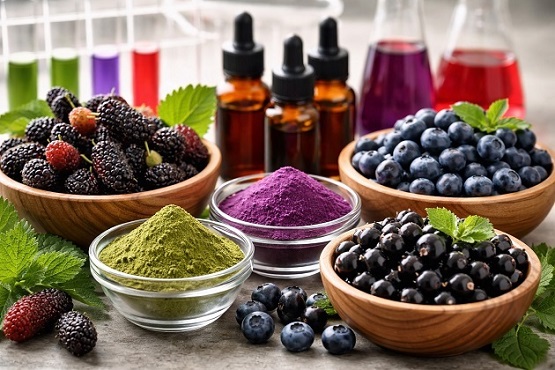 A new lab study finds that combining mulberry, bilberry, and black currant extracts may significantly
enhance insulin production and improve liver glucose handling.
Strengthening the Gut Barrier First
The research team began by examining how the extracts behaved in intestinal cells. The gut is the first gateway for sugar entering the bloodstream after a meal. If this barrier becomes weak or inflamed, excessive glucose can flood the system.
The combined extract not only preserved the integrity of the intestinal lining but actually strengthened it. Measurements of key tight-junction proteins such as claudin-1, occludin, and ZO-1 showed notable increases, indicating a tighter and healthier gut barrier. Electrical resistance testing confirmed this improvement. At the same time, oxidative stress in intestinal cells was reduced, suggesting the blend helps protect the gut from metabolic damage.
Better Insulin Production in the Pancreas
After passing the intestinal stage, the study moved to pancreatic beta cells—the cells responsible for producing insulin. Individually, the extracts showed mild benefits. However, when combined, their effects were significantly amplified.
The mixture improved pancreatic cell survival and reduced harmful reactive oxygen species. Most importantly, insulin production rose dramatically compared to single extracts. C-peptide levels, another marker of insulin secretion, also increased sharply, confirming that the pancreas was genuinely producing more insulin rather than merely releasing stored hormone.
The blend also boosted glucokinase levels. This enzyme acts like a glucose sensor inside beta cells. Higher glucokinase levels suggest the pancreas became more efficient at detecting rising blood sugar and responding appropriately.
Improved Liver Response to Insulin
The liver plays a crucial role in deciding whether glucose is stored or released into circulation. Under high-sugar conditions, liver cells treated with the combined extracts showed striking improvements.
Key insulin-signaling proteins, including IRS1, AKT, and AMPK, were significantly activated. GLUT2, the transporter that allows glucose to enter liver cells, also increased. As a result, glucose uptake rose sharply, glycogen storage increased, and excess glucose levels in the surrounding environment dropped back toward normal ranges.
This coordinated activation of multiple pathways suggests the combination does more than target one weak link—it appears to restore balance across the entire glucose-control syst
em.
Why the Combination Matters
According to this
Medical News report, the most important finding was synergy. While each extract contains beneficial plant compounds—such as 1-deoxynojirimycin in mulberry and anthocyanins in bilberry and black currant—the real power emerged when they were used together. Statistical analyses confirmed that the combined effects exceeded what would be expected if each ingredient simply worked alone.
Conclusion
The study demonstrates that a carefully formulated combination of mulberry leaf, bilberry, and black currant extracts can influence glucose metabolism at multiple levels—strengthening the intestinal barrier, enhancing pancreatic insulin secretion, and improving liver insulin signaling. Although these findings are based on laboratory models and not yet human trials, they provide strong mechanistic evidence that multi-targeted nutraceutical formulations may offer meaningful support for glycaemic regulation. Future clinical studies will be essential to confirm whether these promising results translate into real-world benefits for individuals struggling with blood sugar imbalances.
The study findings were published in the peer reviewed journal: Nutrients.
https://www.mdpi.com/2072-6643/18/5/811
For the latest on Herbs and Phytochemicals and Diabetes, keep on logging to Thailand
Medical News.
Read Also:
https://www.thailandmedical.news/articles/herbs-and-phytochemicals
https://www.thailandmedical.news/articles/diabetes
Medical Disclaimer: All content published by Thailand Medical News is based on scientific research and is intended for informational and educational purposes only. It is not medical advice, diagnosis, or treatment. Readers must not attempt to use, apply, or experiment with any protocols, compounds, or therapies mentioned without first consulting a qualified and licensed medical doctor. Many findings discussed are experimental or preliminary, and only a licensed healthcare professional can determine what is safe and appropriate for an individual’s specific medical condition.




 Share
Share
 Tweet
Tweet
 Share
Share

































