Nikhil Prasad Fact checked by:Thailand Medical News Team Mar 30, 2026 4 months, 2 weeks, 6 days, 15 hours, 34 minutes ago
Medical News: A New Strategy for a Difficult Cancer
Triple-negative breast cancer (TNBC) is one of the most aggressive and difficult-to-treat forms of breast cancer. Unlike other types, it lacks key receptors that targeted therapies depend on, leaving chemotherapy drugs such as doxorubicin as the main treatment option. However, many patients eventually develop resistance to these drugs, reducing their effectiveness and limiting long-term outcomes.
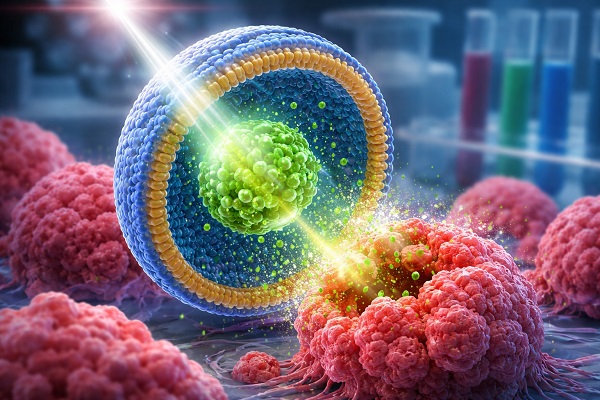 Liposome technology boosts natural compound activity to target and weaken resistant breast cancer cells
Researchers from the University of Oradea, the “Iuliu Hațieganu” University of Medicine and Pharmacy in Cluj-Napoca, the Oncological Institute “Prof. Dr. I. Chiricuță” in Cluj-Napoca, the Doctoral School of Biomedical Sciences at the University of Oradea, and the National Institute for Research and Development in Electrochemistry and Condensed Matter in Timișoara explored a new way to improve treatment results using a natural compound combined with modern delivery technology.
Transforming a Natural Compound into a Targeted Therapy
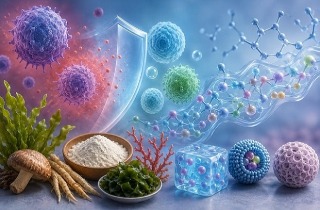
Caffeic acid is a plant-derived antioxidant known for its anti-inflammatory and anticancer properties. Despite its potential, its direct use in cancer treatment has been limited due to instability and poor delivery to tumor cells.
To address this, scientists encapsulated caffeic acid into liposomes, which are tiny fat-based particles capable of transporting active substances directly into cells. These liposomes were found to be highly stable and capable of holding large amounts of the compound while releasing it gradually over time. This sustained release improves the compound’s effectiveness and allows it to remain active longer within the cellular environment.
Laboratory Findings Reveal Strong Anti-Cancer Effects
The research team tested the liposomal caffeic acid on two types of TNBC cells: standard cells and cells that had developed resistance to doxorubicin. The results showed a significant reduction in cancer cell viability, particularly at higher concentrations.
Importantly, the treatment triggered apoptosis, a natural process that causes cancer cells to self-destruct. The liposomal formulation demonstrated effects comparable to doxorubicin in some cases, indicating its strong therapeutic potential.
Different Effects in Sensitive and Resistant Cells
One of the most interesting findings was the dual behavior of the treatment. In standard cancer cells, caffeic acid appeared to reduce excessive damage caused by chemotherapy, suggesting a protective effect. In contrast, in doxorubicin-resistant cells, the same treatment enhanced cancer cell death.
This
Medical News report highlights how this selective action could play a critical role in future therapies. It suggests that the compound may help protect normal or less aggressive cells while specifically targeting resistant cancer cells
, improving overall treatment balance.
Disrupting Cancer Survival Mechanisms
Further analysis revealed that the treatment affected important molecular pathways involved in cancer survival. In resistant cells, the liposomal caffeic acid reduced the activity of NRF2 and STAT3 proteins, both of which are known to promote tumor growth and resistance to therapy.
The treatment also increased oxidative stress within cancer cells and caused damage to their membranes, further weakening their ability to survive. These combined effects make the cancer cells more vulnerable to chemotherapy.
Controlled Release Improves Effectiveness
Another key advantage of the liposomal system was its controlled release profile. The compound was released gradually over time, maintaining its presence and activity within the cells. This avoids rapid breakdown and ensures a more consistent therapeutic effect.
Such controlled delivery systems are increasingly being recognized as essential tools in modern oncology, especially for improving the performance of natural compounds.
Conclusion
The study demonstrates that liposomal caffeic acid can significantly enhance the effectiveness of chemotherapy, particularly in drug-resistant breast cancer cells.
By targeting survival pathways, increasing cancer cell death, and offering controlled drug delivery, this approach represents a promising step toward more precise and less toxic cancer treatments. These findings support further research into combining natural compounds with advanced delivery systems to overcome resistance and improve patient outcomes.
The study findings were published in the peer reviewed journal: Antioxidants.
https://www.mdpi.com/2076-3921/15/4/424
For the latest on Breast Cancer, keep on logging to Thailand
Medical News.
Read Also:
https://www.thailandmedical.news/articles/cancer
https://www.thailandmedical.news/articles/herbs-and-phytochemicals




 Share
Share
 Tweet
Tweet
 Share
Share