Nikhil Prasad Fact checked by:Thailand Medical News Team Apr 21, 2026 5 months, 1 week, 6 days, 4 hours, 32 minutes ago
Medical News: A growing body of research is shedding new light on how tiny proteins in the brain can both protect and harm nerve cells, depending on the situation. These proteins, known as connexins, are now being closely studied for their role in stroke, brain injuries, neurodegenerative diseases, and even psychiatric conditions. Scientists believe that understanding this delicate balance could open the door to new treatments for some of the most challenging neurological disorders.
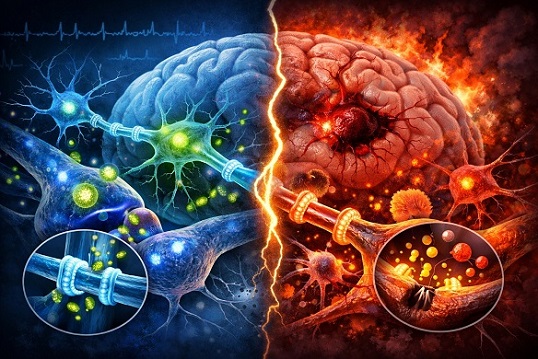 Tiny brain channels can both heal and harm, shaping the future of neurological treatments
What Are Connexins and Why They Matter
Tiny brain channels can both heal and harm, shaping the future of neurological treatments
What Are Connexins and Why They Matter
Connexins are special proteins that sit in the membranes of brain cells and act like communication channels. They form structures called gap junctions and hemichannels, allowing cells to exchange important signals, nutrients, and ions. This communication is essential for keeping the brain functioning normally.
However, when the brain is under stress or injury, these same channels can behave very differently. According to findings detailed, connexins - especially one type called Cx43 - can switch from being helpful to harmful. Under normal conditions, they support brain stability and repair. But during disease or injury, they can trigger inflammation and cell death.
The Dangerous Shift During Brain Injury
In conditions like stroke or traumatic brain injury, connexins become overactive. This leads to the release of harmful substances such as glutamate and ATP, which can overstimulate neurons and cause further damage. The study shows that this overactivation can worsen swelling, disrupt the blood–brain barrier, and accelerate the death of brain cells.
Interestingly, blocking specific connexin channels in experimental models has been shown to reduce brain damage and improve recovery outcomes. This suggests that targeted therapies could potentially limit the harmful effects while preserving the beneficial ones.
Different Connexins Play Different Roles
Not all connexins behave the same way. For example, Cx43 is mainly found in support cells called astrocytes and plays a major role in inflammation and injury response. Meanwhile, Cx36 is more involved in neuron-to-neuron signaling and has been linked to seizures and abnormal brain activity.
Other types, such as Cx32 and Cx47, are important for maintaining the protective coating around nerve fibers. When these are disrupted, it can lead to problems like demyelination, which is seen in several neurodegenerative diseases.
Impact on Neurodegenerative and Mental Disorders
The research also highlights how connexin dysfunction is involved in long-term brain diseases like Alzheimer’s, Parkinson’s, and ALS. In these conditions, abnormal connexin activity contributes to chronic inflammation and the buildup of toxic proteins in the brain.
In psychiatric disorders such as depression and schizophrenia, reduced levels of certain connexins have been linked to impaired communication between brain cells. This disruption may play a role in mood regulation and cognitive function.&l
t;br />
New Hope for Future Treatments
This
Medical News report highlights that scientists are now exploring drugs that can selectively block harmful connexin activity without interfering with their normal protective roles. Early studies show promising results, particularly in reducing inflammation and improving recovery after stroke.
Researchers emphasize that timing is crucial. Since connexins can be both helpful and harmful, treatments must be carefully designed to target the right phase of disease progression.
Conclusion
Connexins represent one of the most intriguing paradoxes in modern neuroscience. They are essential for brain health, yet capable of driving severe damage when dysregulated. The ability to fine-tune their activity could transform how doctors treat stroke, brain injuries, and neurodegenerative diseases. While more research is needed, the current findings provide strong evidence that connexins could become a powerful target for next-generation neurological therapies, offering hope to millions affected by these conditions.
The study findings were published in the peer reviewed journal: Molecules.
https://www.mdpi.com/1420-3049/31/8/1341
For the latest research on brain disorders, keep on logging to Thailand
Medical News.
Read Also:
https://www.thailandmedical.news/articles/alzheimer,-dementia-




 Share
Share
 Tweet
Tweet
 Share
Share

































