Nikhil Prasad Fact checked by:Thailand Medical News Team Jul 06, 2026 1 month, 3 weeks, 6 days, 13 hours, 31 minutes ago
Medical News: For decades, scientists have believed that the immune system’s memory is one of its greatest strengths. However, a new review suggests that this same memory may sometimes work against us, especially when battling rapidly changing RNA viruses such as influenza, SARS-CoV-2, and dengue virus. Instead of mounting the best possible defense against a new viral variant, the immune system often falls back on older immune responses, reducing its ability to recognize important new mutations.
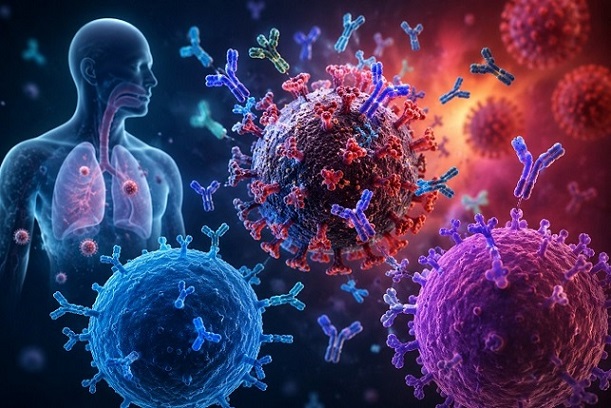 Scientists reveal how immune memory can sometimes help rapidly mutating viruses evade newer, more
effective immune defenses
The review was conducted by researchers from Dali University, the Yunnan Key Laboratory of Screening and Research on Anti-Pathogenic Plant Resources from Western Yunnan, the School of Public Health at Dali University, and Fudan University’s Shanghai Institute of Infectious Disease and Biosecurity and Key Laboratory of Medical Molecular Virology in China.
Why the Immune System Can Make the Wrong Choice
The phenomenon, known as immunological imprinting, occurs because the immune system prefers to reactivate memory B cells created during earlier infections or vaccinations instead of generating fresh immune cells tailored to a newly evolved virus.
RNA viruses mutate quickly, producing new variants that can escape existing immunity. While memory B cells respond within a few days, newly activated naïve B cells require about a week to develop. Because the memory cells react first, they dominate the immune response and consume most of the available immune resources. As a result, the body produces large amounts of antibodies aimed at older viral features instead of the newest mutations that may be driving infection.
How Older Antibodies Can Block Better Protection
The review explains that antibodies produced from previous infections may physically cover important parts of new viruses. This "epitope masking" prevents naïve B cells from recognizing newly mutated viral targets and limits the production of highly effective neutralizing antibodies.
Researchers also describe how immune activity inside germinal centers—specialized structures in lymph nodes where antibodies mature—becomes biased toward existing memory cells. These cells often stop further antibody improvement because they already bind well to familiar viral regions, even if those regions are no longer the most important targets on newer variants.
This
Medical News report highlights that the immune system is not malfunctioning. Instead, it is following an evolutionary strategy designed to provide rapid protection, but that strategy becomes less effective when viruses evolve faster than immune memory can adapt.
Influenza, COVID-19 and Dengue Show the Same Pattern
The review presents evidence that influenza provides the clearest example of immunological imprinting. A person's first in
fluenza infection during childhood can shape immune responses for decades. While this sometimes offers protection against related viruses, it can also reduce the effectiveness of vaccines and immunity against newer strains.
The same problem has emerged with SARS-CoV-2. People vaccinated or infected with the original strain often produce antibodies that still strongly recognize the original virus after encountering Omicron variants, while generating relatively weak responses against Omicron-specific mutations. This may partly explain why protection against reinfection declines as the virus continues to evolve.
Dengue virus presents an even greater concern. Because it has four major serotypes, antibodies produced after one infection may fail to neutralize another serotype. Instead, they can actually help the virus enter immune cells through a process known as antibody-dependent enhancement, increasing the risk of severe disease.
New Strategies Could Overcome the Problem
Researchers believe future vaccines can be redesigned to reduce immunological imprinting. Proposed approaches include masking older viral targets, directing immune responses toward newly mutated regions, using heterologous vaccination strategies that combine different vaccine platforms, extending booster intervals, employing stronger modern adjuvants, and designing multivalent vaccines that stimulate broader immunity.
Artificial intelligence is also expected to play an important role by predicting viral evolution and helping scientists design vaccine antigens that avoid triggering outdated immune responses while encouraging broader neutralizing antibodies.
Conclusion
The review shows that immune memory remains essential for protecting people from severe disease, but it can also limit protection against rapidly evolving viruses. Understanding exactly how immunological imprinting develops gives researchers valuable opportunities to improve future vaccines that generate stronger, broader, and longer-lasting protection against influenza, COVID-19, dengue, and other emerging RNA viruses while reducing the chances that viruses will continue escaping existing immunity.
The study findings were published in the peer reviewed journal: Viruses.
https://www.mdpi.com/1999-4915/18/7/745
For the latest on Immunology, keep on logging to Thailand
Medical News.
Read Also:
https://www.thailandmedical.news/articles/immunology




 Share
Share
 Tweet
Tweet
 Share
Share