Nikhil Prasad Fact checked by:Thailand Medical News Team Mar 27, 2026 5 months, 6 days, 19 hours, 11 minutes ago
Medical News: Natural Compound May Weaken Cancer Defenses
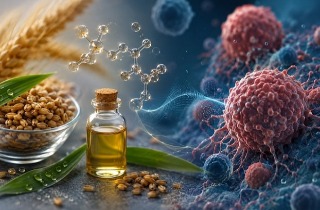
A new scientific study has revealed that a widely available antioxidant called alpha-lipoic acid (ALA) could help improve the body’s ability to fight prostate cancer. Researchers discovered that this compound can interfere with a key survival mechanism used by cancer cells, potentially making them easier targets for the immune system.
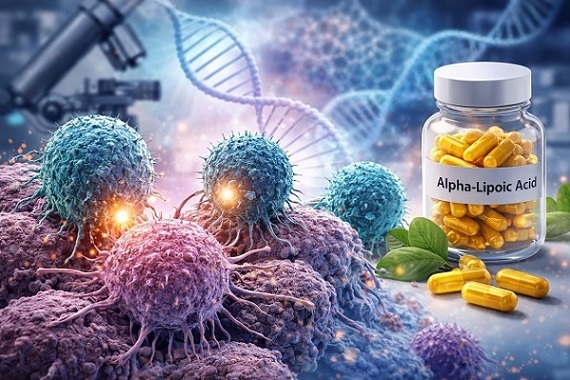 A common antioxidant may help the immune system better detect and destroy prostate cancer cells
Prostate cancer cells often protect themselves using a protein known as PD-L1. This protein acts like a shield, allowing tumors to hide from immune cells and continue growing unchecked. However, scientists have now found that ALA can significantly reduce the levels of this protein, opening the door for stronger immune responses against cancer.
Study Conducted by Leading Research Institutions
The research was conducted by scientists from Taipei Tzu Chi Hospital, Buddhist Tzu Chi Medical Foundation in New Taipei City, Cathay Medical Research Institute at Cathay General Hospital, National Chung Hsing University in Taichung, Academia Sinica in Taipei, National Defense Medical University in Taipei, and China Medical University Hospital in Taichung.
In the study that is covered by this
Medical News report, the team used advanced prostate cancer cells in laboratory experiments to understand how ALA affects tumor behavior. These types of cancer cells are known to be aggressive and often resistant to current treatments, making them ideal for testing new approaches.
Key Finding: Reducing PD-L1 at Its Source
One of the most important discoveries was that ALA reduces PD-L1 production at the genetic level. Instead of simply breaking down the protein after it forms, ALA prevents cancer cells from making it in the first place.
The researchers found that ALA blocks several internal signaling pathways that normally trigger PD-L1 production. These include the JAK1/STAT1/IRF-1 pathway, along with cancer-related regulators such as c-Myc and HIF-1α. By shutting down these pathways, ALA effectively removes the cancer cell’s ability to hide from immune attacks.
Enhanced Immune Cell Activity Against Tumors
Another major finding was that ALA improves the ability of immune cells to kill cancer cells. In controlled lab experiments, immune cells were more effective at destroying prostate cancer cells when ALA was present.
This suggests that ALA could work alongside existing immunotherapy treatments by boosting their effectiveness. By lowering PD-L1 levels, the compound allows immune cells to better recognize and attack tumors.
Additional Mechanisms Strengthening Its Effects
The study also showed that ALA reduces harmful molecules called reactive oxygen species (ROS), which are known to promote cancer growth and increase PD-L1 levels. By lowering ROS, ALA further weakens cancer
cell defenses.
In addition, ALA was found to interfere with a key cellular system known as the mTOR pathway. This pathway controls how cells produce proteins, including those involved in cancer survival. By disrupting this process, ALA reduces the overall ability of cancer cells to grow and resist treatment.
Implications for Future Cancer Treatments
Current immunotherapy treatments are not effective for all patients, and many cancers develop resistance over time. This study suggests that adding a safe and widely available compound like ALA could improve treatment outcomes by making cancer cells more vulnerable.
Because ALA is already used as a dietary supplement and is generally considered safe, it may offer a practical and affordable addition to existing therapies. However, further studies in humans are needed before it can be widely recommended for cancer treatment.
Conclusion
The findings from this study highlight the promising role of alpha-lipoic acid as a supportive therapy in prostate cancer treatment. By targeting multiple pathways, reducing PD-L1 levels, and enhancing immune cell activity, ALA offers a multi-layered approach to weakening cancer defenses. While more research is required, this discovery could lead to improved treatment strategies and better outcomes for patients facing aggressive forms of prostate cancer.
The study findings were published in the peer reviewed journal: Antioxidants.
https://www.mdpi.com/2076-3921/15/4/413
For the latest on prostate cancer, keep on logging to Thailand
Medical News.
Read Also:
https://www.thailandmedical.news/articles/cancer




 Share
Share
 Tweet
Tweet
 Share
Share