Pelargonium Sidoides Extract Emerges as A Powerful Natural Weapon Against Influenza Viruses Including H1N1 and H3N2
Nikhil Prasad Fact checked by:Thailand Medical News Team Dec 12, 2025 9 months, 3 weeks, 1 day, 18 hours, 14 minutes ago
Medical News: A growing body of scientific evidence is placing renewed focus on Pelargonium sidoides, a medicinal plant native to southern Africa that has been traditionally used for treating respiratory ailments for well over a century. In modern medicine, attention has centered on a standardized root extract known as EPs 7630, which is already widely prescribed or sold over the counter in many countries for bronchitis, sinus infections, and upper respiratory tract illnesses. Increasingly, laboratory and immune-focused studies now suggest that this plant extract may also help prevent and treat influenza infections by interfering with viral entry while simultaneously strengthening the body’s early immune defenses.
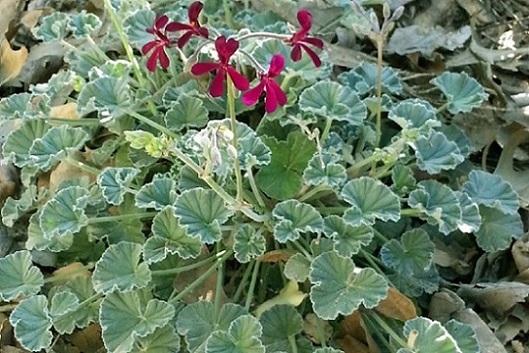 Pelargonium Sidoides Extract Emerges as A Powerful Natural Weapon Against Influenza Viruses
Including H1N1 and H3N2
Understanding How Influenza Infects the Airways
Influenza viruses initiate infection by attaching themselves to the cells lining the nose, throat, and lungs. This process is driven primarily by the viral surface protein hemagglutinin, which binds to receptors on human airway cells. Once inside, the virus rapidly multiplies, and another viral enzyme, neuraminidase, enables newly formed viruses to escape infected cells and spread deeper into the respiratory tract. Most existing antiviral drugs target these mechanisms, but resistance has become an increasing concern, particularly with repeated seasonal use. This has led scientists to investigate plant-based compounds that act through multiple mechanisms rather than a single molecular target.
Direct Antiviral Action of Pelargonium Sidoides
Multiple laboratory investigations have demonstrated that EPs 7630 exhibits direct antiviral activity against a wide range of influenza A strains. These include seasonal H1N1 viruses, pandemic H1N1 variants, oseltamivir-resistant strains, and H3N2 subtypes that commonly circulate during severe flu seasons. Crucially, these effects were observed at concentrations that were not toxic to human cells, suggesting that the extract does not simply suppress viral activity by harming host tissue.
Detailed mechanistic studies indicate that the extract interferes with early stages of influenza infection. Researchers have shown that EPs 7630 can disrupt viral hemagglutination, limiting the virus’s ability to bind effectively to host cells. It also appears to impair neuraminidase-related functions, reducing viral spread once infection has begun. By targeting more than one step in the viral life cycle, the extract may reduce viral load and slow disease progression, even in strains that show reduced sensitivity to conventional antivirals.
Potential Role in Influenza Prevention
Influenza prevention relies heavily on vaccination, but vaccines do not always provide complete protection due to strain mismatches and waning immunity. Additional supportive strategies that reduce viral attachment or early replication may therefore play an important complementary role. By weakening the influenza virus’s ability to gain a foothold in the respiratory tract, Pelargonium sidoides extract may reduce the likelihood of infection following exp
osure, particularly during the earliest stages when viral numbers remain low. This
Medical News report highlights growing interest in such multi-layered preventive approaches, especially for vulnerable populations during intense flu seasons.
Immune System Modulation and Symptom Reduction
Beyond direct antiviral effects, EPs 7630 has been shown to influence the innate immune system, the body’s first line of defense against respiratory viruses. Research indicates that the extract can stimulate immune cells such as macrophages and natural killer cells, while also enhancing the production of signaling molecules involved in early antiviral responses. This immune priming may allow the body to respond more rapidly and effectively to influenza infection, potentially reducing symptom severity and shortening the duration of illness.
Importantly, Pelargonium sidoides extract appears to promote a balanced immune response rather than excessive inflammation. This distinction is critical, as severe influenza complications are often driven by uncontrolled inflammatory reactions in the lungs rather than viral replication alone.
Clinical Evidence and What Still Needs Clarification
While EPs 7630 is supported by substantial clinical data for general respiratory tract infections, large-scale trials focused specifically on laboratory-confirmed influenza remain limited. Nevertheless, the convergence of antiviral laboratory findings, immune-modulating data, and real-world respiratory outcomes suggests that Pelargonium sidoides extract may serve as a valuable supportive option. It should be viewed as complementary to vaccination and prescribed antivirals rather than a replacement for them.
As influenza continues to evolve and antiviral resistance remains a concern, interest in scientifically validated plant-based therapies is likely to grow. Pelargonium sidoides extract stands out as one of the most thoroughly studied natural compounds in this space, warranting further clinical investigation.
References:
https://www.sciencedirect.com/science/article/abs/pii/S0166354212000642
https://www.dovepress.com/pelargonium-sidoides-extract-eps-7630-a-review-of-its-clinical-efficac-peer-reviewed-fulltext-article-IJGM
https://ui.adsabs.harvard.edu/abs/2024Heliy..1040554R/abstract
https://www.blackmoresinstitute.org/news/pelargonium-sidoides-eps-7630
https://www.frontiersin.org/journals/pharmacology/articles/10.3389/fphar.2024.1455870/full
https://pmc.ncbi.nlm.nih.gov/articles/PMC12315653/
https://www.mdpi.com/1424-8247/4/10/1295
https://link.springer.com/article/10.1007/s00431-021-04211-y
https://www.mdpi.com/1660-4601/19/9/5254
https://www.cambridge.org/core/journals/expert-reviews-in-molecular-medicine/article/immunomodulatory-effects-of-pelargonium-sidoides-extract-eps7630-in-the-treatment-of-acute-rhinosinusitis/7191A9918033E26727C3FC79A1C29104
https://www.cochranelibrary.com/cdsr/doi/10.1002/14651858.CD006323.pub3/full
https://journals.plos.org/plosone/article?id=10.1371/journal.pone.0138075
For the latest on prophylactics and antivirals for Influenza, keep on logging to Thailand
Medical News.
Read Also:
https://www.thailandmedical.news/articles/influenza-or-flu




 Share
Share
 Tweet
Tweet
 Share
Share

































