Nikhil Prasad Fact checked by:Thailand Medical News Team Dec 10, 2025 8 months, 3 weeks, 2 days, 2 hours, 35 minutes ago
TCM News: Ancient Herbal Formula May Offer New Hope in Alzheimer Treatment
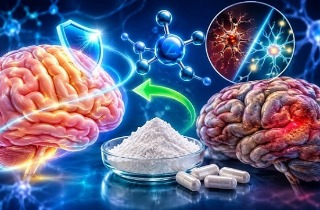
A Traditional Chinese Medicine (TCM) herbal remedy known as Mahuang Fuzi Xixin Decoction (MFXD) has shown strong potential in protecting brain cells and treating Alzheimer’s disease (AD), according to a new study by researchers from Ningxia Medical University, Shenzhen Bao’an Chinese Medicine Hospital at Guangzhou University of Chinese Medicine, and Qingdao Ruyi Software Co., Ltd.

This
TCM News report highlights how the researchers used modern science to explore how this ancient formula works, combining computer modeling, lab tests, and biological analysis to uncover the many ways MFXD may slow the damage caused by Alzheimer’s.
What Is MFXD and Why Is It Important
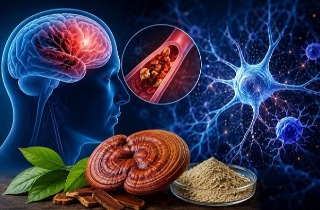
MFXD is a traditional formula dating back over 2,000 years, made from three herbs—Ephedra (Mahuang), Aconite (Fuzi), and Asarum (Xixin)—combined in a precise ratio. Each herb plays a unique role. Ephedra helps warm the body and improve energy flow, Aconite boosts kidney and yang energy, and Asarum clears channels in the body to support circulation.
Previous reports have hinted at its benefits for brain health, but this new study is one of the most detailed efforts to understand how it may fight Alzheimer’s at a molecular level.
How the Study Was Done
The research team first used specialized databases to identify 37 active compounds in MFXD that might influence brain function. From these, they pinpointed 230 biological targets and matched them against over 4,900 Alzheimer’s-related genes. They found 47 overlapping targets—suggesting potential direct impact.
Using molecular docking (a computer method to predict how compounds bind to proteins), they found that two of the most active components—quercetin and luteolin—attached well to proteins linked to inflammation and brain damage in Alzheimer’s. In particular, these compounds showed strong interactions with three key proteins: MMP9, EGFR, and FOS.
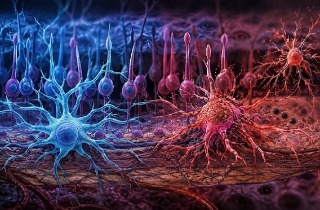
To confirm these findings, the scientists performed lab experiments using PC12 nerve cells damaged by amyloid-beta (a toxic protein seen in Alzheimer’s). They tested MFXD serum and its key components to see if they could improve cell survival.
What the Results Showed
Lab tests revealed that:
-Quercetin and luteolin both increased nerve cell survival in a dose-dependent way.
-MFXD serum restored cell health to over 95%, performing as well as or better than the prescription drug donepezil hydrochloride (DHCL).
-Western blot tests showed MFXD reduced levels of harmful proteins like p-Tau, MMP9, and p-NF-κB p65, while also helping correct GSK-3β activity—a key player in brain cell health.
-ELISA tests showed reduced levels of TNF-α, a molecule linked to inflammation, in treated cells.
Together, these results suggest that MFXD targets several biological pathways at once—reducing inflammation, improving nerve
survival, and preventing the buildup of harmful brain proteins.
A Multi Pathway Herbal Attack on Alzheimer’s
The researchers believe that MFXD works not just through one mechanism but by regulating several interconnected pathways. These include the TNF signaling pathway, calcium signaling, NF-κB signaling, and key processes related to Tau protein—a hallmark of Alzheimer’s damage. Importantly, the herbal formula helped restore normal brain cell functions that were damaged in the Alzheimer’s model.
By simultaneously targeting multiple proteins and signaling routes, MFXD offers a broad-spectrum approach that may be more effective than single-target drugs.
Conclusions
This study suggests that Mahuang Fuzi Xixin Decoction has real potential as a multi-target treatment for Alzheimer’s disease. Its natural compounds, particularly quercetin and luteolin, work on key proteins and pathways linked to inflammation, nerve damage, and toxic protein buildup. These findings provide early evidence that this ancient herbal remedy may help fight one of today’s most devastating brain disorders. More research in animal models and humans will be needed, but the results so far are promising. The formula’s ability to repair damage and regulate inflammation points to its value as a modern therapeutic option rooted in traditional knowledge.
The study findings were published in the peer reviewed journal: Frontiers in Aging Neuroscience
https://www.frontiersin.org/journals/aging-neuroscience/articles/10.3389/fnagi.2025.1688316/full
For the latest
TCM News, keep on logging to Thailand Medical News.
Read Also:
https://www.thailandmedical.news/articles/tcm-news
https://www.thailandmedical.news/articles/alzheimer,-dementia-




 Share
Share
 Tweet
Tweet
 Share
Share