Nikhil Prasad Fact checked by:Thailand Medical News Team Mar 12, 2026 6 months, 3 weeks, 1 day, 21 hours, 14 minutes ago
Medical News:
Researchers Examine Popular Anti-Aging Compound
Nicotinamide mononucleotide, commonly known as NMN, has gained attention in recent years as a supplement that may support healthy aging. Scientists have been exploring its possible benefits because NMN helps the body produce nicotinamide adenine dinucleotide, or NAD+, a molecule that plays a key role in cellular energy production and repair. Now a new scientific analysis suggests that NMN supplements might also offer modest benefits for people with elevated blood pressure.
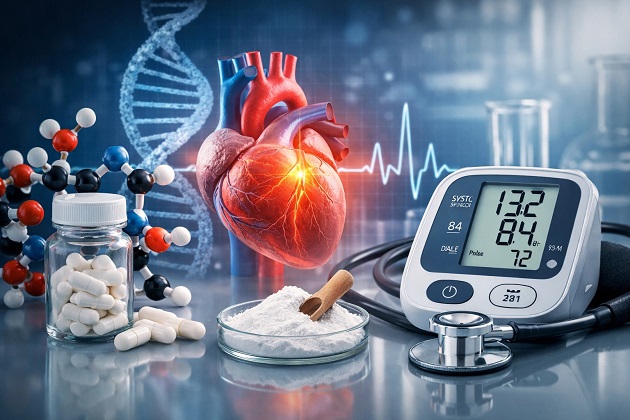 New research suggests NMN supplements may modestly reduce blood pressure, especially in older adults
Researchers from the Department of Nutritional and Toxicological Science, School of Public Health and Nursing, Hangzhou Normal University, Hangzhou, China, conducted a detailed review of multiple clinical trials to understand whether NMN supplementation could influence blood pressure levels in adults. The research team included Mu Zhang, Yingci Chen, Nan Jiang, Jingjing Zeng, Jianyun Zhang, Chenyang Wu, Yingying Liu, Zizheng Nie, Jun Yang and Shufen Han.
Why Blood Pressure Control Is Important
High blood pressure is one of the most common health problems worldwide and a major contributor to heart disease and stroke. Even slightly elevated blood pressure can increase the long-term risk of cardiovascular problems if it remains uncontrolled. Because of this, researchers continue to explore lifestyle and nutritional strategies that could help manage early stages of rising blood pressure.
Many adults develop what doctors call “elevated blood pressure” before progressing to full hypertension. Interventions that can slow or prevent this progression may play an important role in protecting long-term cardiovascular health.
Review of Clinical Trials
To better understand NMN’s effects, the researchers performed a systematic review and meta-analysis of randomized controlled trials involving adults with elevated blood pressure. The team searched several major scientific databases and identified ten eligible studies for analysis.
Altogether, the trials included 349 participants, with 182 individuals receiving NMN supplements and 167 receiving a placebo. The studies were conducted between 2021 and 2025 in China, Japan and the United States.
Participants in the trials received NMN in various forms including capsules, tablets and powder. Daily doses ranged from 250 milligrams to 1500 milligrams, and the interventions lasted between four and twelve weeks.
What the Study Found
After combining the results from all the trials, the researchers observed that NMN supplementation produced a small but statistically significant reduction in diastolic blood pressure, which is the lower number in a blood pressure reading. On average, participants taking NMN experienced a reduction of about 2.15 mmHg compared with those receiving a placebo.
While the overall effect on systolic blood pressure, the upper number in a blood pressure reading, was not statistically significant across all participants, further analysi
s revealed an interesting pattern. Among adults aged 60 years and older, NMN supplementation was associated with a modest reduction in systolic blood pressure of nearly 4 mmHg.
According to this
Medical News report, even relatively small reductions in blood pressure can have meaningful effects at the population level by lowering the risk of heart attacks and strokes.
Possible Biological Mechanisms
Scientists believe NMN may influence blood pressure by increasing levels of NAD+ in the body. NAD+ plays an essential role in maintaining healthy blood vessels. Higher levels of NAD+ may improve the ability of blood vessels to relax and reduce oxidative stress that can damage vascular tissues.
Previous animal studies have suggested that boosting NAD+ levels may improve endothelial function and reduce arterial stiffness, which are key factors linked to high blood pressure.
Safety and Side Effects
The clinical trials included in the analysis reported that NMN supplementation was generally well tolerated. Some participants experienced mild digestive symptoms such as diarrhea or abdominal discomfort, but these effects were temporary and resolved without medical treatment.
No serious adverse events related to NMN supplementation were reported in the trials.
Conclusion
The findings suggest that NMN supplementation may offer a modest benefit in lowering diastolic blood pressure and could potentially help support cardiovascular health, particularly in older adults with elevated blood pressure.
However, the researchers emphasize that the current evidence remains limited because most trials involved relatively small numbers of participants and short intervention periods. Larger and longer clinical studies will be needed to confirm whether NMN can play a meaningful role in blood pressure management and to determine the safest and most effective dosage for long-term use.
The study findings were published in the peer reviewed journal: Nutrients.
https://www.mdpi.com/2072-6643/18/6/890
For the latest on supplements, keep on logging to Thailand
Medical News.
Read Also:
https://www.thailandmedical.news/articles/supplements
Medical Disclaimer: All content published by Thailand Medical News is based on scientific research and is intended for informational and educational purposes only. It is not medical advice, diagnosis, or treatment. Readers must not attempt to use, apply, or experiment with any protocols, compounds, or therapies mentioned without first consulting a qualified and licensed medical doctor. Many findings discussed are experimental or preliminary, and only a licensed healthcare professional can determine what is safe and appropriate for an individual’s specific medical condition




 Share
Share
 Tweet
Tweet
 Share
Share

































