Nikhil Prasad Fact checked by:Thailand Medical News Team Apr 21, 2026 5 months, 1 week, 6 days, 2 hours, 56 minutes ago
Medical News: Cancer research is increasingly turning to nature for answers, and a new study is shining a spotlight on a traditional African medicinal plant with surprising therapeutic promise. Scientists have found that extracts from Warburgia salutaris, a plant widely used in traditional medicine, may become significantly more effective against cancer when delivered using advanced liposomal technology.
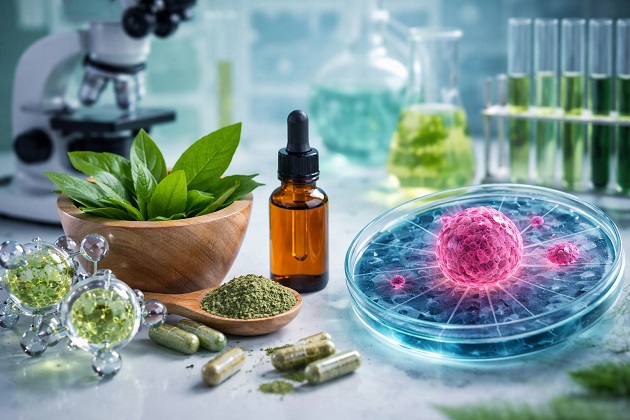 Liposomal delivery transforms a traditional plant extract into a precise and selective anticancer agent
Traditional Medicine Backed by Modern Research
Liposomal delivery transforms a traditional plant extract into a precise and selective anticancer agent
Traditional Medicine Backed by Modern Research
Warburgia salutaris, commonly known as the pepper-bark tree, has long been used across Southern Africa to treat infections, inflammation, and tumor-related conditions. Researchers from Sefako Makgatho Health Sciences University, Tshwane University of Technology, University of Limpopo, and associated pharmaceutical sciences departments in South Africa investigated how this plant could be optimized for modern cancer therapy.
The study focused on improving how the plant extract is delivered into cancer cells, addressing a major limitation of many natural compounds - poor absorption and stability.
Liposomal Delivery Improves Precision
To overcome these challenges, scientists used liposomes - tiny, fat-based particles that can carry drugs directly into cells. These particles measured approximately 159 nanometers in size and showed strong stability, making them ideal for targeted delivery.
Two formulations were tested:
-A conventional crude extract
-A liposomal-encapsulated extract
The goal was to compare their effectiveness and understand how delivery impacts anticancer activity.
Potent and Selective Anti-Cancer Activity
Both formulations demonstrated strong cytotoxic effects against human breast cancer cells (MCF-7). Even at low concentrations, the extracts significantly reduced cancer cell viability.
However, key differences emerged:
-The crude extract caused rapid and less controlled cell death, often associated with necrotic damage.
-The liposomal formulation induced apoptosis, a regulated and more desirable form of cell death in cancer treatment.
This distinction is critical, as apoptosis reduces inflammation and limits damage to surrounding tissues.
Limited Toxicity to Healthy Cells
Importantly, the extracts showed minimal toxicity toward normal cells, including kidney and immune cells. This suggests a high degree of selectivity - an essential feature for safer cancer therapies.
Mechanisms Behind Cancer Cell Elimination
Further analysis revealed that the extracts activate multiple pathways responsible for programmed cell death:
-Increased expression of Bax and caspase-3, proteins that drive apoptosis
-Suppression of Bcl-2, a protein that protects cancer cells
-Activation of bo
th intrinsic and extrinsic apoptotic pathways
This
Medical News report notes that liposomal encapsulation enhances control over these mechanisms, promoting a more precise therapeutic effect.
Anti-Metastatic and Anti-Inflammatory Benefits
The study also demonstrated that both extracts could inhibit cancer cell migration, suggesting potential to slow or prevent metastasis.
In addition, the extracts significantly reduced reactive oxygen species (ROS), which are known to contribute to inflammation and cancer progression. Lowering ROS levels may help disrupt the tumor-supportive environment within the body.
Bioactive Compounds Drive Multi-Target Effects
Chemical analysis identified a wide array of bioactive compounds, including flavonoids, lignans, anthracenes, and terpenoids. Many of these are already known to possess anticancer and anti-inflammatory properties, working together to produce a multi-targeted therapeutic effect.
Conclusion
The findings from this study highlight the strong anticancer potential of Warburgia salutaris, particularly when combined with liposomal delivery systems. While the crude extract demonstrates powerful cytotoxicity, the encapsulated version offers greater precision, improved stability, and controlled activation of cancer cell death pathways. These advantages could translate into more effective and safer treatment strategies in the future. However, further clinical research is necessary to confirm these benefits in humans and to determine appropriate therapeutic applications.
The study findings were published in the peer reviewed International Journal of Molecular Sciences.
https://www.mdpi.com/1422-0067/27/8/3567
For the latest cancer research, keep on logging to Thailand
Medical News.
Read Also:
https://www.thailandmedical.news/articles/herbs-and-phytochemicals
https://www.thailandmedical.news/articles/cancer




 Share
Share
 Tweet
Tweet
 Share
Share

































