Nikhil Prasad Fact checked by:Thailand Medical News Team Aug 06, 2026 1 hour, 15 minutes ago
A growing body of research suggests that COVID-19 may temporarily weaken the immune system enough to allow the dormant varicella-zoster virus (VZV), the virus that causes chickenpox, to reactivate as shingles in some people. However, researchers stress that this does not mean COVID-19 directly causes shingles in everyone. Instead, it may reduce the body's immune reserve, making reactivation more likely in vulnerable individuals.
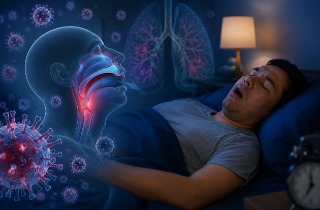
 Researchers propose that COVID-19 may temporarily weaken immune defenses, allowing dormant shingles virus to reactivate
in susceptible individuals.
The study was conducted by researchers from the Department of Immunology, School of Basic Medical Sciences, Harbin Medical University, and the College of Veterinary Medicine, Northeast Agricultural University, both in Harbin, Heilongjiang, China.
COVID-19 May Lower the Body's Protective Threshold
Instead of claiming that COVID-19 is a direct cause of shingles, the researchers propose a "threshold-lowering" model. Normally, the immune system keeps VZV inactive inside nerve cells for decades after a person recovers from chickenpox. When immune defenses decline because of aging, chronic illness, severe stress, or certain medications, the virus can awaken and cause shingles.
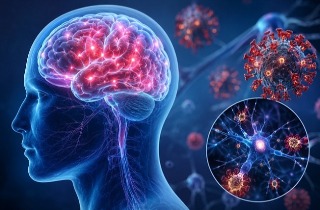
The researchers believe SARS-CoV-2 infection may temporarily push some people closer to this tipping point by disrupting important immune responses, particularly those involving T cells and interferons that normally keep the virus under control.
Large Studies Show a Consistent Pattern
Several large population studies reviewed by the researchers found a modest but consistent increase in shingles following COVID-19 infection, especially among people hospitalized with severe disease. The greatest risk appears during the first two weeks after infection, although some studies detected an elevated risk lasting up to one year.
Importantly, the review found no evidence that shingles has suddenly become more common in younger adults than older people. Rather, COVID-19 may simply cause susceptible individuals to develop shingles earlier than they otherwise would have because their immune reserve has been temporarily reduced.
This
Medical News report highlights that the researchers caution against interpreting these findings as proof of a direct cause-and-effect relationship.
Why the Immune System Matters
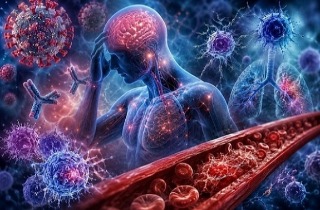
The review explains that antibodies alone are not enough to prevent shingles. Protection mainly depends on specialized T cells that constantly monitor and suppress the dormant virus. COVID-19, particularly severe illness, can reduce lymphocyte numbers, disturb interferon signaling, trigger prolonged inflammation, and alter T-cell function. These immune disturbances may weaken the body's ability to keep VZV dormant.
The authors also emphasize that conditions such as diabetes, chronic lung disease, kidney disease, cancer, autoimmune disorders, HIV infection, psychological stress, and corticosteroid treatment can further redu
ce immune reserves, increasing the likelihood of viral reactivation.
More Research Is Needed
The researchers say current evidence supports an association rather than proof of causation because most existing studies relied on medical records instead of directly measuring VZV-specific immune responses. They recommend future prospective studies that carefully monitor immune cells, inflammatory markers, viral activity, disease severity, treatments, vaccination history, and long COVID symptoms to determine exactly how COVID-19 affects shingles risk.
The researchers conclude that COVID-19 may temporarily lower the immune threshold needed to keep the varicella-zoster virus dormant, particularly in people whose immune systems are already compromised by age, chronic disease, stress, or medical treatments. While the evidence does not prove a universal causal relationship, the findings strongly support closer monitoring of susceptible individuals and further studies measuring virus-specific immune responses to better understand why shingles develops after COVID-19 in certain patients but not others.
The study findings were published in the peer reviewed journal: Frontiers in Cellular and Infection Microbiology.
https://www.frontiersin.org/journals/cellular-and-infection-microbiology/articles/10.3389/fcimb.2026.1904565/full
Read Also:
https://www.thailandmedical.news/articles/coronavirus
https://www.thailandmedical.news/articles/long-covid 



 Share
Share
 Tweet
Tweet
 Share
Share