Nikhil Prasad Fact checked by:Thailand Medical News Team May 04, 2026 4 months, 4 weeks, 2 days, 20 hours, 54 minutes ago
Medical News: A tropical plant long used in traditional medicine is now attracting growing scientific interest for its possible role in supporting blood health. Annona muricata, commonly known as soursop, has been widely used across Africa, the Caribbean, and South America to address fatigue, weakness, and recovery after illness. Researchers are now examining whether this plant may help support the body’s natural ability to produce and maintain healthy blood cells.
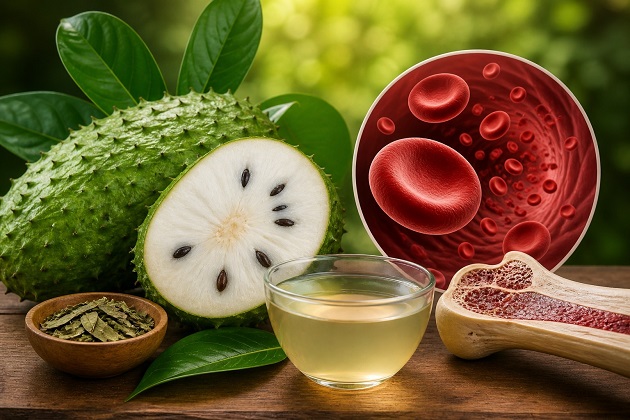 Researchers explore how soursop’s natural compounds may support blood health and immune balance
The Importance of Healthy Blood Formation
Researchers explore how soursop’s natural compounds may support blood health and immune balance
The Importance of Healthy Blood Formation
The body relies on a continuous process known as hematopoiesis to produce blood cells. This process takes place in the bone marrow and is responsible for generating red blood cells, white blood cells, and platelets. These cells are essential for oxygen transport, immune defense, and proper clotting.
When this system is disrupted, it can lead to conditions such as anemia, reduced immunity, and delayed recovery from illness. In many cases, these problems are not caused only by nutritional deficiencies but also by inflammation, infections, and chronic diseases that interfere with normal bone marrow function.
Traditional Use Points to Blood Health Benefits
For generations, soursop has been used in traditional healing practices to manage symptoms linked to poor blood health. In several African communities, leaf infusions are commonly given to individuals recovering from malaria or childbirth, situations often associated with fatigue and blood loss.
In Caribbean and South American traditions, soursop is also used to restore strength and vitality after illness. While these uses were not described using modern medical language, they closely align with conditions involving impaired blood cell production.
Bioactive Compounds Behind the Interest
Scientific studies have identified key compounds in soursop, including flavonoids, polyphenols, and acetogenins. These natural substances are known for their antioxidant and anti-inflammatory properties.
Oxidative stress and chronic inflammation are major contributors to impaired blood cell production. They can damage the bone marrow environment and affect the stem cells responsible for generating blood cells. By reducing these harmful processes, soursop compounds may help maintain the conditions needed for healthy blood formation.
How Soursop May Support the Bone Marrow
Rather than directly stimulating blood cell production, soursop appears to support the internal environment where blood cells are formed. Its antioxidant effects help reduce cellular damage, while its anti-inflammatory actions may limit signals that suppress blood production.
This
Medical News report highlights that these combined effects may assist the body in recovering from illness, infection, or chronic inflammation that disrupts normal bloo
d formation. The plant’s influence on immune function may also contribute to balanced blood cell development.
Evidence From Laboratory and Animal Studies
Research conducted in laboratory and animal models has shown that soursop extracts can reduce oxidative stress, lower inflammation, and improve certain blood-related markers. Some studies have also observed stabilization of immune responses, which are closely linked to blood cell production.
However, these findings remain preliminary. There is still no direct evidence confirming that soursop can improve blood cell production in humans.
Safety and Potential Risks
Despite its promising properties, soursop is not without risks. Certain compounds, particularly acetogenins, have been associated with toxicity when consumed in high amounts or over long periods. Concerns have been raised about possible neurological effects and liver stress at excessive doses.
Traditional use typically involves mild, diluted preparations, which may carry lower risks. However, concentrated extracts and supplements require careful evaluation before widespread use.
Challenges in Scientific Validation
One of the major challenges is the lack of human clinical trials. In addition, there is no standardized method of preparation, and different parts of the plant may contain varying levels of active compounds.
These factors make it difficult to determine safe and effective dosages or to compare findings across studies. Researchers emphasize the need for controlled clinical trials and standardized formulations to establish clear medical value.
Conclusion
Soursop presents an intriguing example of how traditional medicine can guide modern scientific research. Its long-standing use in treating fatigue and weakness is supported by emerging evidence showing antioxidant, anti-inflammatory, and immune-modulating effects that may indirectly support blood health.
However, current research indicates that its role is supportive rather than therapeutic. It does not directly stimulate blood cell production but may help create favorable conditions for the body to restore normal function. The lack of human clinical evidence remains a critical limitation, and safety concerns related to high-dose or prolonged use must be carefully considered.
Further research, particularly well-designed clinical trials, is essential to determine whether soursop can play a meaningful and safe role in supporting blood health in medical practice.
The study findings were published in the peer reviewed journal: Antioxidants.
https://www.mdpi.com/2076-3921/15/5/579
For the latest on hematopoiesis, keep on logging to Thailand
Medical News.
Read Also:
https://www.thailandmedical.news/articles/herbs-and-phytochemicals




 Share
Share
 Tweet
Tweet
 Share
Share

































