Thailand Medical Study Reveals Thai Herb That Targets Six Airway Cancer Cell Lines
Nikhil Prasad Fact checked by:Thailand Medical News Team Aug 14, 2026 1 month, 3 weeks, 1 day, 12 hours, 54 minutes ago
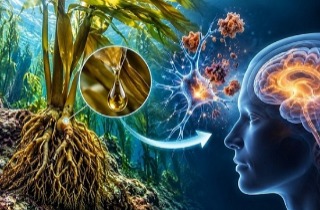
A fascinating medical study has identified a traditional Thai medicinal plant with particularly strong laboratory activity against six cancer cell lines representing malignancies of the upper respiratory tract. The findings are drawing attention to Caesalpinia sappan, or sappanwood, an ingredient found in Kampramong’s traditional anticancer remedy.
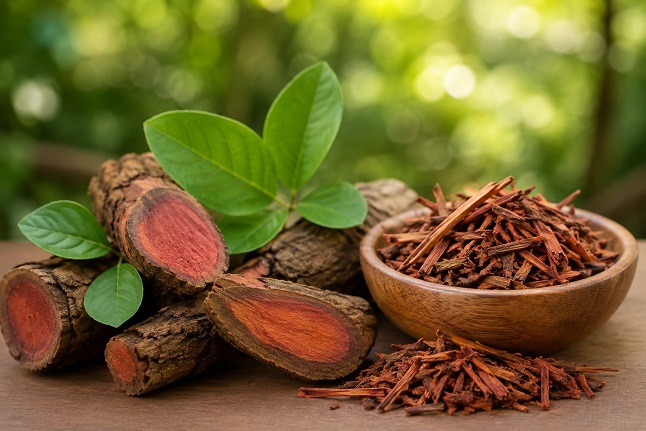 Thai researchers found that sappanwood showed strong and selective laboratory activity against six airway and
head-and-neck cancer cell lines
Researchers screened 31 ethanolic plant extracts from the remedy, looking not only at their ability to kill cancer cells but also at inflammation, antioxidant activity and flavonoid content.
The research involved
Thailand Medical scientists from the Graduate School, Faculty of Medicine; Department of Applied Thai Traditional Medicine, Faculty of Medicine; Center of Excellence in Applied Thai Traditional Medicine Research; and Department of Otolaryngology, Faculty of Medicine, all at Thammasat University, Thailand. Researchers also came from Regional Medical Sciences Center 12 Songkhla, Ministry of Public Health, Thailand, and the Faculty of Pharmacy and Pharmaceutical Sciences, Katz Group-Rexall Centre for Pharmacy and Health Research, University of Alberta, Canada.
Sappanwood Emerges as the Strongest Candidate
The extracts were tested against six malignant cell lines known as HK1, KB, HONE-1, NPC38, NPC43 and HEp2, representing cancers affecting different areas of the upper respiratory and head-and-neck region.
Three plants stood out: Caesalpinia sappan, Coscinium fenestratum and Tectona grandis. However, C. sappan produced the most impressive overall results.
Its IC50 values—the concentration required to reduce cancer-cell survival by half—ranged from just 4.71 to 13.60 micrograms per milliliter across the six malignant cell lines. In several comparisons, its laboratory activity was stronger than or close to that of cisplatin, a chemotherapy drug used as the study’s positive control.
Cancer Cells Were Targeted More Selectively
Importantly, researchers also tested C. sappan against non-cancerous NP460 and HaCaT cells. The extract was substantially less toxic to these cells.
Using HaCaT cells as the comparison, its selectivity index ranged from 7.1 to 20.5 depending on the cancer cell line. Against NP460 cells, the selectivity index exceeded 10 for every malignant cell line tested.
As explained in this Medical News report, these results are important because an experimental anticancer substance becomes more interesting when it damages malignant cells at concentrations that are less harmful to normal cells.
Flavonoids and Inflammation Provide Another Clue
Researchers found that flavonoid content and suppression of nitric oxide, a molecule associated with inflammatory processes, were strongly linked with cancer-cell toxicity. Statistical analysis showed that two principal components explained approximately 71.92 percent
of the variation in the biological measurements.
Interestingly, conventional antioxidant activity was less closely associated with cancer-cell killing, suggesting that the effects cannot simply be explained by the plants acting as antioxidants.
Brazilin Could Hit Several Cancer Pathways
Computer modeling was then used to investigate brazilin and sappanchalcone, two important phytochemicals compounds associated with C. sappan.
Brazilin showed strong predicted interactions with several cancer-related proteins, including GRB2, SRC, MAPK1 and AKT1. These proteins participate in signaling systems that help regulate cell growth, proliferation and survival. Sappanchalcone also demonstrated potentially important predicted interactions.
The researchers therefore proposed that C. sappan could work through several compounds acting on multiple molecular targets rather than through one single pathway.
Conclusions
The findings make sappanwood an intriguing candidate for further investigation into upper respiratory tract cancers and the phenomenon known as field cancerization, in which surrounding tissues may remain vulnerable to developing additional tumors. However, these findings come from laboratory cell experiments and computer modeling, not clinical trials. Further biochemical studies, animal research, pharmacological testing and eventually controlled human studies will be required before C. sappan or its compounds can be considered established cancer treatments.
The study findings were published in the peer reviewed International Journal of Molecular Sciences.
https://www.mdpi.com/1422-0067/27/16/7239
Read Also:
https://www.thailandmedical.news/articles/thailand-medical
https://www.thailandmedical.news/articles/herbs-and-phytochemicals




 Share
Share
 Tweet
Tweet
 Share
Share