Nikhil Prasad Fact checked by:Thailand Medical News Team Feb 12, 2026 6 months, 2 weeks, 4 days, 13 hours, 35 minutes ago
Medical News: Hidden Link Between Fragile Bones and Brain Health
A new study has uncovered a surprising connection between weak bones and shrinking brain volume in older women, raising fresh concerns that osteoporosis may be linked to changes inside the brain itself. Researchers found that women with lower bone mineral density not only had more fragile bones, but also showed reduced blood flow in certain brain regions and smaller overall brain volumes.
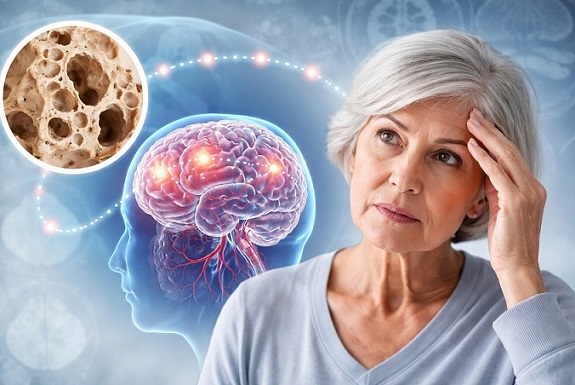 Fragile bones in older women are linked to reduced brain blood flow and smaller brain volumes,
suggesting a hidden connection between osteoporosis and cognitive decline
The study was conducted by scientists from the Department of Imaging and Interventional Radiology at Prince of Wales Hospital, the Jockey Club Centre for Osteoporosis Care and Control, and the Department of Medicine and Therapeutics at The Chinese University of Hong Kong. Their findings add weight to growing evidence of a “bone–brain axis,” a biological link between skeletal health and brain function.
Inside The Study
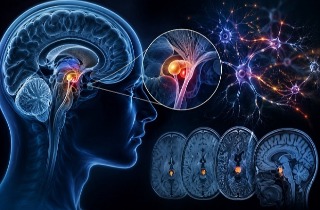
The research team examined 99 women with an average age of 65 who were suspected of having mild cognitive impairment. Each participant underwent bone density scans, carotid artery ultrasound, advanced MRI scans of both the brain and lower spine, and cognitive testing using the Hong Kong version of the Montreal Cognitive Assessment.
Nearly half of the women had osteopenia, a precursor to osteoporosis, while about a quarter had full osteoporosis. The scientists then compared bone density, blood flow inside the vertebrae, bone marrow fat levels, brain blood flow, and brain volume measurements.
What The Researchers Discovered
Women with lower bone mineral density had significantly lower blood flow in deep brain regions and smaller total brain volumes. Those with poorer blood circulation inside the L3 vertebra of the spine also had reduced overall brain volume and smaller hippocampi, the brain structures critical for memory.
The study also found that higher fat content inside bone marrow was linked to lower brain volume. In fact, women in the lowest quarter for vertebral blood flow had noticeably smaller brains compared to those with the best bone circulation. Similarly, those with the highest marrow fat had reduced brain size and lower bone density scores.
Interestingly, while bone measures were linked to brain structure and blood flow, they were not directly tied to cognitive test scores. However, poorer brain blood flow and smaller brain volumes were clearly associated with worse cognitive performance.
Why This Matters
This
Medical News report highlights the possibility that reduced blood supply may be a common problem affecting both bones and the brain. The researchers suggest that inflammation, blood vessel dysfunction, and hormonal signaling could play roles in damaging both tissues over time.
Both osteoporosis and cognitive decline ofte
n develop silently for years before symptoms appear. By the time fractures or memory problems become obvious, significant damage may already have occurred. Identifying shared warning signs could open the door to earlier prevention strategies.
A New Direction for Ageing Research
The researchers emphasize that this was an observational study and does not prove that bone loss causes brain shrinkage. However, the consistent associations seen across imaging tests suggest that the health of blood vessels in bone and brain may be closely connected.
In conclusion, the study provides important new evidence that weaker bones are linked to lower brain blood flow and smaller brain volumes in older women. Although more long-term studies are needed, the findings suggest that protecting bone health may also support brain health. Understanding this connection could eventually lead to integrated approaches that target both osteoporosis and cognitive decline together, potentially improving quality of life in ageing populations.
The study findings were published in the peer reviewed journal: Diagnostics.
https://www.mdpi.com/2075-4418/16/4/529
For the latest on osteoporosis, keep on logging to Thailand
Medical News.
Read Also:
https://www.thailandmedical.news/articles/arthritis
https://www.thailandmedical.news/articles/health-news




 Share
Share
 Tweet
Tweet
 Share
Share