Nikhil Prasad Fact checked by:Thailand Medical News Team Jan 19, 2026 8 months, 2 weeks, 2 days, 3 hours, 43 minutes ago
Medical News: A major new study has revealed that Long COVID may be fueled by persistent immune system disruption linked to lingering SARS-CoV-2 viral components known as envelope and nucleocapsid proteins. These findings provide fresh biological evidence explaining why millions continue to suffer long after the initial SARS-CoV-2 infection has passed.
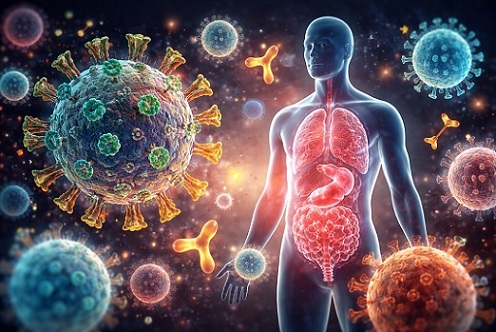 Persistent immune reactions to hidden viral proteins may explain why Long COVID symptoms
endure for months.
Researchers And Institutions Behind the Study
The study was conducted by American scientists from the University of Illinois College of Medicine, University of Illinois at Chicago, Illinois Research Network RECOVER Hub, Massachusetts General Hospital, Harvard Medical School, Howard University College of Medicine, University of Alabama at Birmingham, University of Mississippi Medical Center, Case Western Reserve University, University of Utah Health, University of California San Francisco, Emory University, Stanford University School of Medicine, and Brigham and Women’s Hospital.
Studying Long COVID Over Six Months
Researchers closely monitored 30 adults following confirmed COVID infections. Twenty participants developed Long COVID symptoms such as fatigue, brain fog, breathing issues, and heart related complaints, while ten recovered fully. Blood samples were collected roughly three weeks after infection, again at three months, and once more at six months. This long-term tracking allowed scientists to observe how immune responses evolved instead of fading away.
Antibodies Reveal Lingering Viral Exposure
One of the most striking discoveries was that Long COVID patients maintained unusually high antibody levels against SARS-CoV-2 envelope and nucleocapsid proteins for at least six months. These proteins are not included in COVID vaccines, meaning the immune system may still be reacting to leftover viral material rather than vaccine effects. In contrast, antibodies against the spike protein were lower and skewed toward more inflammatory forms, suggesting ongoing immune stress rather than recovery.
Gut And Lung Immune Signals Raise Concerns
The study also identified elevated levels of IgA and IgM antibodies, which are commonly linked to immune activity in the gut and respiratory tract. This points to continued immune stimulation at mucosal surfaces, raising the possibility that viral fragments may persist in tissues such as the intestines or lungs, quietly driving inflammation.
Immune Cells Remain on High Alert
Advanced immune profiling revealed increased levels of circulating follicular helper T cells and MAIT cells in Long COVID patients. These cells are essential for antibody production and mucosal immune defense. Their persistent elevation suggests the immune system remains locked in a prolonged response mode. Importantly, higher MAIT cell levels closely matched higher antibody levels against envelope proteins.
Chronic Inflammation and Autoimmunity
Blood tests showed elevated inflammatory molecules including IL-11, LIF, a
nd HMGB-1, all associated with tissue damage and long-term inflammation. Researchers also detected increased autoantibodies in Long COVID patients, meaning the immune system may mistakenly attack the body’s own tissues. This autoimmune activity varied widely between individuals, helping explain why symptoms differ so much from person to person.
Why These Findings Matter
This
Medical News report highlights that Long COVID is a genuine biological condition marked by persistent immune dysregulation. The continued immune response against envelope and nucleocapsid proteins supports the theory that unresolved viral remnants or prolonged antigen exposure may be central drivers of the condition.
Conclusion
The study offers compelling evidence that Long COVID is not simply delayed healing but an active immune disorder involving persistent viral signals, chronic inflammation, and autoimmunity. By identifying envelope and nucleocapsid proteins as key immune triggers, these findings open the door to better diagnostic tests and targeted treatments aimed at calming the immune system and addressing potential viral persistence. Understanding these mechanisms is critical for developing effective therapies and improving long term outcomes for Long COVID patients.
The study findings were published on a preprint server and are currently being peer-reviewed.
https://www.researchsquare.com/article/rs-8302624/v1
For the latest on Long COVID-19, keep on logging to Thailand
Medical News.
Read Also:
https://www.thailandmedical.news/articles/long-covid
https://www.thailandmedical.news/articles/coronavirus




 Share
Share
 Tweet
Tweet
 Share
Share

































