Long COVID Linked to Persistent Endothelial Activation After SARS-CoV-2 Infection
Nikhil Prasad Fact checked by:Thailand Medical News Team Jul 18, 2026 1 month, 2 weeks, 1 day, 21 hours, 16 minutes ago
Medical News: A new international study has uncovered compelling evidence that many patients who develop long COVID continue to carry persistent biological changes affecting their blood vessels months after recovering from the initial SARS-CoV-2 infection.
The findings suggest that ongoing activation of the endothelium—the thin layer of cells lining blood vessels—may be one of the defining features that separates long COVID patients from those who make a full recovery.
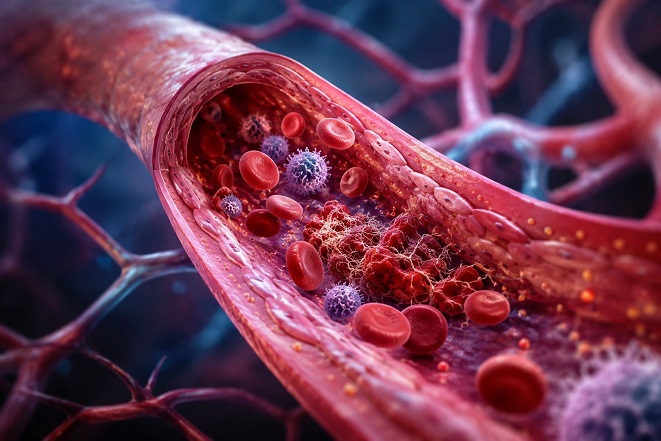 Researchers found that persistent activation of blood vessel lining cells distinguishes long COVID patients from those
who fully recover
The research was conducted by scientists from the Latvian Biomedical Research and Study Centre, the University of Latvia, Riga Technical University in Latvia, and Uppsala University in Sweden.
By combining advanced blood gene analysis, urine metabolomics, kidney injury biomarkers, and long-term electronic health records, the team identified measurable biological markers that could eventually help predict which hospitalized COVID-19 patients are most likely to develop long COVID.
Tracking Recovery Beyond Hospital Discharge
The researchers followed 81 hospitalized COVID-19 patients, collecting blood and urine samples at hospital admission, approximately one month after discharge, and again around three months later.
Patients were then classified according to whether they fully recovered or later developed long COVID.
Of the participants, 46 developed long COVID while 35 recovered without persistent complications.
Those who developed long COVID tended to be older, had higher body mass index, and generally required slightly longer hospital stays.
Using a multiomics approach, the investigators tracked thousands of genes together with dozens of urine metabolites and kidney injury markers, allowing them to follow how the body recovered over time and identify abnormalities that persisted only in long COVID patients.
Severe Infection Triggers Widespread Biological Damage
The study found that severe SARS-CoV-2 infection causes widespread activation of inflammatory and blood-clotting pathways during the acute phase of illness.
One of the most striking discoveries was the activation of immunothrombosis, a process in which the immune system and blood clotting system become tightly linked.
The researchers observed excessive activation of the complement system, highly stimulated neutrophils releasing extracellular traps, increased platelet activation, and inflammatory molecules that together promote abnormal clot formation while damaging blood vessels.
At the same time, mitochondria—the structures responsible for producing energy inside cells—showed significant dysfunction. Instead of producing energy efficiently, cells switched to an emergency metabolic pathway associated with low oxygen levels.
Urine metabolite analysis confirmed widespread disruption of normal energy metabolism, although much of this gradually improved during recovery.
gt;
This
Medical News report highlights that the study also found evidence of kidney injury during severe COVID-19. Several urinary biomarkers indicating tubular damage, inflammation, and fibrosis were markedly elevated during hospitalization before steadily declining over the following months, suggesting gradual recovery of kidney function.
Blood Vessel Activation Persists in Long COVID
Although many inflammatory and metabolic abnormalities improved over time, the researchers discovered that patients who developed long COVID retained a very different molecular profile three months after hospitalization.
Blood gene analysis revealed persistent activation of pathways associated with endothelial cells, platelets, complement proteins, and chronic vascular inflammation.
Among the most important findings was increased activity of genes linked to von Willebrand factor (VWF) and Protein S (PROS1), both of which play critical roles in regulating blood clotting and blood vessel health. Long COVID patients also continued to show elevated expression of platelet activation markers, inflammatory chemokines such as CXCL5, the inflammatory enzyme ALOX12, and complement regulatory proteins including CFH.
Together, these findings indicate that many long COVID patients continue to experience low-grade inflammation and persistent activation of the lining of their blood vessels long after the virus itself has been cleared.
New Biomarkers May Help Predict Long COVID
Importantly, the researchers identified clinically measurable biomarkers that closely matched these persistent molecular changes. Because these biomarkers can potentially be measured through blood testing, they may eventually help physicians identify hospitalized COVID-19 patients who are at greater risk of developing long COVID and allow closer monitoring during recovery.
The investigators believe these persistent endothelial-associated activation signatures likely reflect incomplete healing of blood vessel injury that occurred during severe infection, leaving behind a molecular fingerprint that distinguishes long COVID patients from individuals who recover completely.
Conclusions
The findings provide some of the strongest molecular evidence to date that long COVID is associated with persistent endothelial activation, platelet reactivity, complement dysregulation, and chronic low-grade vascular inflammation rather than simply prolonged recovery from infection. These measurable biological signatures could form the basis for future diagnostic tests, improve post-COVID risk stratification, and guide the development of targeted therapies aimed at restoring blood vessel health and preventing long-term complications.
The study findings were published in the peer reviewed journal: iScience.
https://www.cell.com/iscience/fulltext/S2589-0042(26)01701-3
For the latest on Long COVID, keep on logging to Thailand
Medical News.
Read Also:
https://www.thailandmedical.news/articles/long-covid




 Share
Share
 Tweet
Tweet
 Share
Share

































