Nikhil Prasad Fact checked by:Thailand Medical News Team May 15, 2026 4 months, 3 weeks, 10 hours, 52 minutes ago
Medical News: A natural plant long used in traditional medicine could soon attract global attention after scientists discovered that its root extract may help prevent nonalcoholic fatty liver disease (NAFLD), a condition now affecting millions worldwide. Researchers found that the alcoholic extract of Anacyclus pyrethrum root was able to reduce liver fat buildup, improve blood sugar and cholesterol levels, calm inflammation, and restore healthy gut bacteria in laboratory mice fed a high-fat diet.
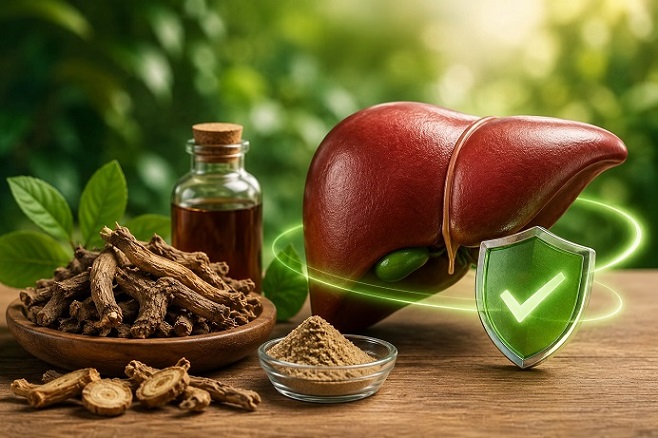 Scientists discover traditional medicinal root extract may protect the liver by reducing inflammation and restoring healthy
gut bacteria
The research was conducted by scientists from the School of Pharmacy at Xinjiang Medical University and the Xinjiang Key Laboratory of Uyghur Medical Research, Xinjiang Institute of Materia Medica, China.
A Growing Global Health Threat
NAFLD is becoming one of the world’s most common liver disorders, especially in people with obesity, diabetes, and poor dietary habits. The disease develops when excess fat accumulates in the liver even in people who drink little or no alcohol. If left untreated, it can progress to severe liver inflammation, scarring, cirrhosis, liver failure, and even liver cancer.
Researchers explained that there are still no officially approved drugs that can fully treat NAFLD, making the search for safer and natural therapies increasingly important.
Ancient Medicinal Plant Under Scientific Spotlight
Anacyclus pyrethrum is a medicinal plant traditionally used in parts of North Africa and Xinjiang, China. Local healers have used its roots for pain relief, cough treatment, and neurological disorders. Earlier studies had already suggested the plant could improve blood sugar control and reduce inflammation.
In this new study, scientists analyzed the plant extract and identified 55 active compounds, including phenolic acids, flavonoids, fatty acids, and natural amides believed to possess antioxidant and anti-inflammatory effects.
How The Extract Protected the Liver
The research team fed mice a high-fat diet for 12 weeks to trigger fatty liver disease. Some mice were then treated with different doses of the root extract.
The results were impressive. Mice receiving the extract showed lower fasting blood sugar, lower cholesterol, reduced triglycerides, decreased “bad” LDL cholesterol, and higher “good” HDL cholesterol levels. Liver damage markers known as AST and ALT were also significantly reduced.
Microscopic examination of liver tissue revealed that untreated mice developed severe fat accumulation, damaged liver cells, and disorganized liver structure. In contrast, mice treated with the higher doses of the herbal extract showed liver tissue that appeared far healthier and much closer to normal.
Gut Bacteria Played a Major Role
One of the most important findings involved the gut microbiome. Scientists discovered that the extract changed the balance of intestinal bacteria in ways linked to
better liver health.
The treatment increased beneficial bacteria such as Akkermansiaceae while lowering harmful bacteria including Desulfovibrionaceae, which are known to produce inflammatory toxins.
This
Medical News report highlights that the herbal extract also strengthened the intestinal barrier by increasing protective proteins called Occludin and ZO-1. These proteins help prevent harmful bacterial toxins from leaking from the intestines into the bloodstream and liver.
Researchers observed that treated mice had significantly lower levels of lipopolysaccharide (LPS), a toxic bacterial molecule strongly linked to inflammation and liver injury.
Blocking A Dangerous Inflammatory Pathway
Further investigation showed that the plant extract suppressed the harmful LPS/TLR4/NF-κB signaling pathway, which is known to trigger chronic inflammation in fatty liver disease.
The extract reduced levels of inflammatory proteins including TNF-α and IL-6 while also suppressing TLR4, MyD88, and activated NF-κB proteins in both liver and intestinal tissues.
The researchers believe these combined effects explain why the plant was able to slow fatty liver progression so effectively.
Strong Potential but Human Trials Still Needed
The findings suggest that Anacyclus pyrethrum root extract could eventually become a promising natural therapy for fatty liver disease by targeting inflammation, metabolism, and gut bacteria simultaneously. However, the current findings are limited to animal studies, and human clinical trials will still be needed before the extract can be recommended for medical use. The study also strengthens growing scientific evidence showing that improving gut health may be one of the most powerful ways to combat chronic liver disease in the future.
The study findings were published in the peer reviewed International Journal of Molecular Sciences.
https://www.mdpi.com/1422-0067/27/10/4398
For the latest on herbs and phytochemicals, keep on logging to Thailand
Medical News.
Read Also:
https://www.thailandmedical.news/articles/herbs-and-phytochemicals




 Share
Share
 Tweet
Tweet
 Share
Share