The Phytochemical Vasicine from the Plant Adhatoda Vasica Shows Promise In Calming Allergic Asthma
Nikhil Prasad Fact checked by:Thailand Medical News Team Jan 27, 2026 8 months, 1 week, 1 day, 2 hours, 24 minutes ago
Medical News: A new scientific study has revealed that vasicine, a phytochemical derived from the medicinal plant Adhatoda vasica, may offer powerful protection against allergic asthma by calming overactive immune responses in the lungs. This discovery is significant as allergic asthma continues to affect millions worldwide, causing breathing difficulties, wheezing, coughing, and repeated hospital visits.
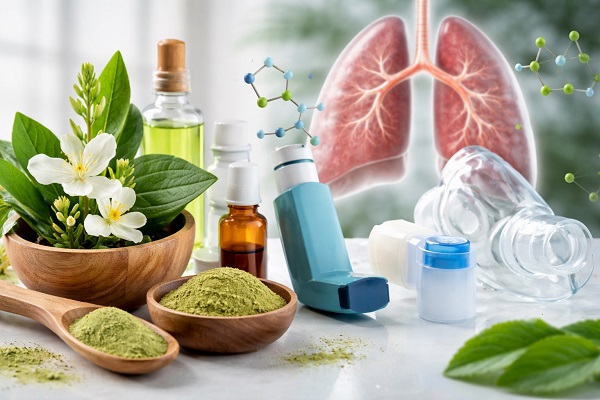 A natural plant compound demonstrates powerful immune calming effects in allergic asthma models.
Understanding Allergic Asthma and Why It Is Hard to Treat
A natural plant compound demonstrates powerful immune calming effects in allergic asthma models.
Understanding Allergic Asthma and Why It Is Hard to Treat
Allergic asthma occurs when the immune system overreacts to harmless substances such as pollen or dust mites. This overreaction leads to airway swelling, excess mucus production, and tightening of airway muscles, making breathing difficult. Mast cells, a type of immune cell, play a central role by releasing histamine and other inflammatory substances when triggered by allergens.
Current treatments like steroids and bronchodilators can be effective but often come with side effects when used long term. This has driven scientists to explore safer and more targeted alternatives, especially those derived from natural sources.
What Is Vasicine and Why Researchers Studied It
Vasicine is a bioactive alkaloid extracted from Adhatoda vasica, a plant used for over 2000 years in traditional medicine to treat respiratory conditions. Previous studies hinted that vasicine could reduce inflammation, but how it worked in allergic asthma was not clearly understood.
To address this, researchers from the Department of Chinese Medicine at Yunnan University of Chinese Medicine, the School of Public Health at Kunming Medical University, the First Affiliated Hospital of Yunnan University of Chinese Medicine, and the Yunnan Key Laboratory of Southern Medicinal Utilization conducted detailed laboratory and animal experiments.
Key Findings from The Study
Using a well-established mouse model of allergic asthma, the researchers found that vasicine significantly reduced airway hyperresponsiveness, meaning the airways were less likely to tighten when exposed to irritants. Lung tissue examinations showed reduced swelling, less mucus buildup, and fewer infiltrating inflammatory cells.
Blood and lung fluid analysis revealed that vasicine lowered IgE levels and sharply reduced inflammatory messengers such as IL-4, IL-5, IL-9, and IL-13, which are known to drive allergic asthma. Importantly, mast cell numbers in lung tissue were also reduced.
Further laboratory studies showed that vasicine prevented mast cells from releasing histamine and other harmful substances. It achieved this by blocking a critical immune signaling route known as the FcεRI-Lyn-Syk-MAPK pathway, which acts like an ignition switch for allergic reactions. This
Medical News report highlights that vasicine also reduced calcium influx inside mast cells, a key step required for allergic mediator release.
W
hy These Findings Matter
The study shows that vasicine does not just mask asthma symptoms but targets the underlying immune mechanisms that cause the disease. By calming mast cells and suppressing allergic inflammation at its source, vasicine may represent a safer and more precise therapeutic option.
Conclusions And Future Implications
The findings strongly suggest that vasicine has the potential to become a natural treatment candidate for allergic asthma. By reducing airway sensitivity, suppressing inflammatory cytokines, and blocking mast cell activation pathways, vasicine addresses multiple drivers of asthma simultaneously. While further human studies are needed, this research provides a solid scientific foundation for future drug development based on this traditional medicinal compound.
The study findings were published in the peer reviewed journal: Pharmaceuticals.
https://www.mdpi.com/1424-8247/19/1/190
For the latest on Herbs and Phytochemicals, keep on logging to Thailand
Medical News.
Read Also:
https://www.thailandmedical.news/articles/herbs-and-phytochemicals




 Share
Share
 Tweet
Tweet
 Share
Share

































