Nikhil Prasad Fact checked by:Thailand Medical News Team Jun 09, 2026 1 month, 3 weeks, 2 days, 23 hours, 24 minutes ago
Medical News: A new pilot study has found that a simple daily grape powder supplement may help improve gut health in people living with Crohn’s disease, a chronic inflammatory bowel condition that affects millions worldwide. While the short-term intervention did not dramatically reduce disease symptoms, researchers observed encouraging changes in gut bacteria and signs of reduced intestinal inflammation, suggesting that grapes could eventually play a supportive role in managing the disease.
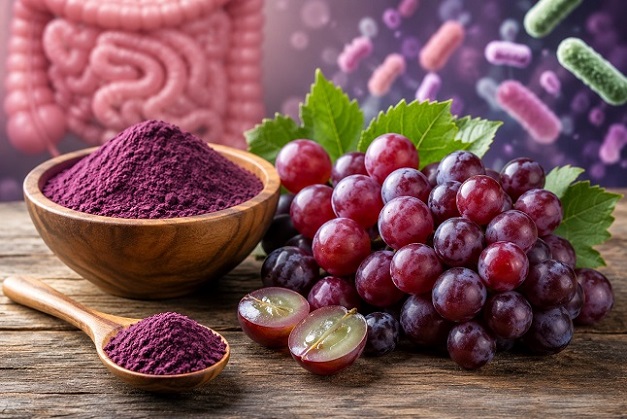 Daily grape powder supplementation improved beneficial gut bacteria and showed promising anti-inflammatory
effects in Crohn’s disease patients
A Common Fruit Gains Scientific Attention
Crohn’s disease is a lifelong inflammatory bowel disease that causes inflammation anywhere along the digestive tract. Symptoms often include abdominal pain, diarrhea, fatigue, weight loss, and nutritional deficiencies. Although medications can help control the condition, many patients continue to experience flare-ups and persistent low-grade inflammation.
Researchers have increasingly focused on the role of diet and the gut microbiome—the vast community of microorganisms living in the digestive system—in influencing disease activity. Grapes are rich in natural plant compounds called polyphenols as well as dietary fiber, both of which have been linked to anti-inflammatory and antioxidant effects.
To investigate whether grapes could benefit people with Crohn’s disease, scientists conducted a pilot study involving daily supplementation with freeze-dried grape powder.
Who Conducted the Research?
The study was led by researchers from the Department of Surgery at Qom University of Medical Sciences in Iran; the Division of Gastroenterology and Liver Diseases at Case Western Reserve University School of Medicine; the Digestive Health Research Institute at Case Western Reserve University School of Medicine; the Department of Nutrition at Case Western Reserve University School of Medicine; and the Digestive Health Institute at University Hospitals Cleveland Medical Center in the United States.
How the Study Was Performed
The study enrolled 21 adults with Crohn’s disease who completed the trial. Participants consumed 45 grams of freeze-dried grape powder daily for 21 days. This amount is roughly equivalent to eating one and a half cups of fresh grapes each day.
The participants continued their usual diets but avoided berries and berry-containing products throughout the study. Researchers monitored disease symptoms, blood inflammation markers, stool inflammation markers, and changes in gut bacteria before and after the intervention.
Importantly, most participants were already in clinical remission or had relatively mild disease activity at the start of the study.
Encouraging Signs of Reduced Inflammation
One of the most interesting findings involved fecal myeloperoxidase (MPO), a marker that reflects intestinal inflammation.
More than 61 per
cent of participants experienced a reduction in MPO levels after three weeks of grape powder supplementation. Although the overall reduction was not statistically significant because of the small study size, the trend suggests that grape-derived compounds may help calm inflammatory activity in the intestine.
Researchers also found that 80 percent of participants either experienced improvement or no worsening in their Harvey Bradshaw Index scores, a commonly used measure of Crohn’s disease symptoms.
This
Medical News report notes that maintaining low inflammation is particularly important because even patients who appear to be in remission can still harbor silent inflammation that may trigger future flare-ups.
Major Changes in the Gut Microbiome
Perhaps the most significant discoveries came from the microbiome analysis. The researchers found that grape powder increased several groups of bacteria often associated with healthier gut environments. These included Akkermansiaceae, Bacteroidaceae, Tannerellaceae, Rikenellaceae, and Monoglobaceae.
Particularly noteworthy was the increase in Akkermansia-related bacteria, which are known for supporting the protective mucus layer that lines the intestine.
Damage to this barrier is a major concern in Crohn’s disease because it can allow harmful substances to penetrate intestinal tissues and trigger immune responses.
The study also detected increases in Eubacterium eligens, a bacterium known for producing butyrate. Butyrate is a beneficial short-chain fatty acid that helps nourish cells lining the colon, strengthens intestinal barriers, and may reduce inflammation.
Researchers observed that responses varied between individuals, indicating that the benefits of grape supplementation may depend on a person's existing microbiome composition.
Functional Improvements in Gut Bacteria
Beyond changes in bacterial populations, the study found shifts in the biological activities carried out by these microbes.
After grape powder supplementation, gut bacteria showed increased activity in pathways linked to vitamin production, amino acid metabolism, tissue repair, and immune regulation. At the same time, pathways previously associated with inflammation, bacterial virulence, and intestinal stress became less prominent.
These findings suggest that grape powder may encourage a healthier and more balanced microbial ecosystem, potentially creating conditions that support intestinal healing.
Safe and Well Tolerated
The supplement was generally very well tolerated. Only one participant reported temporary abdominal pain and nausea after consuming the grape powder, and no serious adverse events occurred during the study.
Researchers also reported excellent compliance, with nearly all participants consuming the supplement exactly as instructed.
Conclusion
Although this was a small pilot study lasting only three weeks, the findings provide early evidence that freeze-dried grape powder may positively influence the gut environment in people with Crohn’s disease. The intervention appeared safe, caused no worsening of disease activity, and encouraged the growth of several bacterial groups linked to gut health and reduced inflammation. While symptom improvements were modest and larger controlled trials are needed before any firm recommendations can be made, the results highlight the potential of simple dietary approaches to complement conventional treatment. Future studies involving more participants and longer intervention periods may reveal whether grape-derived nutrients can play a meaningful role in reducing disease activity, preventing flare-ups, and improving long-term outcomes for Crohn’s disease patients.
The study findings were published in the peer reviewed journal: Nutrients.
https://www.mdpi.com/2072-6643/18/12/1844
For the latest on gut inflammation and Crohns disease, keep on logging to Thailand
Medical News.
Read Also:
https://www.thailandmedical.news/articles/herbs-and-phytochemicals
https://www.thailandmedical.news/articles/gastroenterology




 Share
Share
 Tweet
Tweet
 Share
Share