COVID-19 Leaves Lipid Changes but Glycemic Control Remains Stable in Individuals with T2D
Nikhil Prasad Fact checked by:Thailand Medical News Team Sep 07, 2026 14 minutes ago
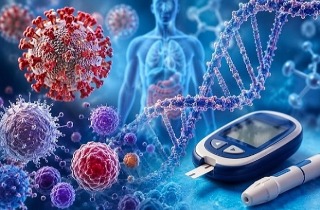
COVID-19 infection may leave measurable changes in blood lipid levels among adults with type 2 diabetes (T2D), while having little lasting impact on blood sugar control, according to a large retrospective study from Saudi Arabia.
 COVID-19 was linked to small reductions in several blood lipids while long-term blood sugar markers remained stable in
adults with type 2 diabetes
Researchers analyzed 969 adults with T2D who had confirmed COVID-19 between April 2020 and December 2021. The median age was 58 years, 56.7% were women, and hypertension was the most common comorbidity.
Researchers Compared Patients Before and After Infection
The researchers came from the Chair of Medical and Molecular Genetics Research, Department of Clinical Laboratory Sciences, College of Applied Medical Sciences, King Saud University; Department of Pathology, College of Medicine, Imam Mohammad Ibn Saud Islamic University; Department of Clinical Laboratory Sciences, College of Applied Medical Sciences, King Saud Bin Abdulaziz University for Health Sciences, Ministry of National Guard Health Affairs; and King Abdullah International Medical Research Centre, all in Riyadh, Saudi Arabia.
Investigators compared each patient's laboratory results from one to 12 months before infection with measurements obtained one to 12 months afterward.
This within-patient design allowed researchers to examine fasting blood glucose, HbA1c, triglycerides, total cholesterol, LDL cholesterol and HDL cholesterol while reducing differences between individual patients.
Blood Sugar Surprisingly Remained Stable
A key finding highlighted in this
Thailand Medical News report was the absence of significant deterioration in long-term glycemic control.
Median fasting blood glucose was 7.9 mmol/L before COVID-19 and 7.8 mmol/L afterward. HbA1c, which reflects average blood glucose over several months, remained at a median 7.6%. Neither change was statistically significant.
This suggests that, within the follow-up period studied, COVID-19 was not associated with sustained worsening of glucose regulation in this T2D population.
Cholesterol and Triglycerides Tell a Different Story
The lipid results were more striking. Median triglycerides declined from 1.47 to 1.44 mmol/L, while total cholesterol fell from approximately 4.3 to 4.1 mmol/L. LDL cholesterol dropped from approximately 2.7 to 2.5 mmol/L, whereas HDL remained essentially unchanged.
LDL showed the largest and most consistent reduction, with a median patient-level change of −0.120 mmol/L and a small effect size. Changes in triglycerides and total cholesterol were also statistically significant but small.
Researchers therefore cautioned that statistical significance should not automatically be interpreted as a clinically important improvement.
Medication use could also have influenced the findings: 90.09% used metformin and 95.55% used statins.
;Conclusions
The findings indicate that COVID-19 was followed by modest lipid changes rather than persistent worsening of glycemic control in these adults with T2D. However, the observational design cannot prove COVID-19 caused the changes, and missing information on disease severity, vaccination, treatment changes and viral variants means larger prospective controlled studies are needed.
The study findings were published in the peer reviewed journal: Pathogens.
https://www.mdpi.com/2076-0817/15/9/934
Read Also:
https://www.thailandmedical.news/articles/coronavirus
https://www.thailandmedical.news/articles/long-covid




 Share
Share
 Tweet
Tweet
 Share
Share