Nikhil Prasad Fact checked by:Thailand Medical News Team Mar 30, 2026 5 months, 3 days, 20 hours, 3 minutes ago
Medical News: A growing body of research is shedding new light on a surprising and often misunderstood connection between attention deficit hyperactivity disorder (ADHD), childhood bedwetting, and a key brain protein known as brain-derived neurotrophic factor (BDNF). While these conditions have long been studied separately, scientists are now exploring how they may be biologically linked in ways that could reshape how both are understood and managed.
 Scientists uncover a possible brain-based link between ADHD and childhood bedwetting involving key
neurodevelopmental protein
Understanding The Three-Way Connection
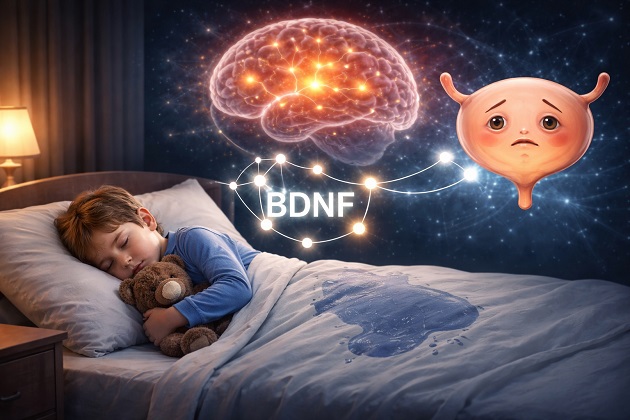
ADHD is one of the most common neurodevelopmental conditions in children, affecting attention, impulse control, and activity levels. Bedwetting, medically known as enuresis, is also relatively common in childhood and often resolves naturally with age. However, research shows that children with ADHD are significantly more likely to experience bedwetting than those without it. At the center of this emerging link is BDNF, a protein that plays a critical role in brain development, nerve cell growth, and communication between neurons.
According to the review, BDNF is essential for processes such as learning, memory, and emotional regulation. It also influences how the brain and body communicate during sleep, including signals that control bladder function.
What The Study Explored
The study, conducted by researchers from the 1st Pediatric Department, Faculty of Health Sciences, School of Medicine, Aristotle University of Thessaloniki in Greece, analyzed existing scientific literature from 2000 to 2025. A total of 30 relevant studies were reviewed to explore how ADHD, enuresis, and BDNF might be interconnected.
Researchers examined several possible mechanisms. One key idea is that both ADHD and bedwetting may stem from shared developmental issues in the brain, particularly in regions responsible for arousal and control during sleep. Another theory suggests that BDNF influences both brain signaling and bladder function, potentially acting as a bridge between the two conditions.
The Role of The Brain and Bladder
One of the most interesting findings is that BDNF is not only active in the brain but also in the bladder. In fact, bladder tissue may produce significantly higher levels of BDNF than brain tissue, suggesting it plays an important role in urinary control. Children with bedwetting have been found to show elevated levels of BDNF in urine, which may indicate increased sensitivity in bladder nerves or delayed development of bladder control. Meanwhile, ADHD has been linked to disruptions in brain circuits that regulate attention and arousal, areas where BDNF is also active.
This
Medical News report highlights that both conditions may involve difficulties in how the brain processes signals during sleep. For example, a child may not wake up when the bladder is full, or the brain may fail to properly suppress the urge to urinate during sleep.
/>
Mixed Evidence and Ongoing Questions
Despite these promising connections, the research is far from conclusive. Some studies report higher levels of BDNF in children with ADHD, while others show lower or unchanged levels. This inconsistency makes it difficult to determine whether BDNF is a cause, a consequence, or simply one piece of a larger puzzle.
Another important limitation is that many studies measure BDNF in different ways—such as in blood, urine, or brain tissue—which may not reflect the same biological processes. As noted in the analysis, urinary BDNF likely reflects local bladder activity rather than overall brain function.
What This Means for Parents and Doctors
The findings suggest that ADHD and bedwetting may not be entirely separate issues, but rather interconnected conditions with shared biological roots. This could have important implications for diagnosis and treatment, encouraging healthcare providers to screen for both conditions when one is present.
However, experts caution that BDNF is not yet a reliable biomarker for diagnosing or predicting either condition. More research is needed, especially long-term studies that track how BDNF levels change over time and with treatment.
Conclusion
In conclusion, the study opens an intriguing window into how brain development, sleep regulation, and bladder control may be more closely linked than previously thought. While BDNF appears to be a promising candidate in explaining this connection, current evidence remains inconsistent and incomplete.
Understanding whether this protein truly acts as a biological bridge between ADHD and enuresis will require more precise and standardized research. Until then, the findings serve as a valuable reminder that childhood conditions often overlap in complex ways, and a more integrated approach to pediatric care may be essential for better outcomes.
The study findings were published in the peer reviewed journal: Brain Sciences.
https://www.mdpi.com/2076-3425/16/4/372
For the latest on ADHD and Enuresis, keep on logging to Thailand
Medical News.
Read Also:
https://www.thailandmedical.news/articles/health-news




 Share
Share
 Tweet
Tweet
 Share
Share