Nikhil Prasad Fact checked by:Thailand Medical News Team Jun 06, 2026 3 months, 4 weeks, 5 hours, 21 minutes ago
Medical News: For years, scientists have struggled to explain why many people continue to experience memory problems, mental fatigue, difficulty concentrating, and other neurological symptoms long after recovering from viral infections. Now, a new review suggests that the answer may not lie in active viral infection of the brain, but rather in lingering viral proteins that continue to trigger harmful biological processes long after the virus itself has disappeared.
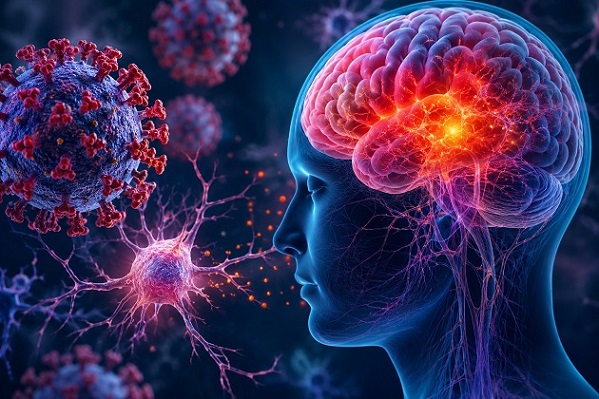 Scientists warn that lingering viral proteins may drive chronic brain inflammation and accelerate processes linked
to Alzheimer's and Parkinson's disease long after infections have ended
Researchers from the Department of Pharmacology, Toxicology, and Pharmacy at the University of Veterinary Medicine Hannover, Germany, and the Center for Systems Neuroscience Hannover (ZSN), Germany, have presented compelling evidence that viral proteins from several different virus families may act as long-lasting toxins that promote brain inflammation and even set the stage for neurodegenerative diseases.
Viral Proteins Emerging as Hidden Threats
The review focuses on what scientists call the "protein-as-pathogen" model. According to this theory, viral proteins released during infection can remain in the body and continue causing damage even after viral replication has ended.
The concept gained momentum during the COVID-19 pandemic as millions of people reported persistent neurological symptoms often referred to as "brain fog." Similar symptoms have also been observed following infections caused by HIV, influenza, dengue virus, West Nile virus, Japanese encephalitis virus, and other pathogens.
Researchers argue that the important discovery is no longer whether viral proteins are harmful, but rather that proteins from many different viruses appear to attack the brain through remarkably similar mechanisms.
Triggering a Dangerous Brain Inflammatory Response
One of the key findings highlighted in the review is that viral proteins can activate specialized immune cells in the brain known as microglia and astrocytes.
These cells normally protect the brain from injury and infection. However, when overstimulated, they can unleash powerful inflammatory responses that damage neurons and interfere with communication between brain cells.
The researchers identified a common pathway involving immune receptors known as TLR4 and TLR2. Viral proteins from SARS-CoV-2, influenza viruses, dengue virus, Japanese encephalitis virus, and other pathogens appear capable of activating these receptors.
Once activated, a chain reaction begins. This process stimulates inflammatory molecules and triggers the NLRP3 inflammasome, a powerful inflammatory complex already implicated in Alzheimer's disease and other neurological disorders.
Recent animal studies cited in the review showed that the SARS-CoV-2 spike protein alone was capable of producing cognitive deficits, memory impairment, synaptic loss, and chronic neuroinflammation even without the presence of a live virus.
Scientists also noted
that patients suffering from cognitive post-COVID syndrome display measurable brain abnormalities, including cortical thinning, increased iron accumulation in the hippocampus, and biomarkers indicating ongoing brain cell damage.
Viral Proteins May Seed Neurodegenerative Diseases
Perhaps the most alarming finding discussed in the review is the growing evidence that viral proteins may help initiate protein aggregation processes associated with diseases such as Alzheimer's and Parkinson's.
Neurodegenerative diseases are often characterized by the buildup of abnormal proteins including tau, amyloid-beta, and alpha-synuclein.
Researchers found evidence that viral proteins may directly interact with these brain proteins and accelerate their aggregation.
Several studies showed that the SARS-CoV-2 spike protein can bind to alpha-synuclein and promote the formation of toxic clumps associated with Parkinson's disease. Other research demonstrated that both spike and nucleocapsid proteins can accelerate the development of these pathological protein structures.
In addition, viral proteins appear capable of disrupting autophagy, the cellular cleanup system responsible for removing damaged proteins. When this system fails, toxic protein aggregates can accumulate more easily.
This
Medical News report highlights how these findings could fundamentally change the way scientists view post-viral illnesses. Rather than being isolated conditions caused by different pathogens, they may represent variations of the same biological process involving chronic inflammation and progressive protein damage.
Evidence Extends Beyond COVID-19
Importantly, researchers emphasize that these mechanisms are not unique to SARS-CoV-2.
West Nile virus proteins have been shown to stimulate amyloid-beta production and neurodegenerative pathways. Influenza virus proteins have been linked to alpha-synuclein accumulation and disruptions in cellular protein regulation. Japanese encephalitis virus proteins have also been found to impair protective cellular processes and weaken the blood-brain barrier.
The growing list of viruses capable of triggering these effects suggests that viral-induced neurological damage may be a much broader public health issue than previously recognized.
New Therapeutic Possibilities Emerging
The discovery of shared pathways offers hope for future treatments. Instead of developing separate therapies for every post-viral condition, researchers suggest targeting common biological mechanisms. Potential approaches include drugs that block TLR4 signaling, inhibit the NLRP3 inflammasome, or enhance autophagy to improve cellular cleanup functions.
One particularly encouraging finding involves metformin. Clinical and experimental evidence suggests that the drug may reduce the risk of developing long COVID and help protect against some of the neurological changes associated with viral protein exposure.
Other treatments currently being investigated include JAK inhibitors, low-dose naltrexone, and intravenous immunoglobulin therapies.
Conclusion
The review presents a compelling new framework for understanding long-term neurological complications after viral infections. Evidence increasingly suggests that lingering viral proteins can continue damaging the brain long after an infection has resolved. By activating chronic inflammatory pathways and promoting the accumulation of harmful protein aggregates, these viral remnants may contribute to memory loss, cognitive impairment, and potentially even the development of neurodegenerative diseases. The fact that multiple unrelated viruses appear to use similar biological mechanisms makes this discovery particularly significant. It not only helps explain conditions such as long COVID and other post-viral syndromes but also points toward the possibility of universal treatments that target shared pathways of brain inflammation and protein dysfunction. As viral outbreaks continue to occur worldwide, understanding and addressing these long-term neurological risks is becoming an increasingly urgent public health priority.
The study findings were published in the peer reviewed journal: Current Opinion in Virology.
https://www.sciencedirect.com/science/article/pii/S1879625726000519
For the latest on viruses and neurological damage, keep on logging to Thailand
Medical News.
Read Also:
https://www.thailandmedical.news/articles/coronavirus
https://www.thailandmedical.news/articles/long-covid




 Share
Share
 Tweet
Tweet
 Share
Share

































