Nikhil Prasad Fact checked by:Thailand Medical News Team Jan 28, 2026 7 months, 5 days, 11 hours, 15 minutes ago
Medical News: Researchers from multiple Italian institutions have unveiled promising new laboratory findings suggesting that a modified version of an old malaria drug could become a powerful new weapon against colorectal cancer, one of the deadliest and most common cancers worldwide.
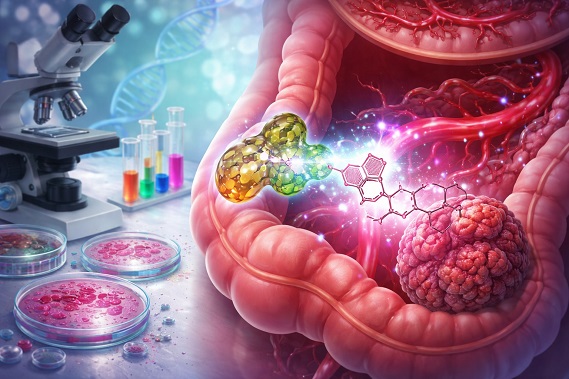 Scientists engineer a malaria drug hybrid that dramatically boosts cancer killing power in colorectal tumors.
A Global Cancer Challenge
Scientists engineer a malaria drug hybrid that dramatically boosts cancer killing power in colorectal tumors.
A Global Cancer Challenge
Colorectal cancer affects nearly two million people each year and remains a leading cause of cancer-related deaths globally. While screening and treatments have improved, many patients are still diagnosed at advanced stages, where chemotherapy resistance and severe side effects limit survival. Scientists are therefore searching for safer and more effective treatment strategies that can attack cancer cells more precisely.
Repurposing a Trusted Malaria Drug
Dihydroartemisinin, a well-known antimalarial drug derived from the plant Artemisia annua, has long been recognized for its safety and effectiveness in treating malaria. Over the last decade, researchers also discovered that it can kill cancer cells. However, its use in cancer therapy has been limited because it breaks down quickly in the body and is poorly absorbed.
To overcome these limitations, scientists combined dihydroartemisinin with naturally occurring bile acids, substances produced by the liver to aid digestion. This
Medical News report highlights how this innovative “molecular hybrid” approach improves drug stability, potency, and cancer-fighting ability.
Where the Research Was Conducted
The study was carried out by researchers from the Department of Environmental and Prevention Sciences, the Department of Translational Medicine, and the Department of Chemical, Pharmaceutical and Agricultural Sciences at the University of Ferrara, Italy, along with scientists from the Institute for Organic Synthesis and Photoreactivity at the National Research Council of Italy in Bologna.
Stronger Cancer Killing at Lower Doses
In laboratory tests using two aggressive human colorectal cancer cell lines, the newly developed bile acid–dihydroartemisinin hybrids performed far better than the original drug alone. Some hybrids were up to twenty times more potent, meaning they stopped cancer cell growth at much lower concentrations.
The most effective versions were created using a precise chemical technique known as click chemistry. These hybrids not only reduced cancer cell survival but also forced cancer cells to stop dividing and, in some cases, triggered programmed cell death. Importantly, the bile acids alone had little effect, showing that the combined hybrid structure was essential.
Blocking Cancer Spread and Blood Supply
Beyond killing cancer cells, the hybrids also reduced the ability of cancer cells to migrate and invade surrounding tissue, key steps in cancer metastasis. In additio
n, the compounds interfered with the growth of endothelial cells that form blood vessels, potentially cutting off the tumor’s blood supply by lowering VEGF receptor levels.
Conclusions and Future Promise
Overall, these findings suggest that bile acid–dihydroartemisinin hybrids could represent a new generation of multi-target cancer treatments that are more powerful, more stable, and potentially safer than conventional chemotherapy. While further animal and clinical studies are required, this research offers renewed hope that reengineering existing drugs can lead to more effective cancer therapies with fewer side effects.
The study findings were published in the peer reviewed journal: Biomolecules.
https://www.mdpi.com/2218-273X/16/1/177
For the latest on treating colon cancer, keep on logging to Thailand
Medical News.
Read Also:
https://www.thailandmedical.news/articles/cancer




 Share
Share
 Tweet
Tweet
 Share
Share

































