Researchers from China Find That the Phytochemical Cepharanthine Can Block Hantavirus from Entering Human Cells
Nikhil Prasad Fact checked by:Thailand Medical News Team May 10, 2026 4 months, 3 weeks, 3 days, 21 hours, 46 minutes ago
Medical News: Chinese scientists have identified a phytochemical compound called cepharanthine as a promising antiviral candidate that may help stop hantavirus infections before they spread inside the body. The discovery is significant because there are currently no approved specific antiviral treatments for deadly hantavirus diseases, which continue to affect thousands of people every year, especially in China.
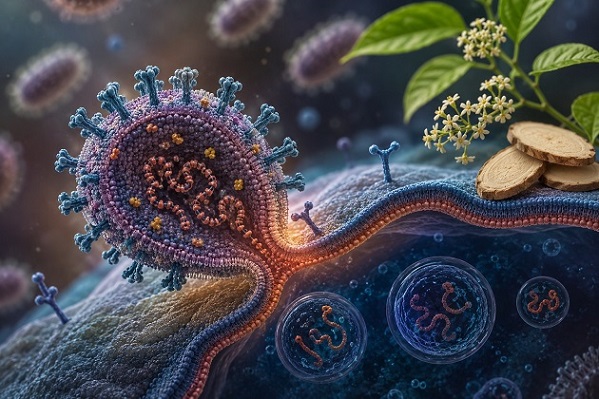 Chinese scientists discover that the natural plant compound cepharanthine may stop deadly hantavirus
infections by blocking the virus from entering human cells.
The research was conducted by scientists from the Division of HIV/AIDS and Sex-Transmitted Virus Vaccines at the National Institutes for Food and Drug Control (NIFDC) and WHO Collaborating Center for Standardization and Evaluation of Biologicals in Beijing, the School of Public Health at Shandong University in Jinan, and the Institute for Reference Standards and Standardization at the National Institutes for Food and Drug Control in Beijing, China.
What Is Hantavirus and Why Is It Dangerous?
Hantaviruses are dangerous viruses spread mainly through rodents. They can cause severe illnesses such as hemorrhagic fever with renal syndrome (HFRS) and hantavirus cardiopulmonary syndrome (HCPS). In severe cases, these diseases can damage the kidneys, lungs, and blood vessels, and can even become fatal.
China reports around 90 percent of the world’s HFRS cases, making the disease a major public health concern. Some outbreaks of hantavirus infections have shown death rates as high as 50 percent. Current treatment options are mostly supportive, meaning doctors can only help manage symptoms rather than directly stop the virus itself.
What Is Cepharanthine?
Cepharanthine (CEP) is a natural bisbenzylisoquinoline alkaloid isolated from the plant Stephania cephalantha Hayata. It has been used in Japan since the 1950s to treat various conditions including leukopenia, alopecia or hair loss, and venomous snakebites.
The compound is well known for its anti-inflammatory, antioxidant, antiviral, and immune-modulating properties. In recent years, scientists have also explored its potential against COVID-19 and several other viral infections.
How The Researchers Conducted the Study
The Chinese team screened a massive library of 2,369 compounds, including 1,813 FDA-approved drugs and 556 compounds derived from traditional Chinese medicine sources. The aim was to identify substances capable of stopping the Hantaan virus, one of the most dangerous hantaviruses.
To safely conduct the experiments, researchers used a specially engineered pseudovirus system that mimicked hantavirus infection without requiring extremely high-level biosafety laboratories. This allowed rapid high-throughput screening of thousands of compounds.
Out of all the tested substances, six compounds showed strong antiviral activity. However, cepharanthine stood out because it demonstrated impressive effectiveness while maintaining relatively low toxicity to cells.
&
lt;br />
Cepharanthine Showed Remarkable Results
Laboratory tests revealed that cepharanthine could block hantavirus infection at very low concentrations. More importantly, the compound also worked in animal studies.
In experiments involving infected mice, cepharanthine reduced viral infection by more than 90 percent. Mice treated with different doses of the compound showed infection reductions ranging from 92 to 94 percent just hours after infection.
Researchers discovered that cepharanthine mainly works during the early stages of infection. Instead of attacking the virus after it multiplies, the compound appears to prevent the virus from successfully entering human cells and fusing with cell membranes.
This
Medical News report highlights that blocking viral entry is considered one of the most effective antiviral strategies because it may stop infection before the virus can spread throughout the body.
Why The Findings Matter
Scientists noted that cepharanthine has already been used medically for decades, meaning researchers already understand much of its safety profile. This could potentially speed up future clinical development if additional studies confirm its effectiveness in humans.
The study also showed that cepharanthine reduced the amount of authentic hantavirus genetic material in infected cells, further strengthening evidence that the compound has genuine antiviral activity.
Conclusion
The findings provide encouraging evidence that cepharanthine may become a future treatment option for dangerous hantavirus infections. What makes the discovery especially important is that the compound not only worked in laboratory cell studies but also produced strong protective effects in infected mice. Researchers believe its ability to block viral entry and membrane fusion could make it useful as both a preventive and early-stage therapeutic agent.
However, larger animal studies and eventual human clinical trials will still be needed before cepharanthine can be officially approved as a treatment for hantavirus diseases.
The study findings were published in the peer reviewed journal: Virologica Sinica.
https://www.virosin.org/article/doi/10.1016/j.virs.2022.04.015
For the latest on hantavirus, keep on logging to Thailand
Medical News.
Read Also:
https://www.thailandmedical.news/articles/hantavirus-news




 Share
Share
 Tweet
Tweet
 Share
Share

































