Nikhil Prasad Fact checked by:Thailand Medical News Team Jun 07, 2026 3 months, 3 weeks, 6 days, 4 hours, 3 minutes ago
Medical News: Leptospirosis, often called “rat urine disease,” has long been a major health threat in tropical countries. Now, a large Malaysian study has uncovered several key warning signs that can help doctors identify which patients are most likely to develop severe and potentially fatal forms of the infection.
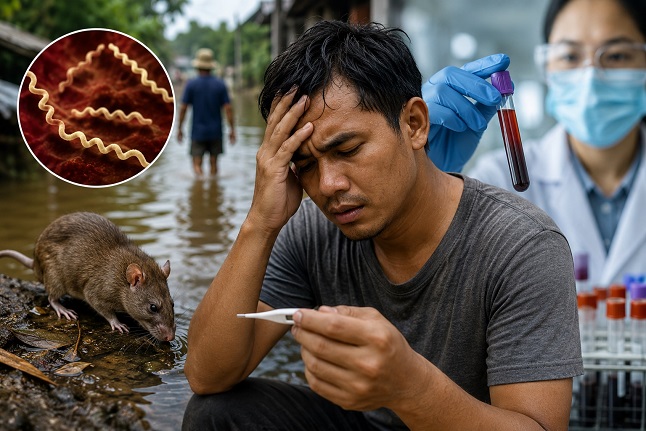 Malaysian researchers identify seven key warning signs that can predict severe and potentially fatal leptospirosis at an
early stage
Scientists found that certain clinical symptoms and routine laboratory findings can predict when leptospirosis is likely to become dangerous, allowing doctors to intervene earlier and potentially save lives.
The research was conducted by investigators from Fatima College of Health Sciences in the United Arab Emirates, Universiti Sains Malaysia in Penang, University of Tabuk in Saudi Arabia, Universiti Islam Melaka in Malaysia, and the University of Auckland in New Zealand.
A Growing Threat Across Malaysia
Leptospirosis is caused by bacteria belonging to the genus Leptospira. Humans typically become infected after coming into contact with water, soil, or surfaces contaminated by the urine of infected animals, especially rodents. The disease is common in tropical climates where warm temperatures and high humidity allow the bacteria to survive for long periods.
Malaysia has experienced a significant increase in leptospirosis cases over the last decade. Flooding events, heavy rainfall, rapid urbanization, and increased human interaction with contaminated environments have all contributed to the growing burden of the disease.
Although many infected individuals experience only mild symptoms such as fever and muscle pain, some patients develop severe complications affecting multiple organs, including the kidneys, liver, lungs, and heart. These severe cases can rapidly become life-threatening.
One of the Largest Studies of Its Kind
The researchers reviewed medical records from 525 adults diagnosed with leptospirosis who were admitted to two major hospitals in Kelantan, northeastern Peninsular Malaysia, between 2011 and 2017.
Among the patients studied, 303 individuals, or 57.7 percent, developed severe leptospirosis. The overall hospital mortality rate was 6.5 percent, with nearly all deaths occurring among patients classified as having severe disease.
The average patient age was 38 years, and about two-thirds of the patients were men.
Common symptoms at admission included fever, muscle aches, nausea, vomiting, joint pain, and headaches. However, the researchers discovered that some less obvious signs were much more strongly linked to severe disease.
Seven Major Predictors of Severe Disease
After detailed statistical analysis, the research team identified seven independent predictors that significantly increased the risk of severe leptospirosis.
The strongest predictor was the presence of abnormal T-wave patterns on an electrocardiogram (ECG), indicating possible heart invol
vement. Patients with these ECG abnormalities were nearly seven times more likely to develop severe disease.
Other important predictors included:
-Age over 40 years
-Delayed hospitalization more than four days after symptoms began
-Redness of the eyes known as conjunctival suffusion
-Low blood sodium levels (hyponatremia)
-Prolonged blood clotting time
-Elevated liver enzyme ALT levels
The findings suggest that many of these warning signs can be detected using simple examinations and routine blood tests available in most hospitals.
Heart Involvement Emerges as a Critical Warning Sign
One of the most striking discoveries was the importance of cardiac abnormalities. Although heart complications in leptospirosis have been recognized before, this study showed that ECG changes were the strongest predictor of severe illness. Researchers believe that inflammation triggered by the infection may directly affect heart tissue and electrical conduction systems.
This means that routine ECG screening could become an important tool for identifying high-risk patients as soon as they arrive at the hospital.
Why Early Treatment Matters
Another significant finding was the association between delayed hospital admission and severe disease.
Nearly half of all patients arrived at the hospital more than four days after symptoms first appeared. Those who delayed seeking care faced a substantially higher risk of developing severe complications.
According to the investigators, early recognition remains critical because serious organ damage often develops during the later stages of infection. Prompt medical treatment, including antibiotics, intensive monitoring, and supportive care, may help reduce complications and improve survival.
This
Medical News report highlights that many of the identified risk factors can be recognized at the bedside without expensive diagnostic equipment, making them especially valuable in rural and resource-limited settings where leptospirosis remains common.
What the Findings Mean
The study demonstrates that severe leptospirosis is far more common than many people realize among hospitalized patients in endemic regions. More importantly, it provides doctors with a practical set of warning indicators that can be used immediately upon admission. By paying close attention to age, heart rhythm abnormalities, eye redness, sodium levels, liver function, blood clotting status, and delays in seeking treatment, healthcare providers may be able to identify high-risk patients much earlier. Earlier recognition could lead to faster interventions, closer monitoring, and improved outcomes. The researchers also emphasize that future studies should investigate the role of different bacterial strains, genetic susceptibility, and emerging biomarkers to further improve prediction and treatment strategies for this potentially deadly disease.
The study findings were published in the peer reviewed journal: Acta Microbiologica Hellenica.
https://www.mdpi.com/2813-9054/71/2/16
For the latest research on Leptospirosis, keep on logging to Thailand
Medical News.




 Share
Share
 Tweet
Tweet
 Share
Share

































