Nikhil Prasad Fact checked by:Thailand Medical News Team Jan 07, 2026 8 months, 3 weeks, 6 days, 19 hours, 36 minutes ago
Medical News: Tiny Molecule Turns Heads in Virus Research
A growing body of science suggests a humble nutrient found in food and produced by gut bacteria could become a helping hand in fights against dangerous viral infections. New research from the National Institutes of Biomedical Innovation Health and Nutrition Japan (NIBIOHN), Tsukuba Primate Research Center, and Osaka University Graduate School of Medicine has uncovered the importance of D-alanine, a naturally occurring D-amino acid, during influenza and COVID-19 illness.
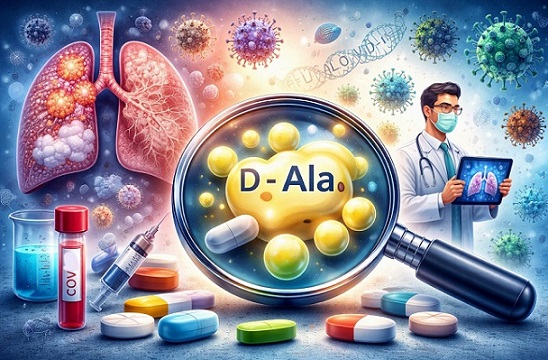 A common nutrient may help predict and reduce the severity of dangerous viral infections
According to the study, dangerously ill mice and critically hospitalized COVID-19 patients showed a sharp drop in blood levels of several D-amino acids. Levels of D-alanine fell the hardest. When scientists added D-alanine back, infected animals tended to fare better, gaining more protection from lung injury, weight loss, and death.
What Are D-Amino Acids
Most amino acids in the body are L-forms, the molecular shape living organisms typically use. The less familiar D-forms are present in tiny amounts, often overlooked until recently. They come from the diet, gut microbes, and normal metabolism, and emerging research links them to disease detection and immune balance.
This
Medical News report highlights that in severe viral illness, D-alanine levels plunge dramatically below normal—even lower than their usual lowest point in the daily sleep–wake cycle, as confirmed in multiple measurements in both mice and humans.
Key Findings from The Study
-D-alanine levels collapse during severe infection
In flu-infected mice, D-alanine dropped by more than 80 percent. Patients with life-threatening COVID-19 on ventilators or ECMO had blood D-alanine levels less than half those of healthy people.
-Lower D-alanine linked to poorer survival
Across several mouse models, the animals that lost body weight fastest and died earliest were the ones whose D-alanine never rebounded.
-Supplementation brought measurable benefit
When researchers supplied D-alanine through drinking water or injection:
*Mice lost less weight
*Their lungs showed fewer blocked air sacs, less bleeding, and reduced immune cell overrun
*Viral load in the lungs was lower
*Survival improved modestly, especially in animals that maintained higher D-alanine levels
These patterns appeared in both influenza A and SARS-CoV-2 infection experiments.
Why It Matters
D-alanine is inexpensive, found naturally in foods, and generally regarded as safe. The scientists caution that benefits were inconsistent and sometimes small because severe infection appears t
o burn through D-alanine faster than supplementation can replace it. Even so, it provides two valuable tools:
-A biomarker to spot who is getting dangerously worse
-A potential supportive nutrient to soften the impact of disease while doctors use other therapies
Conclusion
This research suggests that watching D-alanine could help doctors quickly identify which patients are at highest risk from COVID-19 or influenza, and offering supplemental D-alanine—once doses and timing are refined—may improve outcomes. While the findings still need larger human trials, the study opens a promising doorway by showing that tiny metabolic clues in the blood can guide care, and everyday molecules might provide unexpected protection when viral infections strike hard.
The study findings were published in the peer reviewed journal: BBA Molecular Basis of Disease
https://www.sciencedirect.com/science/article/pii/S0925443922002551
For the latest on preventing or treating Influenza and COVID-19 infections, keep on logging to Thailand
Medical News.
Read Also:
https://www.thailandmedical.news/articles/influenza-or-flu
https://www.thailandmedical.news/articles/coronavirus




 Share
Share
 Tweet
Tweet
 Share
Share

































