Nikhil Prasad Fact checked by:Thailand Medical News Team Oct 19, 2026 44 minutes ago
A combination of two traditional medicinal plants, notoginseng and safflower, could offer a new approach to protecting the heart from ischemic injury, according to research revealing how these plants influence bile acid metabolism and cellular protection.
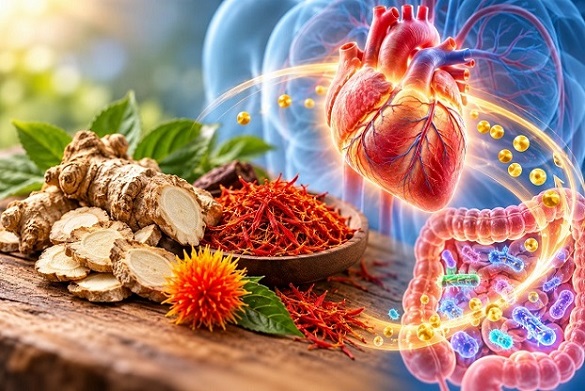 New research suggests that notoginseng and safflower compounds may protect the heart from ischemic
damage by regulating bile acids, gut bacteria, and FXR signaling
Myocardial ischemia occurs when insufficient blood reaches the heart muscle, depriving it of oxygen and potentially causing heart attacks or heart failure.
Researchers from Hubei University of Chinese Medicine, Shihezi University, Peking University, Beijing Anzhen Hospital, Capital Medical University, and University College London investigated the combined effects of notoginseng saponins and safflower flavonoids, known as CNS.
Significant Improvements in Heart Injury
In experiments involving rats with chemically induced myocardial ischemia, CNS substantially reduced heart muscle damage, inflammation, collagen accumulation, and cardiac cell death.
Blood measurements revealed significant reductions in three important indicators of cardiac injury: creatine kinase-MB (CK-MB), lactate dehydrogenase (LDH), and cardiac troponin T (cTnT).
Treatment also lowered inflammatory molecules IL-1β and TNF-α, reduced oxidative damage, and restored protective superoxide dismutase activity.
Bile Acid Regulation Emerges as a Key Mechanism
This
Thailand Medical News report highlights the discovery that CNS protects cardiac tissue partly by correcting abnormal bile acid accumulation.
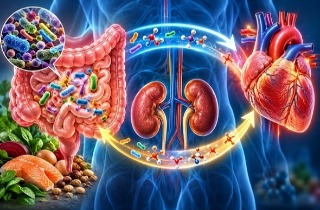
Researchers identified 15 significantly altered metabolites associated with treatment, with bile acid biosynthesis emerging as a particularly important pathway.
CNS reduced excessive bile acids in heart and liver tissues while increasing their elimination through feces. Levels of potentially harmful bile acids, including lithocholic, chenodeoxycholic, and deoxycholic acids, declined in affected tissues.
Gut Bacteria and FXR Signaling
Gut microbiome analysis revealed increased bacterial diversity and restoration of beneficial bacterial groups, including Lactobacillus, Prevotella, and Alloprevotella.
Importantly, CNS activated the farnesoid X receptor (FXR), a protein involved in controlling bile acid metabolism.
Laboratory experiments demonstrated that stimulating FXR strengthened CNS-mediated cellular protection, while blocking FXR weakened these benefits.
Additional experiments involving genetically modified mice lacking FXR showed that CNS could no longer provide comparable protection against cardiac injury. Its ability to normalize bile acid levels was also substantially diminished.
Implications for Future Heart Treatments
These findings suggest that combining notoginseng and safflower compounds could support future cardiovascular drug development
by targeting inflammation, oxidative stress, intestinal bacteria, and bile acid regulation simultaneously.
However, the research involved animals and cultured cells rather than human patients. Clinical studies are necessary to establish safety, appropriate dosing, and whether these promising protective effects translate into meaningful benefits for people with ischemic heart disease.
The study findings were published in the peer-reviewed journal: npj Science of Food.
https://www.nature.com/articles/s41538-026-01168-w
Read Also:
https://www.thailandmedical.news/articles/herbs-and-phytochemicals
https://www.thailandmedical.news/articles/cardiology
Medical Disclaimer: All content published by Thailand Medical News is based on scientific research and is intended for informational and educational purposes only. It is not medical advice, diagnosis, or treatment. Readers must not attempt to use, apply, or experiment with any protocols, compounds, or therapies mentioned without first consulting a qualified and licensed medical doctor. Many findings discussed are experimental or preliminary, and only a licensed healthcare professional can determine what is safe and appropriate for an individual’s specific medical condition. 



 Share
 Tweet
 Share