Nikhil Prasad Fact checked by:Thailand Medical News Team May 12, 2026 3 months, 3 weeks, 16 hours, 1 minute ago
Medical News: A widely used anti-inflammatory drug called indomethacin may soon attract global attention for an entirely different reason after scientists discovered that it can strongly block Respiratory Syncytial Virus (RSV), one of the world’s most dangerous respiratory viruses for infants and older adults.
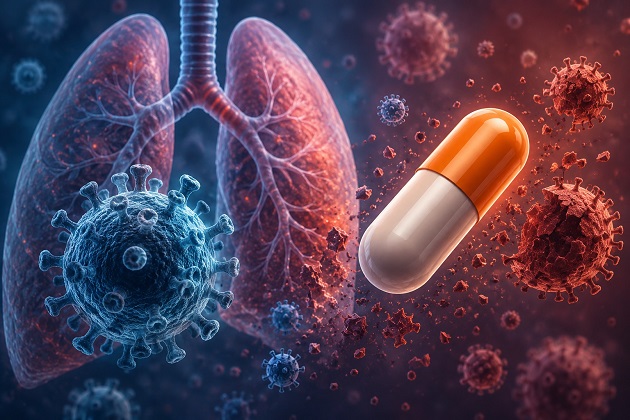 Scientists discover that the common anti-inflammatory drug indomethacin can dramatically reduce RSV virus replication
in human lung cells
Researchers from the Department of Biology at the University of Rome Tor Vergata in Italy and the Institute of Translational Pharmacology of the National Research Council (CNR) in Rome found that indomethacin sharply reduced RSV replication in human respiratory cells during laboratory experiments. The findings are especially important because there are still no highly effective antiviral drugs specifically approved to treat RSV infections after symptoms begin.
RSV is a major cause of hospitalization in babies and can also trigger severe lung disease in elderly individuals and people with underlying health conditions. Each year, the virus infects millions worldwide and contributes to a significant number of pneumonia and bronchiolitis cases.
Scientists Discover Strong Antiviral Effects
The Italian research team tested indomethacin on several types of human respiratory cells infected with RSV. The drug worked remarkably well even at relatively low concentrations. According to the experiments, the medicine reduced the production of infectious RSV particles by more than 90 percent in some settings while showing very little toxicity to healthy cells.
One of the most surprising findings was that the antiviral effect did not depend on the usual anti-inflammatory pathway associated with the drug. Indomethacin is normally known as a non-steroidal anti-inflammatory drug (NSAID) that blocks cyclooxygenase enzymes involved in inflammation and pain. However, another strong cyclooxygenase inhibitor, aspirin, failed to stop RSV replication in the same experiments.
This suggested that indomethacin was using a completely different mechanism to interfere with the virus.
How The Drug Stops RSV
The study showed that indomethacin does not prevent the virus from entering human cells. Instead, it attacks the virus after infection has already started.
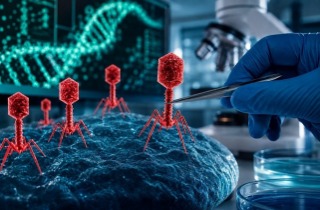
Scientists discovered that the drug interferes with the RSV fusion protein, also known as the F-protein. This protein is critical because RSV uses it to merge with human airway cells and spread from one cell to another. The F-protein is also responsible for the formation of large damaged fused cells known as syncytia, which are commonly seen in severe RSV infections.
Laboratory imaging showed that cells treated with indomethacin had much lower levels of the RSV fusion protein and significantly fewer syncytia formations. Interestingly, the drug appeared to selectively reduce this viral protein while leaving several other RSV proteins relatively less affected.
The researchers believe this targeted disruption may explain why viral spread dropped dramatically.
Potential Advantages
Over Existing Treatments
At present, RSV treatment is mostly supportive. Doctors often rely on oxygen therapy, hydration, and symptom management because available antiviral options have limited effectiveness.
Although vaccines and monoclonal antibodies are now available for prevention, especially for infants and older adults, they are expensive and not useful once active infection becomes severe.
This
Medical News report highlights that indomethacin may offer a unique advantage because it combines both antiviral and anti-inflammatory actions in a single drug. Since RSV disease severity is strongly linked to excessive inflammation in the lungs, a medication that can both suppress viral replication and calm inflammation could become highly valuable.
Another important finding was that indomethacin appears to work through host-cell mechanisms rather than directly attacking viral structures alone. This may reduce the risk of the virus rapidly developing drug resistance, a growing concern with many newer antiviral drugs targeting RSV fusion proteins.
Why The Findings Matter
The researchers noted that RSV remains one of the leading causes of respiratory hospitalization among children under five years old, especially infants younger than six months. Older adults also face significant risks from RSV-related pneumonia and lung complications.
The study also referenced earlier animal research showing that indomethacin reduced RSV-related lung inflammation and tissue damage in infected animals. The new findings now suggest the drug may additionally have direct antiviral effects against RSV itself.
Although the results are promising, the work was conducted in laboratory cell models and not yet in large-scale human clinical trials for RSV treatment. More studies will be needed to determine safe dosing, treatment timing, and real-world effectiveness in infected patients.
Conclusion
The discovery that indomethacin can strongly suppress RSV replication opens an exciting new direction in the search for effective RSV therapies. By interfering with the virus after it enters cells and sharply reducing the production of the crucial fusion protein, the drug demonstrated both antiviral and protective effects in human respiratory cell models. Researchers believe its dual action against both inflammation and viral spread could make it particularly useful for severe RSV infections. If future clinical trials confirm these findings in humans, this decades-old inexpensive drug could potentially become a valuable treatment option for one of the world’s most problematic respiratory viruses.
The study findings were published in the peer reviewed journal: Virus Research.
https://www.sciencedirect.com/science/article/pii/S0168170226000626
For the latest on RSV, keep on logging to Thailand
Medical News.
Read Also:
https://www.thailandmedical.news/articles/med-news
Medical Disclaimer: All content published by Thailand Medical News is based on scientific research and is intended for informational and educational purposes only. It is not medical advice, diagnosis, or treatment. Readers must not attempt to use, apply, or experiment with any protocols, compounds, or therapies mentioned without first consulting a qualified and licensed medical doctor. Many findings discussed are experimental or preliminary, and only a licensed healthcare professional can determine what is safe and appropriate for an individual’s specific medical condition.




 Share
Share
 Tweet
Tweet
 Share
Share