Neuroscience Breakthrough! CASKIN2 Protein Identified as a Key Driver of Memory Signaling
Kittisak Meepoon Fact checked by:Thailand Medical News Team Dec 02, 2025 10 months, 1 day, 22 hours, 38 minutes ago
Medical News: New Discovery That Sheds Light on How the Brain Remembers
A major scientific breakthrough has revealed the long-hidden role of a brain protein called CASKIN2, which acts like a master coordinator for signal transmission between neurons. According to researchers from the Daegu Gyeongbuk Institute of Science and Technology in South Korea, Chungnam National University College of Medicine, and the Center for Synapse Diversity and Specificity, this discovery may eventually help experts better understand brain disorders such as Alzheimer’s disease and autism. Their findings show how the protein affects learning, memory, and the overall communication system inside the brain. This
Medical News report explores these new insights.
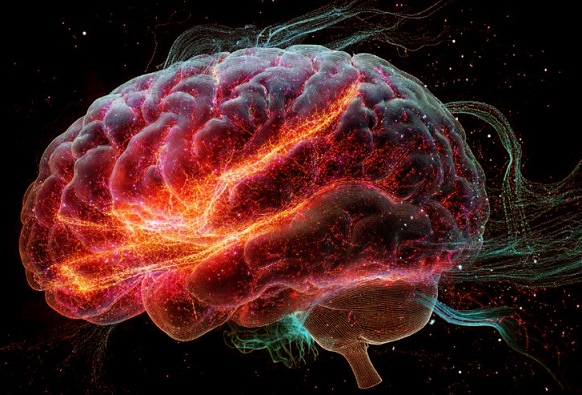 Scientists uncover how the CASKIN2 protein acts as a master regulator of memory-forming neuron signals
How CASKIN2 Helps Neurons Communicate
Scientists uncover how the CASKIN2 protein acts as a master regulator of memory-forming neuron signals
How CASKIN2 Helps Neurons Communicate
The human brain contains billions of neurons that communicate through tiny structures called synapses. For proper memory formation, the sending and receiving sides of these synapses must align with incredible precision. Until now, scientists did not clearly understand how this alignment was controlled at the molecular level.
The new study shows that CASKIN2 sits at the presynaptic terminal—the signal-sending side—and plays an irreplaceable role in strengthening excitatory synapses. Interestingly, its close relative, CASKIN1, does not perform this job, proving that CASKIN2 has a special and unique function in the brain’s communication system.
What makes this discovery more remarkable is that CASKIN2 influences not just the sending side but also the receiving side of the synapse. The team found that CASKIN2 interacts closely with a protein called PTPσ. When PTPσ activates CASKIN2 through a chemical switch known as dephosphorylation, the internal structure of the presynaptic terminal reorganizes itself to deliver faster and more stable messages. This action, in turn, strengthens the NMDA receptors on the receiving neuron, helping signals pass more effectively.
What Animal Studies Reveal About Memory
To confirm these findings, the research teams conducted experiments in mice. When the genes responsible for producing CASKIN2 or PTPσ were removed in the hippocampus—the brain region responsible for memory—mice showed a clear decline in spatial memory. They struggled to remember new locations, proving that these proteins play a central role in learning and memory formation.
The studies further revealed that CASKIN2 acts as the molecular “axis” coordinating the internal actin structure of neurons, which determines how well neurotransmission works. The proper functioning of this mechanism decides how many NMDA receptors reach the cell surface, ultimately shaping synaptic strength and plasticity.
Why This Discovery Matters for Future Medicine
Research
ers say this work offers a major step forward in understanding how precise communication occurs between neurons. It also provides scientific direction for developing therapies targeting diseases involving synaptic failure. By focusing on the molecular partnership between CASKIN2 and PTPσ, future treatments might help restore memory or improve cognitive function in degenerative or developmental brain conditions.
The study team emphasized that these molecular insights serve as a foundation for designing new brain disease therapies. The study also highlights the distinct roles of CASKIN family proteins, clarifying that CASKIN2—unlike CASKIN1—requires PTPσ activation to support proper synaptic function.
Final Thoughts
This research marks an important step in uncovering the biological machinery behind memory. By mapping how CASKIN2 and PTPσ work together to fine-tune signals between neurons, scientists have opened the door to better understanding cognitive disorders and potentially developing new treatments. Their findings show how even tiny molecular shifts inside the brain can shape learning, memory, and overall brain health, offering hope for future medical breakthroughs.
The study findings were published in the peer reviewed journal: Proceedings of the National Academy of Sciences.
https://www.pnas.org/doi/10.1073/pnas.2509116122
For the latest developments in Neuroscience, keep on logging to Thailand
Medical News.
Read Also:
https://www.thailandmedical.news/articles/alzheimer,-dementia-




 Share
Share
 Tweet
Tweet
 Share
Share

































