Nikhil Prasad Fact checked by:Thailand Medical News Team Aug 16, 2026 1 month, 2 weeks, 4 days, 21 hours, 53 minutes ago
Thai Researchers Investigate a Traditional Edible Plant
A new study from Thailand has found that an aqueous extract of Piper sarmentosum Roxb. may help improve cholesterol levels, reduce signs of liver stress and reshape gut bacteria disturbed by a high-fat diet.
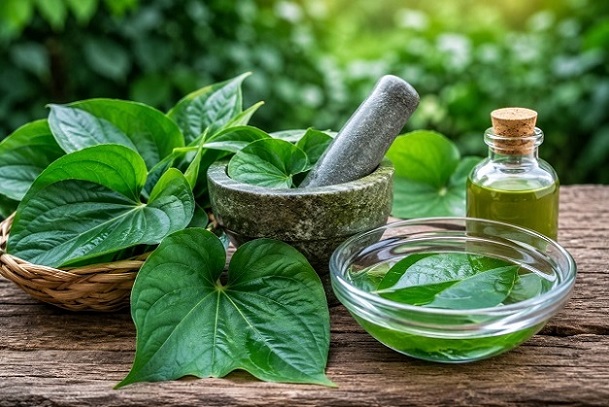 Thai researchers found that Piper sarmentosum extract improved cholesterol and liver markers while altering gut
microbiome patterns in obese rats.
The research focused on PSRW, a water-based extract of Piper sarmentosum, an edible medicinal plant traditionally consumed in parts of Asia. Researchers tested the extract in male Wistar rats that developed obesity and metabolic problems after being fed a high-fat diet. The animals received PSRW, the cholesterol-lowering drug simvastatin, or a combination of both for 12 weeks.
Researchers From Major Thai Institutions
The researchers were from the Department of Biochemistry, Faculty of Medicine, Chiang Mai University; Center of Multidisciplinary Technology for Advanced Medicine, Faculty of Medicine, Chiang Mai University; Cluster of Innovative Research for Translational Medicine in Non-Communicable Diseases, Faculty of Medicine, Chiang Mai University; Innovative Research Unit of Epithelial Transport and Regulation, Department of Physiology, Faculty of Medicine, Chiang Mai University; Office of Research Administration, Chiang Mai University; and Systems Biology and Bioinformatics Research Unit, Pilot Plant Development and Training Institute, King Mongkut’s University of Technology Thonburi.
Major Improvements in Cholesterol and Liver Enzymes
One of the most important findings was that PSRW produced substantial metabolic improvements despite not causing significant weight loss.
Rats receiving the high-fat diet had total cholesterol levels of approximately 191 mg/dL. Treatment with PSRW lowered this to about 115 mg/dL, while simvastatin reduced it to approximately 108 mg/dL. The combination produced an even lower level of about 99 mg/dL.
Liver enzymes also improved dramatically. AST rose to around 243 U/L in high-fat-fed rats but fell to approximately 91 U/L following PSRW treatment. ALT declined from roughly 250 U/L to 108 U/L. With PSRW and simvastatin together, ALT dropped further to approximately 97 U/L.
These findings suggest that the extract’s metabolic effects may occur independently of weight loss.
Gut Microbiome Undergoes Important Changes
What makes this Thailand
Medical News report particularly interesting is the researchers’ detailed investigation of gut bacteria.
The high-fat diet reduced microbial richness and produced substantial changes in bacterial community composition. PSRW partially modified these disturbances, including changes involving bacteria enriched under the high-fat diet.
Researchers also observed an increase in Dwaynesavagella following PSRW supplementation. Importantly, relationships between certain bacteria and metabolic markers changed following treatme
nt. Kineothrix and Muribaculum, for example, became negatively associated with AST and body weight in PSRW-treated animals.
The combination of PSRW and simvastatin also uniquely increased the predicted microbial pathway involving glycine, serine and threonine metabolism.
Researchers believe this could provide clues about how the combination influences metabolic and antioxidant processes.
Plant Compounds Could Help Explain the Effects
The extract contains several biologically active compounds. Analysis of the same aqueous extract in a companion study identified quercetin/trans-cinnamic acid, epicatechin, chlorogenic acid, caffeine and gallic acid among its major components. These compounds provide possible biological explanations for some of the observed lipid and liver-related effects.
Findings Still Need Human Confirmation
The results are promising but remain preliminary. The experiment involved only five rats per group, included only males and tested a single PSRW dose. Gut bacteria were also sampled only at the end of the experiment, while predicted microbial functions require confirmation using more advanced methods. Most importantly, associations between individual bacteria and metabolic improvements do not prove cause and effect.
Conclusions
The study provides compelling early evidence that Piper sarmentosum aqueous extract could influence cholesterol metabolism, liver health and the gut microbiome even without reducing body weight. Its effects were comparable with simvastatin for several measured parameters, while combining both interventions produced additional improvements. However, these findings come from rats and should not be interpreted as evidence that the extract can currently treat high cholesterol, fatty liver disease or obesity in humans. Carefully controlled human clinical studies are needed.
The study findings were published in the peer reviewed journal: Nutrients.
https://www.mdpi.com/2072-6643/18/16/2667
Read Also:
https://www.thailandmedical.news/articles/herbs-and-phytochemicals
https://www.thailandmedical.news/articles/thailand-medical




 Share
Share
 Tweet
Tweet
 Share
Share

































