Nikhil Prasad Fact checked by:Thailand Medical News Team Jul 12, 2026 1 month, 3 weeks, 16 hours, 22 minutes ago
Medical News: Researchers Explore a Promising New Combination Against Deadly Brain Tumors
Scientists from Charles University Faculty of Medicine in Hradec Kralove, Charles University Faculty of Medicine in Pilsen, the University of Hradec Kralove, Charles University Faculty of Pharmacy, University Hospital Hradec Kralove, the Military University Hospital Prague, and the First Faculty of Medicine and General University Hospital in Prague have discovered that combining the common brain cancer drug temozolomide with flubendazole, a medicine traditionally used to treat parasitic worm infections, may significantly improve the ability to slow the growth of aggressive brain cancer cells.
 Scientists found that adding flubendazole significantly strengthened the anti-cancer effects of temozolomide against aggressive glioblastoma in laboratory and animal studies
A New Strategy for Fighting Glioblastoma
Scientists found that adding flubendazole significantly strengthened the anti-cancer effects of temozolomide against aggressive glioblastoma in laboratory and animal studies
A New Strategy for Fighting Glioblastoma
Glioblastoma is the most aggressive form of brain cancer and remains extremely difficult to treat. Even after surgery, radiation and chemotherapy, most patients survive only about 12 to 15 months. One of the biggest challenges is that cancer cells gradually become resistant to temozolomide, the standard chemotherapy drug.
To tackle this problem, researchers tested whether adding flubendazole could make temozolomide more effective. Laboratory experiments were performed using three different human glioblastoma cell lines, while additional studies in mice helped evaluate how the drug combination behaved inside living tissue.
Stronger Attack on Cancer Cells
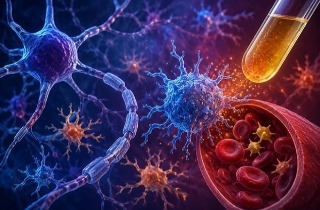
The results were encouraging. The combination treatment consistently reduced cancer cell growth more effectively than temozolomide alone. Flubendazole-containing treatments also caused major structural changes inside the cancer cells, disrupted their internal support system known as microtubules, and triggered activation of several caspases, proteins that help initiate the process leading to cell death.
Researchers also found that the combined treatment forced many tumor cells to become trapped during the G2/M stage of the cell cycle. Since cells must successfully complete this stage before dividing, blocking it can prevent tumors from multiplying rapidly.
Interestingly, flubendazole itself showed much greater potency against glioblastoma cells than temozolomide when tested individually.
Better Drug Delivery May Be Part of the Answer
In the middle of this
Medical News report, one particularly important finding deserves attention. The researchers discovered that adding flubendazole increased the amount of temozolomide that accumulated inside glioblastoma cells. Similar improvements in drug accumulation were also observed in brain and tumor tissues in mice. In some experiments, flubendazole levels also increased when both drugs were given together.
This suggests the combination may help deliver higher concentrations of chemotherapy directly into tumor tissue, potentially making t
reatment more effective without simply increasing the chemotherapy dose.
The study also found reduced levels of alpha-tubulin and betaIII-tubulin, proteins that form microtubules and play essential roles in cancer cell growth and movement. Microscopic imaging clearly showed disrupted microtubule networks after combination treatment, further weakening the tumor cells' ability to survive and divide.
Animal Studies Show Additional Promise
In mice carrying human glioblastoma tumors, animals receiving the combination therapy developed smaller tumors than untreated animals. The researchers also measured lower levels of Ki-67, a marker associated with rapidly growing cancer cells. While flubendazole alone also produced encouraging effects, the combined therapy demonstrated several biological changes that justify additional investigation.
Conclusion
Although these findings remain preclinical and require further validation before any clinical use, the study suggests that combining flubendazole with temozolomide could become a promising strategy to overcome treatment resistance, improve chemotherapy delivery, disrupt multiple survival pathways within glioblastoma cells, and potentially enhance future outcomes for patients battling this devastating cancer.
The study findings were published in the peer reviewed journal: Cells.
https://www.mdpi.com/2073-4409/15/14/1239
For the latest on brain cancer, keep on logging to Thailand
Medical News.
Read Also:
https://www.thailandmedical.news/articles/cancer
https://www.thailandmedical.news/articles/med-news




 Share
Share
 Tweet
Tweet
 Share
Share