Nikhil Prasad Fact checked by:Thailand Medical News Team Jun 19, 2026 3 months, 2 weeks, 1 day, 1 hour, 15 minutes ago
Medical News: A new study has found that even after people recover from mild COVID-19, important molecular changes inside their cells may continue long after the virus has disappeared. Researchers discovered that SARS-CoV-2 infection can disrupt a process known as ADAR RNA editing, and in some individuals these abnormalities persist even after recovery, potentially helping explain why some people continue to experience lingering health issues.
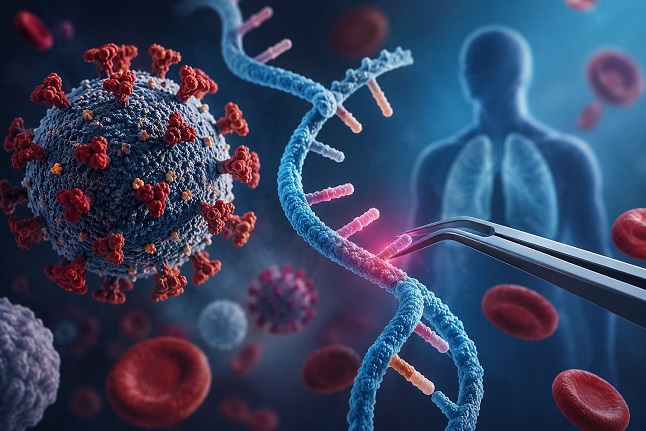 Study finds that mild COVID-19 can leave persistent RNA-editing abnormalities in some individuals even after recovery
The research was conducted by scientists from the Department of Biological Sciences at Kent State University, the Brain Health Research Institute at Kent State University, and the Healthy Communities Research Institute at Kent State University, Ohio, United States.
Understanding RNA Editing
RNA editing is a natural process that helps cells fine-tune how genes function. One of the key players in this process is an enzyme called ADAR, which modifies RNA molecules after they are produced from DNA. These modifications can influence how proteins are made, how immune responses are controlled, and how cells react to infections.
During viral infections, ADAR enzymes become particularly important because they help the body recognize and respond to invading pathogens. However, disturbances in this system can also affect normal cellular functions.
Tracking Patients Before, During and After Infection
To understand how COVID-19 affects RNA editing over time, the researchers analyzed blood samples from 45 healthy, physically fit individuals who had no known medical conditions and developed only mild COVID-19.
What made this investigation unique was that samples were available from the same individuals before infection, during active infection, and after the virus had been cleared. This allowed researchers to track molecular changes across the entire course of illness and recovery.
The team focused on changes involving ADAR gene activity and RNA editing patterns.
ADAR Activity Rises During Infection
The researchers found that ADAR1, one of the major RNA-editing enzymes, became significantly more active during infection. This increase was accompanied by widespread changes in gene activity involving immune system pathways, interferon signaling, and other antiviral defense mechanisms.
Interestingly, once the virus was eliminated, ADAR1 expression largely returned to normal levels. At first glance this suggested that the body's molecular systems had recovered. However, a deeper analysis revealed a more complicated picture.
RNA Editing Remains Disturbed in Some Individuals
Although ADAR1 activity normalized after recovery, RNA editing patterns did not always return to their original state.
The researchers identified numerous editing sites that appeared only during certain stages of infection and disappeared at others. Many of these changes occurred in genes involved in immune regulation and inflammatory r
esponses.
One of the most striking findings was a significant reduction in overall RNA editing during active infection. While some people regained normal editing levels after recovery, others continued to show abnormal patterns weeks after the virus had been cleared.
This
Medical News report highlights an important possibility: the biological effects of COVID-19 may continue even when standard tests show that the infection is over.
Immune System Genes Were Strongly Affected
Many of the altered editing sites were found in genes linked to immune pathways, especially those involved in neutrophil degranulation. Neutrophils are frontline immune cells that release powerful substances to destroy pathogens.
Previous studies have already linked excessive neutrophil activity to inflammation, tissue damage, and long COVID symptoms. The new findings suggest that RNA-editing disturbances may contribute to these immune abnormalities.
The researchers also observed unique editing changes affecting genes involved in interferon responses, inflammatory signaling, RNA metabolism, and cell death regulation.
Two Distinct Recovery Patterns Emerge
A particularly important discovery emerged when the team divided participants into groups based on their recovery patterns.
Approximately one-quarter of the participants continued to show substantial RNA-editing abnormalities after recovery. The remaining individuals largely returned to their pre-infection editing patterns.
This suggests that people may respond very differently to the same infection at the molecular level, even when they experience only mild symptoms.
What the Findings Mean
The study provides some of the strongest evidence to date that SARS-CoV-2 can leave behind lasting changes in the body's RNA-editing machinery. While the infection itself may be mild and temporary, the molecular consequences can persist in certain individuals.
The researchers believe these lingering disturbances could help explain why some people experience prolonged symptoms or unusual health effects after recovering from COVID-19. Although further studies are needed to determine the direct clinical impact of these changes, the findings suggest that persistent RNA-editing dysregulation may represent an important biological mechanism underlying post-COVID complications. Understanding these molecular alterations could eventually lead to better ways of identifying, monitoring, and treating individuals who remain affected long after the virus has been cleared.
The study findings were published in the peer reviewed journal: Frontiers in Cellular and Infection Microbiology.
https://www.frontiersin.org/journals/cellular-and-infection-microbiology/articles/10.3389/fcimb.2026.1857062/full
For the latest COVID-19 news, keep on logging to Thailand
Medical News.
Read Also:
https://www.thailandmedical.news/articles/coronavirus
https://www.thailandmedical.news/articles/long-covid




 Share
Share
 Tweet
Tweet
 Share
Share