Nikhil Prasad Fact checked by:Thailand Medical News Team Jan 30, 2026 6 months, 4 days, 21 hours, 57 minutes ago
Medical News: A new exploratory clinical study has examined whether daily vitamin B3 supplementation can help protect the eyes of people living with primary open angle glaucoma, a leading cause of irreversible blindness worldwide. The research followed patients for six months and focused on whether the supplement could slow or reverse damage to the optic nerve and retina rather than simply lowering eye pressure, which remains the standard treatment approach.
 Daily vitamin B3 supplementation kept glaucoma eyes stable over six months without clear progression or improvement
Why Researchers Looked at Vitamin B3
Daily vitamin B3 supplementation kept glaucoma eyes stable over six months without clear progression or improvement
Why Researchers Looked at Vitamin B3
Glaucoma damages retinal ganglion cells, which are critical nerve cells that transmit visual information from the eye to the brain. Scientists believe that these cells suffer from energy failure and mitochondrial dysfunction as the disease progresses. Vitamin B3, also known as niacinamide, is a precursor to NAD plus, a molecule essential for cellular energy production and repair. Earlier animal studies suggested that boosting NAD levels could protect retinal nerve cells from degeneration, prompting interest in testing this approach in humans.
Who Conducted the Study
The research team included scientists and clinicians from the University of Medicine and Pharmacy of Craiova in Romania, Carol Davila University of Medicine and Pharmacy in Bucharest, Barnsley Hospital NHS Foundation Trust in the United Kingdom, and Iuliu Hatieganu University of Medicine and Pharmacy in Cluj Napoca. Patients were recruited from a private ophthalmology clinic in Bucharest and continued their usual glaucoma treatments during the study.
How The Study Was Done
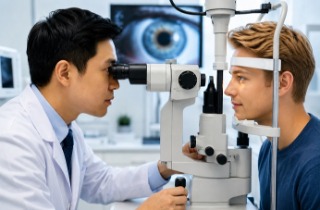
Fifty-eight patients with controlled primary open angle glaucoma were given a daily oral dose of 500 milligrams of niacinamide for six months. Researchers evaluated both eyes where possible, analyzing visual field tests, high resolution retinal scans using optical coherence tomography, and electrical signals from the visual pathway using visual evoked potentials. This
Medical News report highlights that advanced statistical methods were used to account for the fact that many participants contributed data from both eyes, improving accuracy.
What The Researchers Found
After six months, most measures showed stability rather than clear improvement or worsening. Visual field testing revealed a small trend toward better overall sensitivity, but this did not reach statistical significance once eye to eye correlations were considered. Retinal nerve fiber layer thickness showed a very small average decrease of about one micrometer, a change considered too small to represent meaningful disease progression. The ganglion cell complex at the macula remained largely unchanged, supporting the idea of short-term structural stability. Electrical tests of the visual pathway also remained stable, with only minor fluctuations well within normal testing variability.
Why These Findings Matter
Importantly, researchers found a mo
derate link between preservation of macular structure and stable visual field performance, suggesting that monitoring the macula may be especially useful in future neuroprotection trials. The results also reinforce the importance of careful statistical analysis in eye research, as simpler methods may exaggerate apparent benefits.
Conclusions
Overall, six months of low dose niacinamide supplementation appeared safe and was associated with functional and structural stability in glaucoma patients rather than dramatic improvement. While the findings do not prove that vitamin B3 can reverse glaucoma damage, they support further long-term, randomized controlled trials to determine whether higher doses or earlier intervention could offer meaningful neuroprotection. The cautious but encouraging signals suggest that metabolic support for retinal cells remains a promising avenue in glaucoma research.
The study findings were published in the peer reviewed journal: Vision
https://www.mdpi.com/2411-5150/10/1/7
For the latest on glaucoma, keep on logging to Thailand
Medical News.
Read Also:
https://www.thailandmedical.news/articles/glaucoma-news




 Share
Share
 Tweet
Tweet
 Share
Share