Nikhil Prasad Fact checked by:Thailand Medical News Team Jul 02, 2026 1 month, 2 weeks, 3 days, 13 hours, 41 minutes ago
Medical News: Long COVID has been linked to lingering inflammation and damage to blood vessels, prompting scientists to investigate whether everyday nutrition could influence recovery. A new study has now explored whether the amount of minerals people consume through their diet affects blood vessel stiffness and vascular aging in those living with long COVID. While a few interesting trends emerged, the researchers found no strong evidence that any individual mineral independently protects or harms blood vessels after rigorous statistical testing.
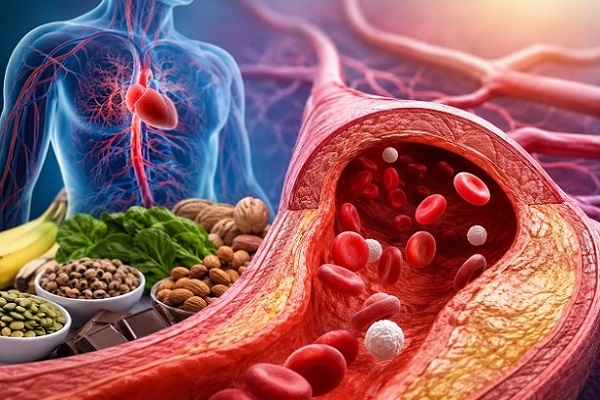 A new study suggests dietary minerals alone may not significantly influence blood vessel health in long COVID,
although magnesium and potassium warrant further investigation
Researchers Investigate Diet and Vascular Health
The research was conducted by scientists from the Primary Care Research Unit of Salamanca (APISAL), the Biomedical Research Institute of Salamanca (IBSAL), the University of Salamanca, the Research Network on Chronicity, Primary Care and Health Promotion (RICAPPS), Hospital Universitario Marqués de Valdecilla, and Hospital Universitario La Paz, all in Spain.
The team analyzed data from 304 adults diagnosed with long COVID as part of the BioICOPER study. Participants recorded everything they ate and drank over seven consecutive days using the validated EVIDENT dietary assessment tool.
Researchers then measured several markers of vascular health, including artery stiffness and vascular aging, while also considering age, lifestyle, medical conditions, and total calorie intake.
What the Study Found
One of the initial observations showed that participants consuming adequate amounts of iron had lower brachial-ankle pulse wave velocity, a measurement associated with healthier, more flexible arteries. However, when researchers performed more sophisticated analyses that adjusted for multiple health and lifestyle factors, this apparent benefit was no longer statistically convincing.
Similarly, zinc intake appeared to show a weak association with increased stiffness in one measurement of the body's central arteries. Yet this relationship disappeared after the researchers corrected for multiple statistical comparisons and excluded participants taking dietary supplements.
This
Medical News report highlights that although isolated findings appeared promising, none remained strong enough to conclude that a single dietary mineral directly influences vascular health in people with long COVID.
Important Trends Still Deserve Attention
Although the main findings were negative, the study uncovered intriguing patterns involving magnesium and potassium. Advanced statistical modeling suggested these minerals may have non-linear relationships with vascular health. In simple terms, their effects may not increase or decrease in a straight line. Instead, there could be optimal intake ranges where benefits become more noticeable, while consuming either too little o
r too much may not produce the same effects.
Researchers also found that many participants failed to meet recommended intakes for several important minerals, especially iodine, calcium, phosphorus, sodium, and magnesium, whereas selenium, zinc, and iron intake was generally more adequate.
The investigators stressed that dietary phosphorus deserves additional study because current dietary assessments cannot distinguish naturally occurring phosphorus from phosphate additives commonly found in processed foods, which may affect the body differently.
Why the Findings Matter
Long COVID is increasingly recognized as a condition involving chronic inflammation, damage to the lining of blood vessels, and accelerated vascular aging. Because minerals help regulate blood pressure, antioxidant defenses, muscle function, and blood vessel relaxation, scientists expected they might play a measurable role in vascular recovery.
Instead, the study suggests that vascular health in long COVID is likely influenced by a much more complex combination of nutrition, metabolism, inflammation, existing medical conditions, and overall dietary patterns rather than any single nutrient alone.
Conclusion
The findings indicate that individual mineral intake alone does not appear to have a clear independent impact on blood vessel stiffness or vascular aging in people with long COVID. Nevertheless, the observed patterns involving magnesium and potassium, together with widespread mineral inadequacies, justify larger long-term studies and carefully designed nutritional intervention trials before any dietary recommendations or supplementation strategies can be confidently made.
The study findings were published in the peer reviewed journal: Nutrients.
https://www.mdpi.com/2072-6643/18/13/2140
For the latest on Long COVID, keep on logging to Thailand
Medical News.
Read Also:
https://www.thailandmedical.news/articles/long-covid




 Share
Share
 Tweet
Tweet
 Share
Share