Long COVID Neurodegeneration Linked to Neurovascular and Neuronal Damage, Impaired Neurogenesis and Neuroinflammation
Nikhil Prasad Fact checked by:Thailand Medical News Team Jul 12, 2026 1 month, 3 weeks, 13 hours, 13 minutes ago
Medical News: Researchers from the National Centre for Neuroimmunology and Emerging Diseases, Health Group, Griffith University, Gold Coast, Australia have uncovered growing evidence that long COVID may trigger changes in the brain that resemble the early stages of neurodegenerative disease. Their review highlights how lingering effects of SARS-CoV-2 infection could damage brain cells, blood vessels, and the brain's natural repair systems, potentially explaining why many patients continue to struggle with memory loss, brain fog, and fatigue months or even years after infection.
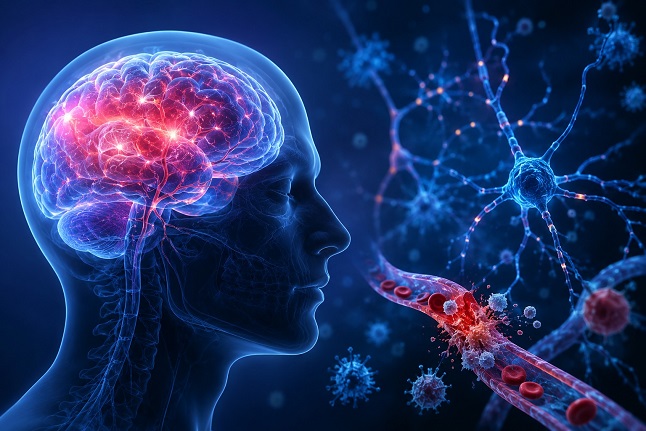 New research suggests long COVID may cause lasting brain injury through chronic inflammation, blood vessel damage,
and impaired brain repair mechanisms
Why Scientists Are Concerned
Long COVID affects an estimated one in ten people infected with SARS-CoV-2, with neurological symptoms among the most common complaints. Many patients experience poor concentration, memory problems, headaches, sleep disturbances, dizziness, and overwhelming fatigue. According to the researchers, these symptoms may not simply reflect slow recovery but could result from ongoing biological damage within the brain.
The review explains that SARS-CoV-2 may reach the brain through several routes, including the olfactory system linked to smell, damaged blood vessels, or even the gut-brain connection via the vagus nerve. Once inside, the virus or its remaining proteins may continue disrupting normal brain function long after the initial infection has resolved.
Brain Damage Appears to Involve Several Mechanisms
The researchers found that long COVID may promote neurovascular injury by damaging the blood-brain barrier, the protective shield that normally prevents harmful substances from entering brain tissue. When this barrier becomes leaky, inflammatory immune cells and proteins can enter the brain, fueling chronic inflammation.
The review also describes evidence of persistent activation of microglia and astrocytes, the brain's immune support cells. While these cells normally protect neurons, prolonged activation causes them to release inflammatory chemicals that can injure nerve cells, disrupt communication between neurons, and reduce neurogenesis, the process through which new brain cells are formed. This
Medical News report highlights that impaired neurogenesis may contribute to the lasting cognitive problems experienced by many long COVID patients.
Imaging Studies Reveal Structural Brain Changes
Brain imaging studies summarized in the review revealed reduced grey matter volume, altered white matter integrity, abnormal brain connectivity, hippocampal remodeling, and metabolic disturbances in patients with long COVID. Several studies also identified reduced blood flow in important cognitive regions together with changes in glutamate, choline, and other brain chemicals involved in memory, learning, and energy production.
Blood markers associated with
neuronal injury and astrocyte damage were also elevated in patients suffering persistent cognitive impairment, supporting the possibility that genuine biological injury accompanies long COVID rather than symptoms being solely psychological.
What the Findings Mean
The researchers stress that current evidence suggests long COVID-related neurological damage is driven by several interacting processes, including viral persistence, chronic neuroinflammation, blood vessel injury, abnormal immune activation, and impaired repair of brain tissue. These mechanisms overlap with pathways already recognized in disorders such as Alzheimer's disease, Parkinson's disease, multiple sclerosis, and other neurodegenerative illnesses. However, they caution that current studies mainly cover relatively short follow-up periods and do not yet prove that long COVID inevitably leads to these diseases.
The researchers conclude that continued long-term monitoring of people with long COVID is essential to determine whether these neurological abnormalities eventually resolve or progress. They also emphasize that identifying reliable biomarkers and understanding the underlying mechanisms will be critical for developing earlier diagnosis, targeted treatments, and strategies to prevent permanent neurological damage in affected patients.
The study findings were published in the peer reviewed Journal of Translational Medicine.
https://link.springer.com/article/10.1186/s12967-026-08607-y
For the latest on Long COVID, keep on logging to Thailand
Medical News.
Read Also:
https://www.thailandmedical.news/articles/long-covid
https://www.thailandmedical.news/articles/coronavirus




 Share
Share
 Tweet
Tweet
 Share
Share

































