Nikhil Prasad Fact checked by:Thailand Medical News Team Jan 13, 2026 7 months, 2 weeks, 6 days, 19 hours, 35 minutes ago
Medical News: In the shadowy depths of our immune system lies a small but mighty organ called the thymus, often overlooked until now. As the world grapples with the lingering shadows of the COVID-19 pandemic, groundbreaking research reveals a chilling truth: the SARS-CoV-2 virus doesn't just ravage the lungs—it launches a stealth attack on the thymus, crippling our body's defense headquarters and setting the stage for long-haul health nightmares.
This Medical News report dives deep into how this insidious virus turns the thymus dysfunctional, why it matters, and the ripple effects that could haunt survivors for years.
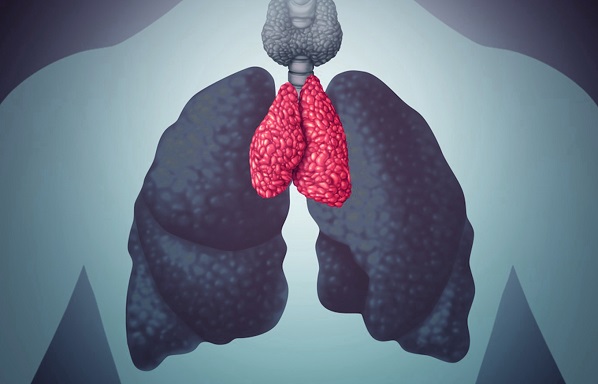 SARS-CoV-2's hidden attack on the thymus could explain long COVID's immune woes
The Vital Role of the Thymus in Our Immune Arsenal
SARS-CoV-2's hidden attack on the thymus could explain long COVID's immune woes
The Vital Role of the Thymus in Our Immune Arsenal
Tucked behind the breastbone, the thymus is no mere bystander in the body's fight against invaders. This butterfly-shaped gland is the boot camp for T-cells, those elite warriors of the adaptive immune system. From birth, it takes immature cells from the bone marrow and molds them into sophisticated fighters capable of recognizing and destroying specific threats like viruses, bacteria, and even cancer cells. The thymus ensures T-cells learn to distinguish friend from foe through a rigorous selection process: positive selection hones their ability to spot foreign antigens, while negative selection weeds out those that might attack the body's own tissues, preventing autoimmune chaos.
Peak performance hits in childhood, but by adulthood, the thymus begins to shrink—a natural process called involution. Yet, it never fully retires, continuing to churn out fresh, naïve T cells that replenish our immune repertoire. Without a healthy thymus, we'd be left with a stagnant army of aging T-cells, vulnerable to new pathogens and prone to misfires. It's the unsung hero keeping our immunity diverse, responsive, and balanced.
SARS-CoV-2's Sneak Attack on the Thymus
Enter SARS-CoV-2, the crafty coronavirus behind COVID-19. Studies show this virus doesn't stop at the respiratory tract; it infiltrates the thymus directly, hijacking its cells and sparking a cascade of destruction. Researchers have found viral particles in thymic tissue, where the virus infects thymocytes—the precursors to T-cells—and epithelial cells that nurture them. This invasion triggers massive inflammation, apoptosis (programmed cell death), and atrophy, shrinking the organ and halting its output.
One pivotal study using autopsy samples and patient data revealed that COVID-19 patients exhibit reduced thymic function, directly correlating with disease severity. In severe cases, the thymus shows altered gene expression, with upregulated inflammatory pathways and downregulated genes crucial for T-cell maturation.
Mouse models infected with SARS-CoV-2 variants like Delta demonstrated severe thymic atrophy, marked by a drastic drop in double-positive (CD4+CD8+) T-cells—up to 80% loss in some instances—driven by interferon-gam
ma (IFN-γ) signaling.
This cytokine storm not only kills off developing T-cells but also disrupts the thymic microenvironment, leading to fibrosis and long-term scarring.
Even milder variants like Omicron cause marginal atrophy, but the original strains and Delta wreak havoc, depleting the T-cell pipeline. In fetal infections, SARS-CoV-2 reaches the thymus via intraamniotic routes, causing DNA damage and immune imbalance, as seen in elevated markers like HMGB1 and CD86.
Genetic factors play a role too; polymorphisms in the TCRA-TCRD locus, which influence thymic output, determine how robustly the immune system rebounds post-infection.
Health Fallout from a Compromised Thymus
When SARS-CoV-2 sabotages the thymus, the consequences echo far beyond acute illness. A dysfunctional thymus means fewer new T-cells entering circulation, resulting in a narrowed T-cell receptor (TCR) repertoire. This "immune exhaustion" leaves patients susceptible to secondary infections, from bacterial pneumonia to opportunistic fungi.
Long COVID sufferers often report persistent fatigue, brain fog, and autoimmune flares—symptoms linked to this thymic hit. Studies tie thymic involution to inflammaging, where chronic low-grade inflammation accelerates aging and boosts risks for conditions like diabetes, heart disease, and even cancer.
In elderly patients, already dealing with age-related thymic shrinkage, COVID-19 exacerbates the problem, leading to "acute T-cell exhaustion." This isn't just peripheral; it's central, disrupting the thymus's oversight of immune homeostasis. Research shows that boosting thymic output with thymosin alpha-1 (Tα1) in severe cases restores T-cell counts, reduces mortality by up to 50%, and cuts reliance on ventilators. Without intervention, survivors face waning immunity, poorer vaccine responses, and a higher autoimmune disease incidence, as self-reactive T cells slip through unchecked.
Detailed Insights from Groundbreaking Studies
Delving into specifics, a 2023 study in the Journal of Allergy and Clinical Immunology examined 200 COVID-19 patients and found thymic epithelial cells expressing ACE2 receptors—the virus's entry point—making them prime targets.
Infected thymi displayed a 40-60% reduction in recent thymic emigrants (RTEs), correlating with ICU stays and mortality rates exceeding 30% in severe groups. Autopsies revealed viral RNA in 70% of thymic samples from deceased patients, with histological changes including lymphoid depletion and hemorrhage.
Another investigation using K18-hACE2 transgenic mice highlighted variant-specific effects: Delta infection caused near-total depletion of double-positive T cells within days, mediated by IFN-γ, as neutralizing antibodies against it reversed atrophy. Remdesivir treatment not only curbed lung viral loads but also preserved thymic structure, restoring T-cell maturation pathways. In humans, CT scans of 465 adults showed pneumonia 3.85 times more prevalent in those without visible thymus, with infected lung segments averaging 4.84 times higher.
Fetal studies detected high viral loads in the thymus, leading to proteomic shifts with upregulated DNA damage responses and immune markers, potentially stunting lifelong immunity. Genetic analyses linked the rs2204985 GG genotype to better thymic reactivation, higher naïve T-cell counts, and milder pneumonia, underscoring personalized risks.
These revelations paint a dire picture, yet they offer hope through targeted therapies. By understanding SARS-CoV-2's thymic assault, we can develop interventions like thymic peptides or antivirals to shield this vital organ, potentially mitigating long-term immune woes and enhancing recovery. The pandemic's hidden toll on the thymus reminds us that COVID-19's legacy extends deep into our biology, urging vigilance and innovation in post-viral care.
As we reflect on these findings, the implications are profound: SARS-CoV-2's targeting of the thymus not only amplifies acute disease severity but also seeds chronic immune dysregulation, heightening vulnerability to infections, autoimmunity, and age-related ailments. Boosting thymic function through drugs like Tα1 or antivirals could revolutionize treatment, offering a lifeline to restore T-cell diversity and resilience. This underscores the need for ongoing research to combat the virus's long shadow on global health, potentially saving countless lives by fortifying our inner defenses against future threats.
References:
https://www.jacionline.org/article/S0091-6749(23)00147-1/fulltext
https://onlinelibrary.wiley.com/doi/full/10.1002/eji.202350624
https://www.mdpi.com/2073-4409/10/3/628
https://www.science.org/doi/10.1126/sciadv.adh7969
https://www.europeanreview.org/article/29542
https://www.nature.com/articles/s41467-025-65131-1
https://www.frontiersin.org/journals/immunology/articles/10.3389/fimmu.2023.1130398/full
https://www.mdpi.com/2076-393X/9/10/1119
https://europepmc.org/article/pmc/pmc9108347
https://www.aaaai.org/tools-for-the-public/latest-research-summaries/the-journal-of-allergy-and-clinical-immunology/2023-the-journal-of-allergy-and-clinical-immunolog/thymus
https://www.sciencedirect.com/science/article/pii/S2589004223000494
https://cdnsciencepub.com/doi/10.1139/cjm-2020-0170
For the latest news, keep on logging to Thailand
Medical News.
Read Also:
https://www.thailandmedical.news/articles/coronavirus
https://www.thailandmedical.news/articles/long-covid




 Share
Share
 Tweet
Tweet
 Share
Share