Medical News Fact checked by:Thailand Medical News Team Mar 05, 2026 6 months, 4 weeks, 1 day, 21 hours, 26 minutes ago
Medical News: Researchers have uncovered new evidence that COVID-19 does far more than attack the lungs. A new scientific study shows that the virus can significantly alter the metabolism of red blood cells—the cells responsible for transporting oxygen throughout the body—and these changes appear to affect men and women differently.
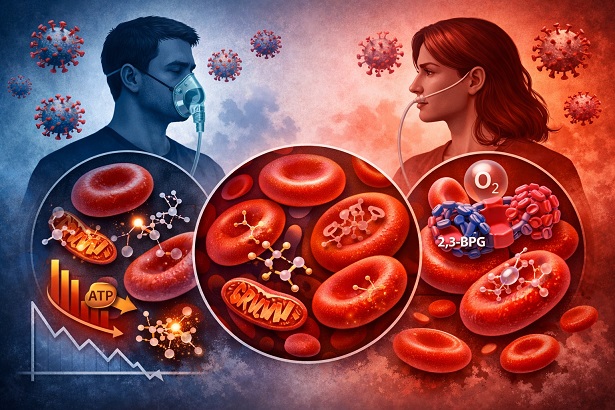 Scientists discover that COVID-19 changes red blood cell metabolism in men and women differently, potentially
affecting disease severity
The research was conducted by scientists from the Vall d’Hebron University Hospital and the Autonomous University of Barcelona in Spain, along with experts from Moldrug AI Systems SL and ProtoQSAR SL located in the Parque Tecnológico de Valencia, Spain. Their findings reveal that COVID-19 can disrupt several crucial metabolic processes inside red blood cells, potentially influencing disease severity and recovery.
Red Blood Cells Under Metabolic Stress
Red blood cells play a critical role in human health by delivering oxygen to tissues and removing carbon dioxide. However, scientists found that SARS-CoV-2 infection causes profound metabolic shifts inside these cells.
By analyzing blood samples from hospitalized COVID-19 patients and comparing them with samples from healthy individuals, researchers discovered widespread disturbances in energy metabolism and antioxidant defenses. Many molecules involved in generating energy and protecting cells from oxidative damage were reduced.
These metabolic disruptions suggest that red blood cells in COVID-19 patients struggle to maintain their normal functions. As a result, oxygen delivery throughout the body may become less efficient, which could partly explain why many patients develop dangerously low oxygen levels.
This
Medical News report highlights that the infection does not merely damage tissues directly but also places systemic stress on the body’s metabolic systems.
Clear Differences Between Men and Women
One of the most striking discoveries was that the metabolic changes were more extensive in men than in women. Male patients showed broader alterations in amino acids and energy-related molecules, especially in severe cases of the disease.
For example, levels of several amino acids—including leucine, phenylalanine, lysine, and isoleucine—were significantly reduced in men. These molecules are important for energy balance and cellular repair. Their decline may indicate a stronger metabolic strain in male patients.
In contrast, female patients showed fewer metabolic disruptions overall. However, women displayed changes in specific molecules linked to oxygen release from red blood cells. One key molecule called 2,3-BPG, which helps hemoglobin release oxygen to tissues, was reduced in women with severe COVID-19.
These differences may partly explain why men tend to experience more severe acute illness while women sometimes develop lo
nger-lasting post-COVID symptoms.
Risk Factors Also Influence Blood Metabolism
The researchers also examined how common health conditions such as diabetes, obesity, age, and cardiovascular disease influence these metabolic changes.
They found that these underlying conditions can significantly modify how red blood cells respond to infection. For instance, some metabolic signals detected in healthy individuals with COVID-19 were less visible in patients who also had diabetes or heart disease.
This suggests that pre-existing metabolic stress may interact with the viral infection, altering how the body reacts and possibly affecting disease outcomes.
Potential Pathway Toward New Biomarkers
The study suggests that analyzing the metabolism of red blood cells could become a useful way to monitor COVID-19 severity and identify patients at higher risk of complications.
Because red blood cells circulate throughout the body, their metabolic profile may act as a window into broader systemic stress caused by infection. Scientists believe this approach could eventually help doctors detect metabolic warning signs earlier and improve patient management.
Conclusion
Overall, the research demonstrates that COVID-19 significantly disrupts the metabolism of red blood cells, affecting pathways involved in energy production, oxidative stress protection, and oxygen delivery. These alterations are more pronounced in men, suggesting that biological sex influences how the body metabolically responds to the virus. The findings also show that underlying conditions such as diabetes, obesity, and cardiovascular disease can modify these metabolic patterns. Understanding these differences may help researchers develop better diagnostic markers and therapeutic strategies aimed at protecting red blood cell function and improving outcomes in future viral outbreaks.
The study findings were published in the peer reviewed journal: Biology.
https://www.mdpi.com/2079-7737/15/5/422
For the latest COVID-19 news, keep on logging to Thailand
Medical News.
Read Also:
https://www.thailandmedical.news/articles/coronavirus
https://www.thailandmedical.news/articles/long-covid




 Share
Share
 Tweet
Tweet
 Share
Share